Japan Property Price History: How Tokyo Property Prices Have Surpassed the 1990 Bubble Peak
Last Updated: 9月 16, 2026
Learn how Japan's property market evolved from the 1990 bubble crash to today's two-speed market and investment trends.
目次
-
The Bubble Era and Two Decades of Falling Prices (1980s–2012)
-
Abenomics and the Market Turning Point (2013–2019)
-
Post-Pandemic Recovery and the New Price Cycle (2020–Present)
-
Understanding Japan's Unique Property Valuation System
-
Important Considerations for Foreign Investors
-
Outlook: Japan Has Become a Two-Speed Market
Supervised By: 風戸 裕樹
“Is it really true that property in Japan never goes up in value?”
“If Japan's population is shrinking, why are apartment prices in Tokyo continuing to reach record highs?”
For decades, Japanese real estate was seen as a market with little potential for capital appreciation.
Homes were widely viewed as depreciating assets, reinforced by the country's long period of economic stagnation after the asset bubble burst.
Today, that perception is changing. Strong demand in major cities, a weaker yen, limited housing supply, and growing interest from both domestic and overseas buyers have pushed property prices higher in many urban and resort areas.
At the same time, many regional markets continue to face population decline and falling demand.
This contrast has created a two-speed property market. Understanding how Japan's real estate market evolved, from the 1980s bubble to today's recovery, is essential for anyone considering investing in Japan.
1. The Bubble Era and Two Decades of Falling Prices (1980s–2012)
2. Abenomics and the Market Turning Point (2013–2019)
3. Post-Pandemic Recovery and the New Price Cycle (2020–Present)
4. Understanding Japan's Unique Property Valuation System
5. Important Considerations for Foreign Investors
6. Outlook: Japan Has Become a Two-Speed Market
1. The Bubble Era and Two Decades of Falling Prices (1980s–2012)
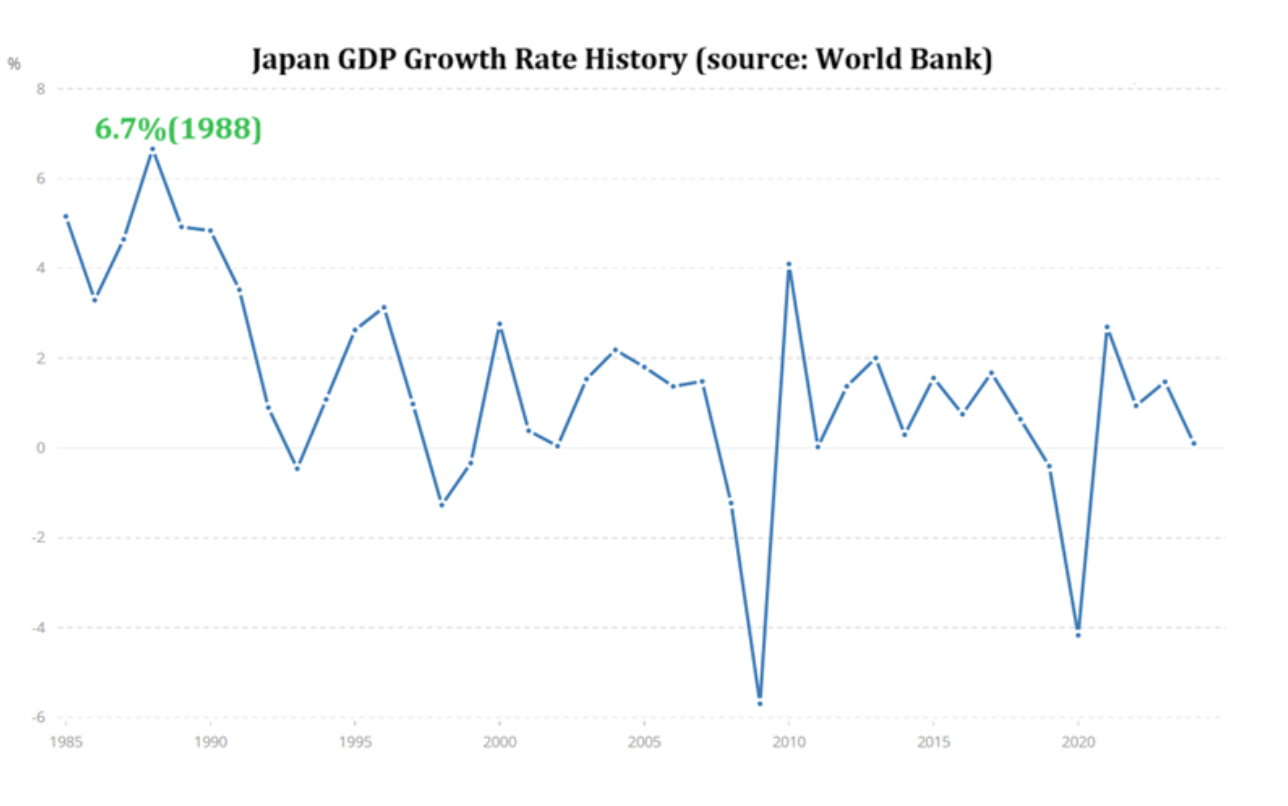
To understand today's market, it helps to look back at Japan's property bubble of the late 1980s.
Following the 1985 Plaza Accord, low interest rates, easy credit, and speculation drove land and stock prices to record highs.
When the Bank of Japan sharply raised interest rates, the bubble burst in the early 1990s, triggering one of the largest property market corrections in modern history.
If you would like to know more about Japan’s real estate bubble in 1990, also read:
🔗 Japan Real Estate Bubble in 1990: What Caused the Crash and Could It Happen Again?
The Long Decline
The years that followed became known as Japan's "Lost Decades."
Economic growth slowed, deflation took hold, and property values declined across much of the country.
For many Japanese households, real estate (especially land) stopped being viewed as an ultimate safe haven and an asset that would naturally appreciate over time.
Instead, homes were often treated more like consumer goods that gradually lost value as they aged.
This period shaped the investment mindset that still influences the market today.
Japanese buyers became highly focused on practical considerations such as:
- Proximity to train stations
- Building quality and maintenance
- Earthquake resistance
- Conservative financing with low leverage
Investor Insight
Properties built during the late 1980s bubble era can sometimes offer larger floor plans and high-quality construction materials. However, buyers should carefully evaluate:
- Building maintenance costs
- Aging infrastructure and equipment
- Outdated layouts
- Compliance with modern earthquake standards
Particular attention should be paid to whether a property complies with Japan's Shin-Taishin (New Earthquake Resistance Standards), which came into effect in June 1981.
For earthquake and natural disaster risks, also read:
🔗 Risks of Real Estate Investment in Japan for Foreigners - Location & Natural Disaster Risks | What are They and How to Mitigate Them?
2. Abenomics and the Market Turning Point (2013–2019)
A major shift began in 2013 with the launch of "Abenomics," the economic policy program introduced by former Prime Minister Shinzo Abe.
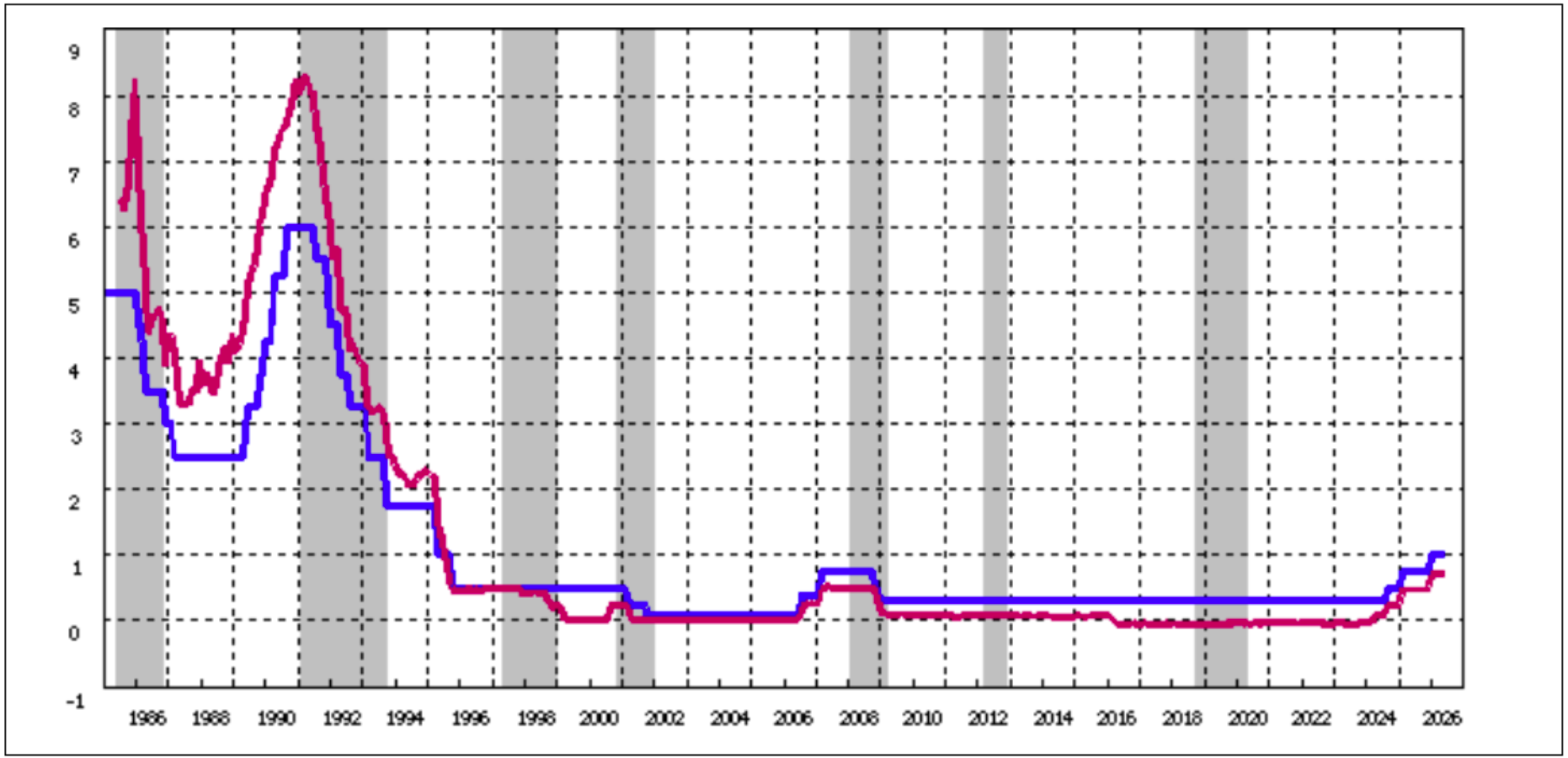
A key component of the policy was aggressive monetary easing by the Bank of Japan, which pushed borrowing costs to historically low levels and encouraged investment.
Japan’s Basic Loan Rate and Uncollaterized Overnight Call Rate Historical Chart
A Market Split Emerges
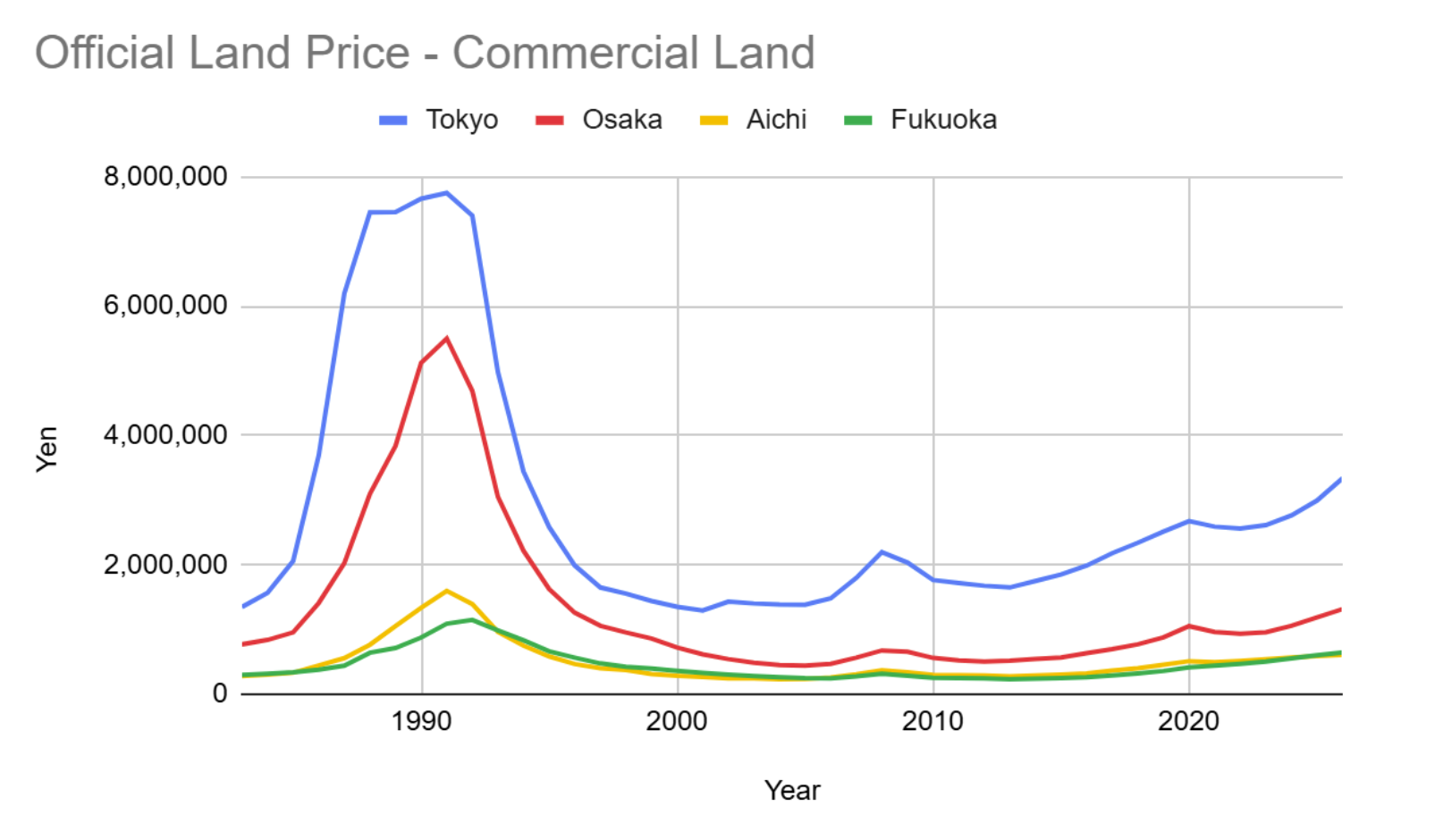
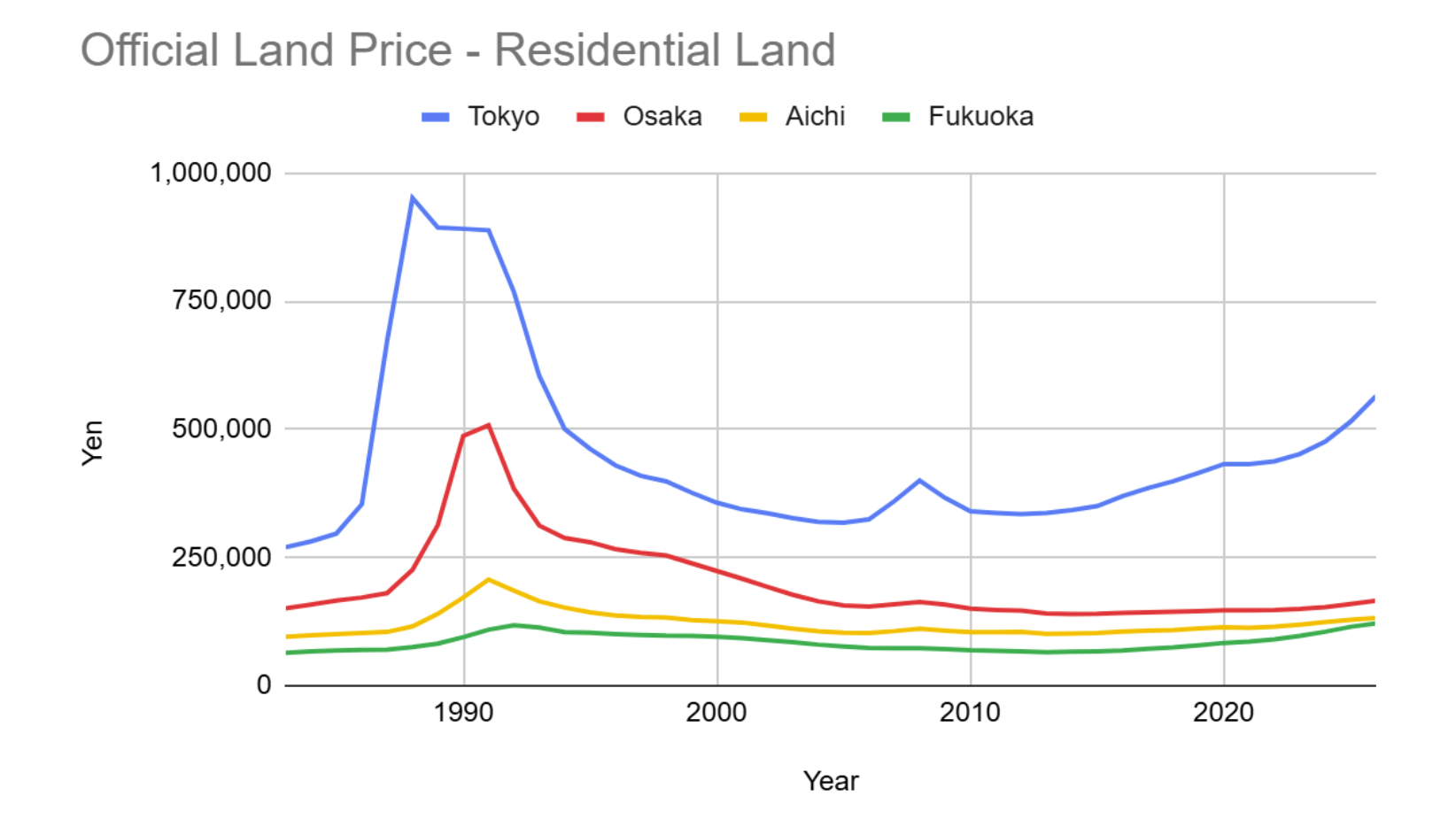
As mortgage rates fell and liquidity increased, demand returned to Japan's largest cities. However, the recovery was far from uniform.
A clear divide emerged between urban and rural markets:
Major Cities
Cities such as Tokyo and Osaka experienced steady increases in land values and condominium prices.
Regional Areas
Many rural towns and distant suburbs continued to face population decline, aging demographics, and falling property values.
This divergence remains one of the defining characteristics of Japan's real estate market today.
The Tourism Boom
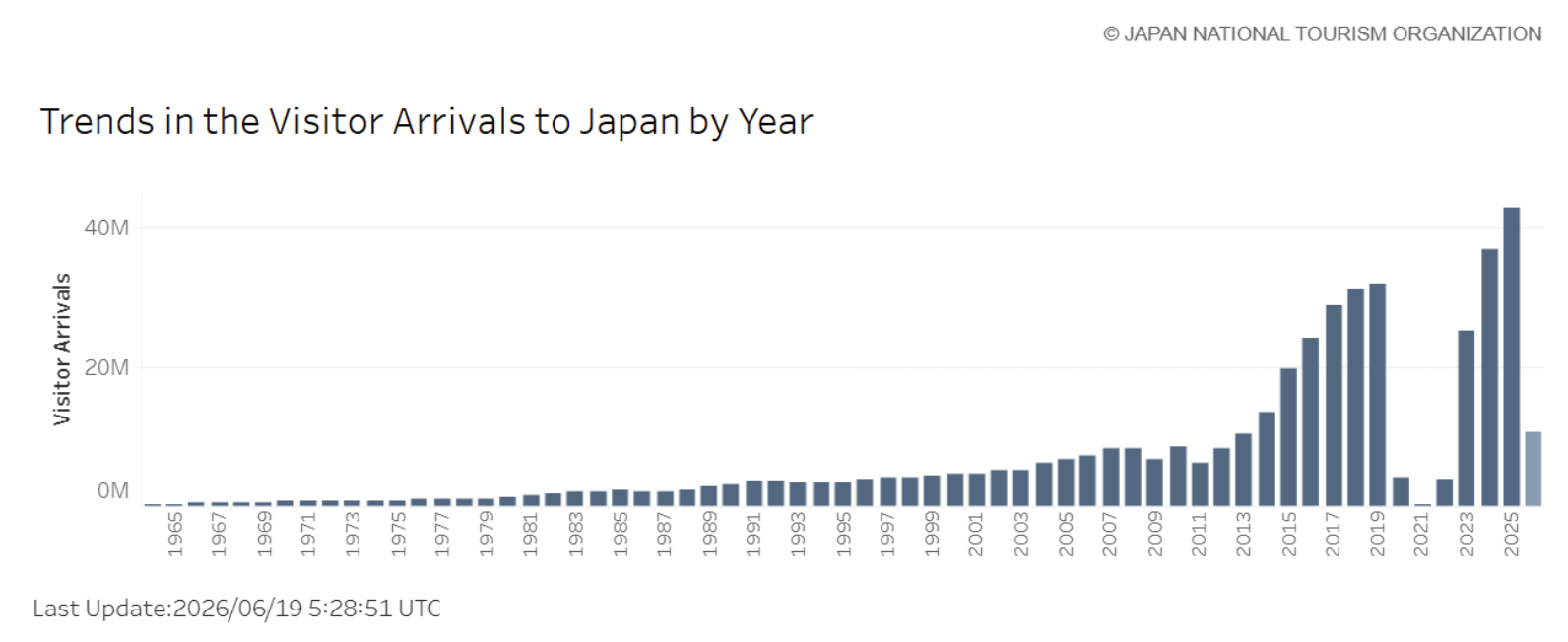
During the same period, Japan welcomed a record number of international visitors. Relaxed visa requirements and growing global interest in Japan fueled tourism growth, creating new opportunities for real estate investors.
Foreign buyers increasingly targeted:
- Hotels
- Commercial properties
- Apartment buildings
- Licensed short-term rental properties (Minpaku)
Prime tourist destinations such as Tokyo, Osaka, Kyoto, and Niseko benefited significantly from this trend.
3. Post-Pandemic Recovery and the New Price Cycle (2020–Present)
While the COVID-19 pandemic temporarily disrupted tourism and economic activity, it did not reverse the long-term strength of Japan's major urban property markets.
In fact, several trends accelerated after the pandemic.
Record Prices in Central Tokyo
By the mid-2020s, condominium prices in central Tokyo had surpassed previous bubble-era highs.
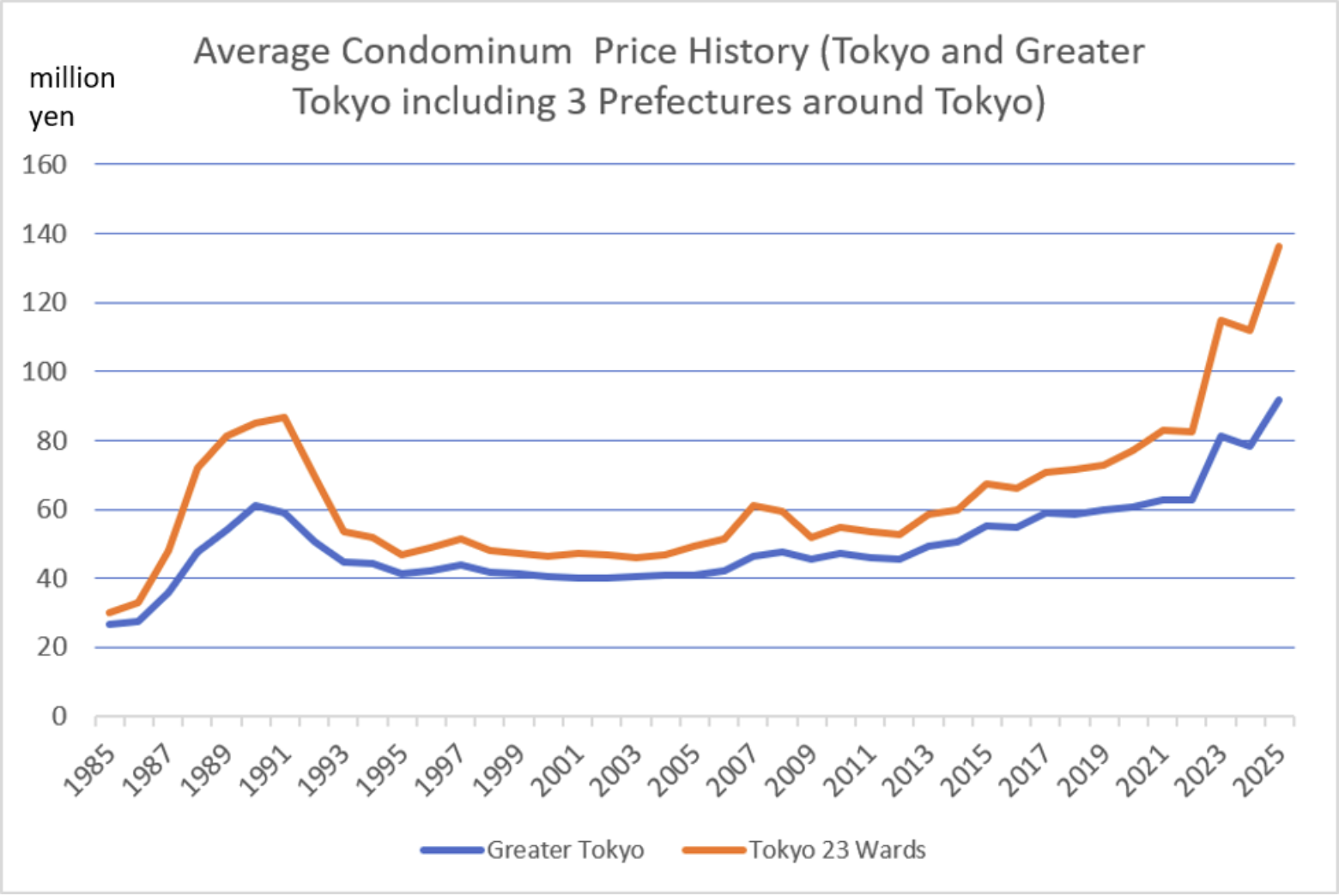
Several factors contributed to this growth:
- Rising construction costs
- Labor shortages in the construction industry and stricter regulations on overtime of workers
- Limited availability of prime development land
- Continued demand from domestic and overseas buyers
At the same time, the supply of newly built condominiums fell to its lowest levels in decades.
The Current Market Realities
The luxury and new-construction segments have reached historic highs.
High input costs for construction materials, a binding cap on construction worker overtime labor, and a severe scarcity of prime land have caused new supply to drop to its lowest levels since 1973.
The impact on pricing across the region is stark:
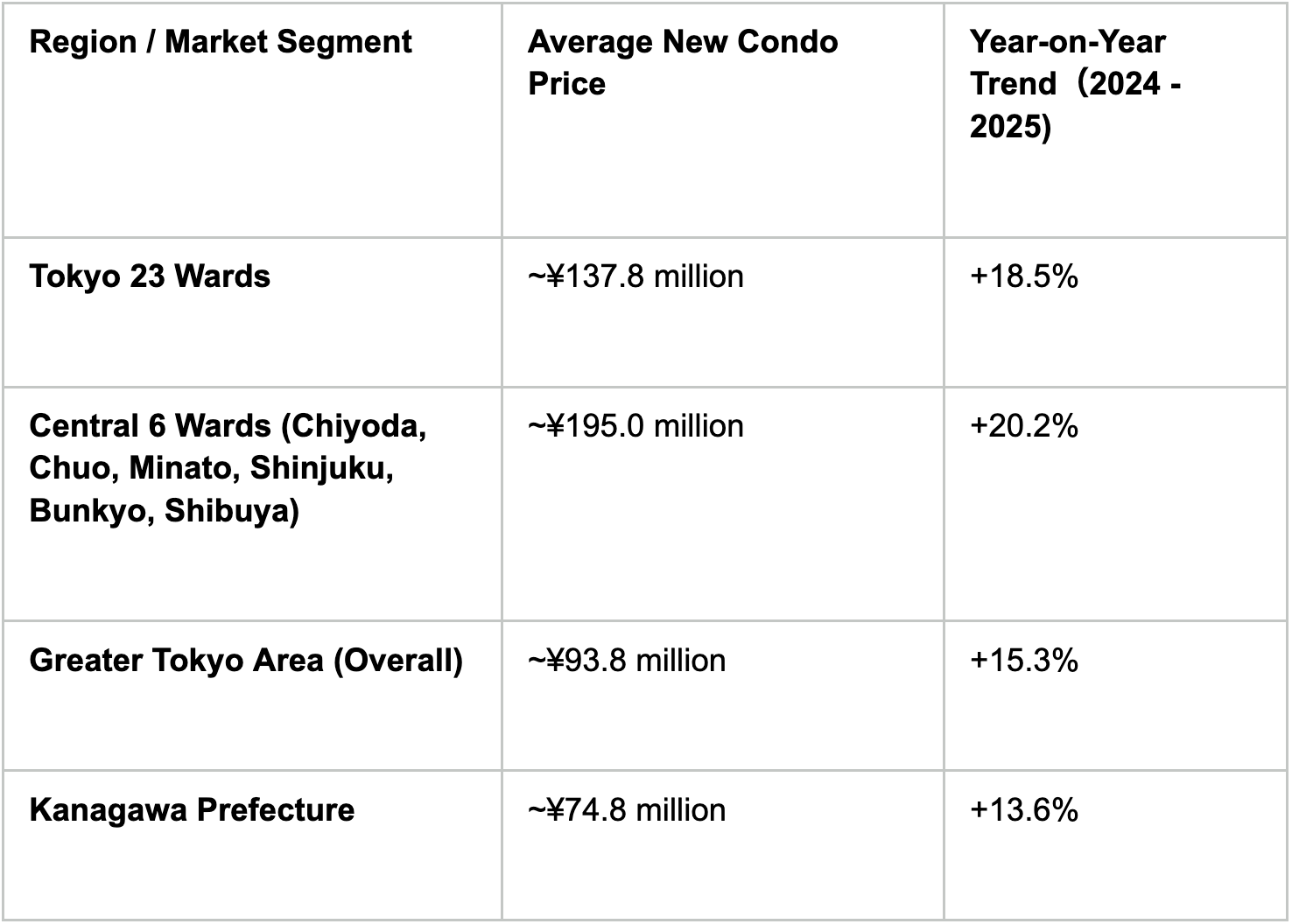
Because new builds have priced out many local families, demand has heavily shifted to the secondary market. The resale condominium market has recorded consecutive monthly price growth for years, proving that the modern appreciation trend is not a brief anomaly, but a sustained structural shift.
The Shift to Resale Properties
As new condominium prices reached record levels, many buyers turned to the resale market.
This has led to sustained price growth in existing condominiums, particularly in desirable urban neighborhoods with strong transport connections.
The result is a market where both new and resale properties have experienced significant appreciation in major cities.
4. Understanding Japan's Unique Property Valuation System
One of the biggest surprises for foreign investors is how Japan evaluates property value.
In many countries, land and buildings are viewed together as a single asset.
In Japan, they are treated separately.
Total Property Value = Land Value + Building Value
The distinction is important because each component behaves differently over time.
Land Value
Land may appreciate, remain stable, or decline depending on location and market conditions.
Building Value
The building itself is generally considered a depreciating asset.
As a structure ages, its accounting value declines regardless of market conditions.
Statutory Useful Life
For tax purposes, Japan assigns a statutory useful life to different building types:
- Wooden residential buildings: 22 years
- Steel structures: 19 to 34 years
- Reinforced concrete (RC) or steel-reinforced concrete (SRC) buildings: 47 years
(Source: National Tax Agency)
These figures are primarily used for depreciation calculations and do not mean a building becomes unfit for use after that period.
Many Japanese buildings remain in service far longer with proper maintenance.
Yield Versus Appreciation
This system creates different investment opportunities.
In regional cities, older properties may offer:
- Lower acquisition costs
- Higher rental yields
- Strong cash flow potential
However, investors must also account for:
- Ongoing maintenance expenses
- Renovation costs
- Limited capital appreciation potential
In contrast, prime areas of central Tokyo often generate lower rental yields, typically around 3% to 4%, but have historically demonstrated stronger land value appreciation and better long-term capital preservation.
5. Important Considerations for Foreign Investors
No Restrictions on Foreign Ownership
Japan is one of the most open property markets in Asia.
Foreign buyers can purchase, sell, own, and inherit freehold real estate under the same legal framework as Japanese citizens.
Importantly, property ownership does not require Japanese residency or a visa.
For more information, also read:
🔗 Japan Property Investment Guide for Foreigners
The Interest Rate Environment
After many years of ultra-low and negative interest rates (interest rate on the balance of the Current Account Deposits at the Bank of Japan), the Bank of Japan has gradually begun normalizing monetary policy.
Although borrowing costs have increased modestly, mortgage rates in Japan remain among the lowest in the developed world.
Foreign investors should note that financing can be challenging for non-residents.
Without Japanese residency, local income, or tax history, buyers often face:
- Larger down payment requirements
- Stricter lending criteria
- Limited access to domestic mortgage products
As a result, many overseas investors purchase properties in cash or seek financing through international banking relationships.
The Capital Gains Tax Timeline
Japan imposes significantly higher taxes on short-term property sales.
The tax rate depends on how long the property has been owned.
- Short-Term Capital Gains (Held under 5 years): Taxed at roughly approximately 39.63% of net gains.
- Long-Term Capital Gains (Held over 5 years): Drops sharply to approximately 20.315% of net gains.
Investors should note that the holding period is measured as of January 1 of the year in which the property is sold.
In practice, this often means ownership must extend beyond five calendar years to qualify for the lower tax rate.
For more details about the capital gains tax, also read:
🔗 Japan Property Tax for Foreigners: Tax Rates, Costs & Rules Explained
6. Summary: A Two-Speed Market
Japan is no longer a monolith of flatlining real estate prices. It has evolved into a clear, two-speed market.
On one track, mega-cities like Tokyo and Osaka, alongside major industrial and tourism hubs like Fukuoka and Hokkaido, are experiencing robust, asset-preserving price hikes.
On the other track, rural and suburban towns face persistent structural decline.
For the foreign investor, success lies in alignment.
If your goal is capital preservation and currency diversification, focus on new or gently used concrete condominiums within a 10-minute walk of major transit lines in Tokyo's core wards.
If your goal is raw cash-flow yield, look to well-maintained secondary cities, but always build structural depreciation and future building maintenance costs directly into your financial modeling.
For foreign investors, success comes down to choosing the right location. Prime urban properties may offer better long-term capital appreciation, while regional markets can provide higher rental yields at lower purchase prices.
Understanding these local market differences is the key to making informed investment decisions in Japan.
Our team of seasoned professionals at PropertyAccess is dedicated to helping you navigate Japan’s real estate market with confidence.
With deep local knowledge and a commitment to personalized service, our experts are here to guide you every step of the way.
Book a Free Consultation Session with Our Team!
プロパティアクセスの経験豊富な専門チームが、お客様が安心して日本の不動産市場に投資いただけるようお手伝いいたします。
不動産に全般に関する豊かな知識とおひとりおひとりに合ったサービスで、不動産投資のプロセスを一貫してサポートしますので、お気軽に個別相談をご利用ください。
無料の個別相談を予約する(予約画面は英語で表示されます)