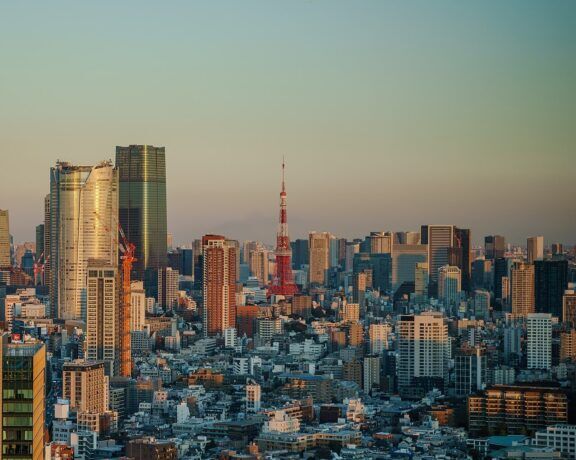
Tokyo vs Osaka: Which Is the Best City for Real Estate Investment?
Last Updated: September 8, 2026
Compare Tokyo and Osaka for real estate investment, from property prices and rental demand to tourism, redevelopment, and long-term growth potential.
Table of Contents
Supervised By: Hiroki Kazato
Real Estate Expert
Tokyo and Osaka are Japan's two most important real estate markets, but they offer very different opportunities, and the decision on where to invest comes down to your own investment goals.
Tokyo is the world's most populous urban area and is arguably one of the world's most desirable cities to live and do business. With this, comes scale, liquidity, international demand and a deep pool of tenants. Smaller compared to Tokyo, Osaka, too has plenty of people but offers better entry prices, strong commercial growth, huge potential brought by growing tourism and one of the country's biggest urban redevelopment projects that is currently underway.
Overall, it's not an outright winner but Tokyo, with its stability, global demand and long term liquidity strategy, is likely the stronger choice. But if one requires a lower entry point and is looking for better value relative to purchase prices then Osaka is definitely worth your attention. Both cities offer excellent opportunities in their own right.
Read More
Japan Property Investment Guide for Foreigners
Tokyo vs Osaka: Real Estate's Two Powerhouses
Tokyo is the country's political, financial and business centre with a high concentration of major corporations and global companies, government institutions and universities.
Characteristic of vast green parks, traditional temples and shrines, and large shopping malls, its unique urban landscape houses a population of more than 13 million and one of the world's largest urban economies. This results in a diversity of investment opportunities from compact apartments and luxury condominiums, to offices, hotels, retail and logistics properties.
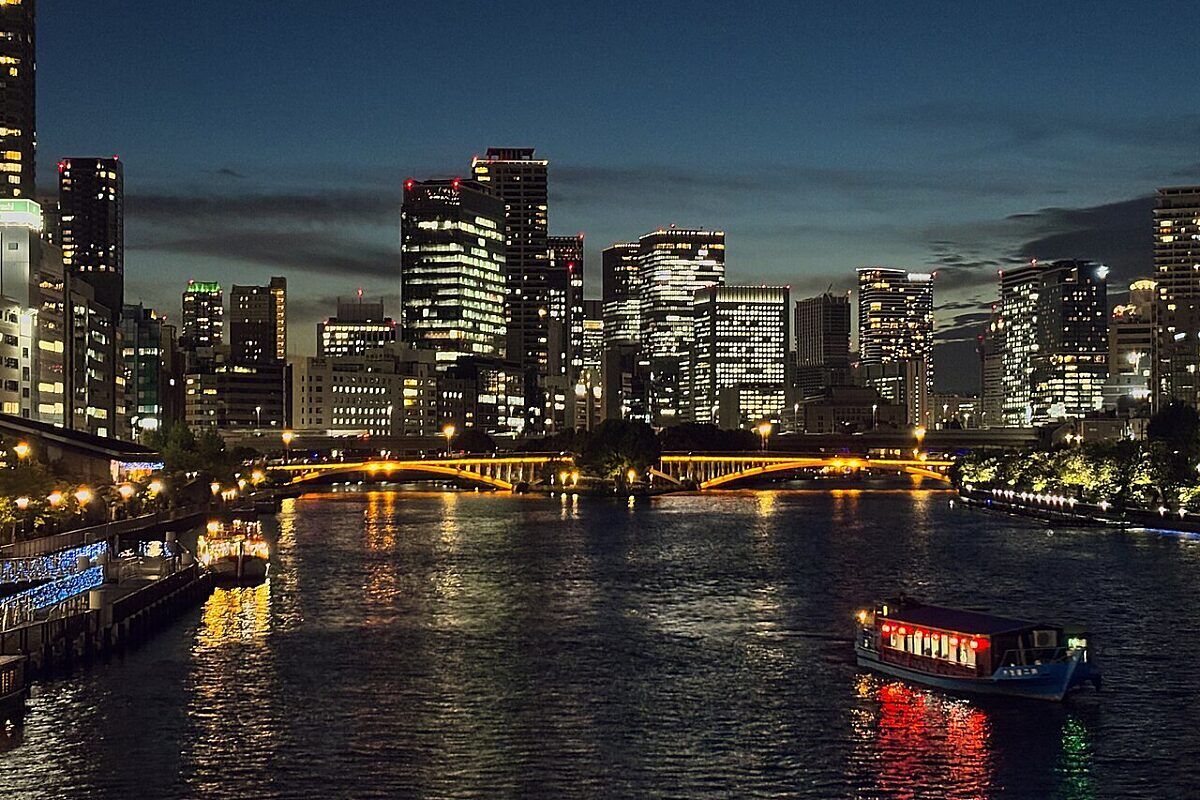
The economic centre of western Japan, Osaka occupies a prime location, boasts a well developed transportation network and has a thriving tourism industry. Its large population and strong commercial identity, coupled with an increasing number of domestic and international investors has pushed the land values higher.
Japan's Ministry of Land, Infrastructure, Transport and Tourism reported that land prices continued to rise in all of Japan's major metropolitan areas in 2025. One landscape that embodies this recovery is the contrast between the Tokyo metropolitan area, where residential land prices increased by an average of 3.9% and commercial land by 8.7% and the Osaka metropolitan area: where residential land rose by 2.2% but commercial land increased by 6.4%. What does this show? It shows a more robust return to life in the commercial real estate market in the Osaka area while price rises in the residential market of Tokyo are attracting more developers in that area, too. Which city makes more sense for your investment? The answer depends on your budget, investment strategy and appetite for risk. But when it comes to things like market size and liquidity, Tokyo has proven to be - and should probably continue to be - the bigger draw. The city's greatest strength is its scale. The Tokyo metropolitan area is one of the largest urban economies in the world, and the city remains the centre of Japan's corporate and financial activity.
Market Size and Liquidity: Tokyo Has the Advantage
One of the key factors driving the strength of Tokyo's commercial real estate market is its position as a magnet for international capital. Many of the largest global investment firms, institutional investors and dedicated real estate funds have a presence in the city as do numerous multinational companies. The presence of such a broad base of investors helps to ensure that properties in the city can be traded relatively easily, especially those in established and desirable locations. Recent investment data is further evidence of Tokyo's ability to attract investment. In 2024, according to JLL, the Greater Tokyo area accounted for an impressive 56% of commercial real estate activity in Japan, with the Greater Osaka area, at 22%, a distant second. The two metropolitan areas accounted for a remarkable 78% of commercial real estate investment activity. While the sheer size of Tokyo as a commercial real estate market in Japan is a major factor in its dominance, the market does not lack for competition.
WIth that being said, Osaka is far from a secondary market in the traditional sense. The Osaka region has, over the years, developed into one of the strongest investment destinations in Japan, and has continued to attract increasing attention from overseas investors. In 2024, commercial real estate investment activity in the Osaka area exceeded ¥1 trillion, the highest level since JLL started surveying the area in 2008.
According to ippon.com, a total of 48 new condominiums were launched across greater Tokyo at a starting price of around ¥136.1 million in 2025. Data from the Real Estate Economic Institute showed this to be the average price of a new condominium in Tokyo's 23 wards. Look at the six wards at the centre of the city - Chiyoda, Chuo, Minato, Shinjuku, Shibuya and Bunkyo - and the starting price was even higher, at roughly ¥195 million.
If you want in on the western Tokyo metropolitan market, you need to pay premium prices where rising construction costs are combined with limited land availability and renewed demand for new housing. You'll also need deep pockets, if you want the advantage of location.
Read More
Tokyo Housing Price Forecast 2026: Is Tokyo Real Estate Still a Good Investment?
Property Prices: Osaka Offers a More Accessible Entry Point
For many investors, the biggest difference between Tokyo and Osaka is simple: price. Osaka has now become an alternative for investments that do not require the intense capital needed in Tokyo.
Look to prime properties in Umeda, at Nakanoshima, some in Shinsaibashi and other areas in central Osaka and prices may come near some of those within prime Tokyo. Look at alternatives though and you may invest at far lower purchase prices for comparable properties. But this comes with the additional advantage of diversifying your portfolio.
There's no guarantee that a lower purchase price is a better investment, but affordability might be one of the most important pieces of the overall puzzle. From an affordability perspective, Osaka is a winner, but if you're looking for robust residential rental demand, Tokyo has no equal.
Regardless of the specifics of your investment, consideration needs to be given to rent, maintenance costs and the risk of vacancy once the owner is responsible for property taxes. Lower purchase price properties work for some investors. But, in terms of relative affordability, Osaka is a winner. But if you're interested in a property consistently generating positive cash flow for years to come, residential rental demand is tough to beat in Tokyo.
Read More
The 10 Best Places to Live in Osaka for Foreigners (Umeda, Namba and More)
Residential Rental Demand: Tokyo Offers Unmatched Depth
The Japanese capital has now emerged as a destination for students and young professionals looking to earn a good living, corporate employees seeking high pay, entrepreneurs seeking opportunity and many of the world's most educated international residents. Drawing people in by the hundreds of thousands, Tokyo's estimated population will feature more than 14.27 million people by December 2025 according to the Tokyo Metropolitan Government, the largest group of which will be within the 23 special wards at approximately 9.95 million.
If you're considering a property investment in Tokyo, not all properties will see residential rental demand. Location, for example, is everything. A small apartment might see itself rented out quickly if it's located waddling distance of a major train station. In contrast, a larger property further from the city's many lines may have a very different rental market. Regardless of the specifics of your investment though, Tokyo's variety of tenant demand is certainly a point in its favor.
For your rental property, an area like Shibuya, Minato or Shinagawa may be best if you're looking for young professionals as tenants. Choose Setagaya or Koto to attract families. By focusing on universities, business districts or transportation hubs, you're sure to have a steady demand for rentals!
Osaka also has a very strong residential market.
With an estimated population of approximately 2.82 million as of August 2026, Osaka City already has a much smaller population base than Tokyo City, but as one of Japan's largest urban centers, it's the economic heart of the Kansai region, attracting workers from across western Japan.
Students and professionals are also attracted to the area due to lower living costs and a more relaxed lifestyle.
Read More
Top 8 Tokyo Neighborhoods to Purchase Real Estate
Rental Yields and Value: Osaka Can Be More Compelling
Both cities have benefits. In terms of tenant demand, Tokyo is a clear winner with its depth and diversity. Still some investors may very well be attracted to Osaka for its more compelling balance between acquisition costs and rental income.
The thing about higher property prices is that they can sometimes make rental income seem more proportionally small, but it also means the value of rental income is that much higher. And Tokyo property prices are so high, rental income can feel like that much smaller a percentage of the purchase price. The Osaka property rental market can offer lower acquisition costs and bigger rental income parameters. If focused on gaining a strong cash flow from rental income, Osaka could be the better option.
So why compare? Size of apartments, smaller investments in multi-family residential and commercial properties and prevalent demand in areas other than the top most expensive districts can lead to a situation where Osaka is far more lucrative, both in terms of greater choice and value. But it depends on the clientele or type of rental income one prefers.
A large property in the major business districts to cater to professionals and corporate tenants, or a tiny apartment close to universities and in central neighborhoods to attract the student or younger generation looking for easy access to restaurants, shopping and entertainment.
Certain neighborhoods in Tokyo also generate very attractive rental income. But it is difficult to find such properties without paying a hefty upfront price.
Read More
Best Places to Live in Japan: 10 Regions to Match Every Lifestyle
Office Real Estate: Both Cities Are Performing Strongly
Both Tokyo and Osaka boasted strong fundamentals in the office market at the beginning of 2026. According to property advisor CBRE, Tokyo's all-grade office vacancy rate was 1.6% in the fourth quarter of 2025, while in the case of Grade A, it is much lower at 0.7%, below the 1% mark for the first time since 2020. The Grade A office rents had reached ¥41,050 per tsubo (1 tsubo = 3.306 square metre), over the ¥40,000 mark for the first time in 17 years.
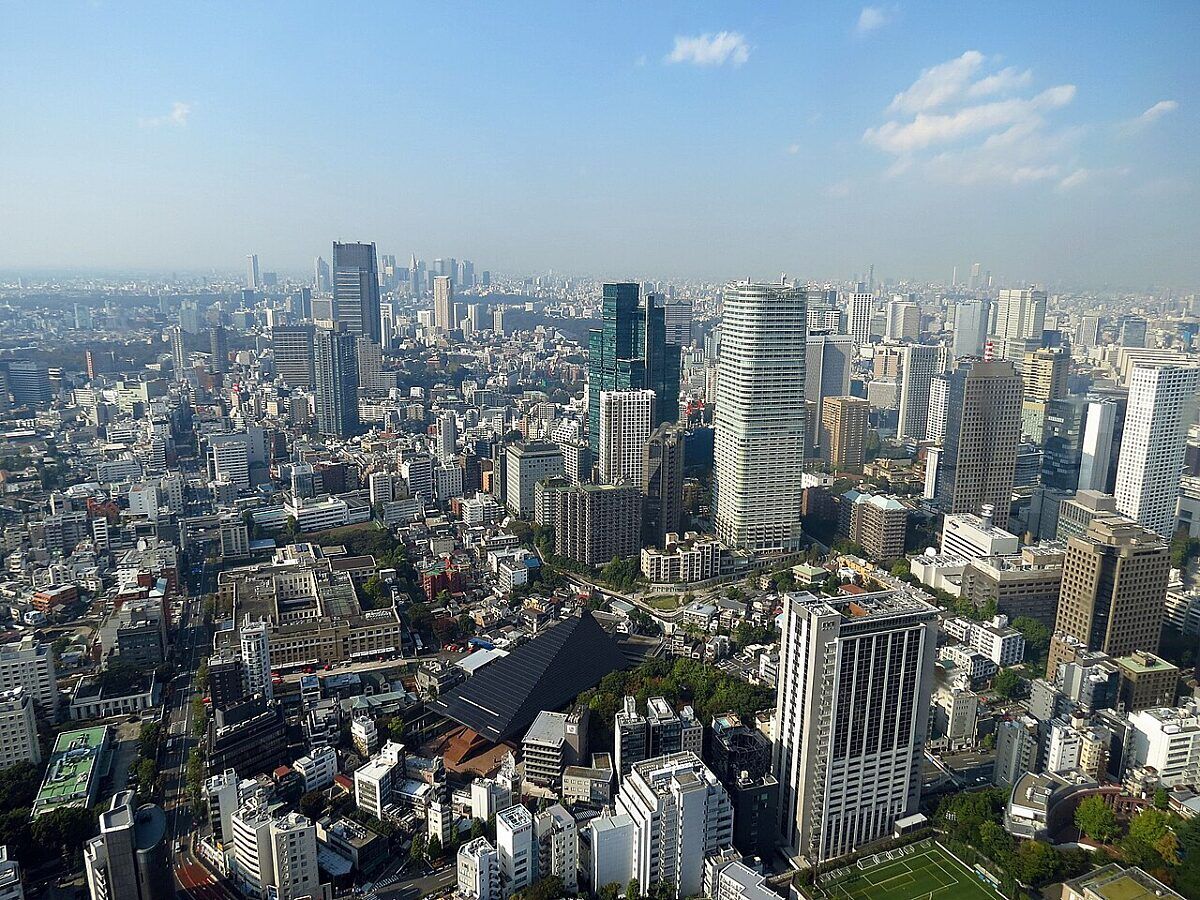
Demand will only further strengthen from companies looking to expand, upgrade or relocate to better specified, located and serviced offices. Osaka, too seems to be performing well. The all-grade office vacancy rate stood at 2.2%, while Grade A rents at ¥26,950 per tsubo, at record high levels. All-grade rents, too, achieved record levels. The difference is that Tokyo offers higher rents to investors because of a greater depth in the market, while Osaka has strong leasing demand but at a lower cost base.
CBRE predicts office rents across Japanese cities are set to rise, bolstered by solid infrastructure, corporate expansion and an ever-refreshed stock of properties. More so in Osaka, where new office supply is limited post the recent development cycle.
Tourism and Hospitality: Osaka Has a Strong Growth Story
Tourism is becoming a big deal in Japan's real estate market. Hotels, serviced apartments, shops and tourist focused projects are all set to gain from both local and international visitors. Sure, Tokyo has its perks. It's the main entry point for travelers and has tons of attractions, shopping and culture. But Osaka is stepping up as a major player in the tourism and hospitality scene.
What's cool is that Osaka isn't just popular on its own, but it's also a gateway to places like Kyoto, Nara and Kobe. Big firms like JLL see hotel investments and a rise in tourism as key for Osaka's commercial real estate growth. For anyone considering hospitality, Osaka is definitely worth a look. Areas with easy access to tourist spots, major train stations and Kansai International Airport are especially primed for success as the city thrives as a tourism hub.
Keep in mind, though, that investing in hospitality isn't the same as traditional residential properties. Things like operating costs, management, regulations and tourism trends play a big role here. However, Osaka's tourism boom adds another level of demand that investors should pay attention to.
So, when it comes to up-coming hospitality spots, Osaka is the winner.
Read More
Redevelopment: Tokyo Is Constantly Reinventing Itself
Tokyo is buzzing with urban redevelopments. Major areas are constantly changing with new office buildings, mixed-use spaces, apartments, hotels, shopping areas and transport upgrades. Places like Shibuya, Shinagawa, Toranomon and parts of the waterfront have seen a lot of new projects recently. This ongoing development is crucial in keeping Tokyo as Japan's top business hub.
For real estate investors, redevelopment offers two main benefits. Firstly, new projects can make neighboring areas more appealing. Secondly, to breathe new life into older districts, making them more competitive in the long run. But there's a catch. When people find out an area is getting better, property prices might already reflect that improvement. Investors need to dig deeper and understand market expectations.
Osaka is also undergoing its fair share of revitalization. The Umeda area is transforming, bolstering Osaka's image as a key business center with new offices, hotels, shops and public spaces popping up. Osaka's development journey is fascinating as it's blending existing infrastructure with spots that still have room to grow.
So, Tokyo wins for overall redevelopment, but Osaka shines for potential value in major changes.
Read More
Latest Mega Residential Projects in Tokyo: 5 Major Developments Shaping the City's Future
Long-Term Stability: Tokyo Remains the Safer Choice
If stability is what you want, Tokyo makes a solid case. It has the biggest economy, the deepest property market and the strongest concentration of businesses and potential tenants. Its size offers a good mix. If one area or property type slows down, the wider Tokyo market still has plenty to offer. Plus, Tokyo's international profile draws foreign investors who are familiar with its importance, keeping capital flowing into Japanese real estate.
According to CBRE, Japan's commercial real estate investment hit a record ¥6.5 trillion in 2025. Even with rising interest rates, investor interest was strong, with Tokyo's prime office yields hitting historical lows. While that level of competition can drive prices up, it also shows that people have faith in the market.
Osaka is also stable and not speculative, but Tokyo has a broader base of demand. When it comes to long-term market stability, Tokyo wins.
Read More
Best Tokyo Neighborhoods for Young Professionals: Where to Live for Work, Lifestyle, and Convenience
Final Thoughts
Neither city is risk-free. Tokyo's main issue is high prices. Purchasing at steep valuations can eat in to your potential profits, especially if rent doesn't rise as fast as costs. Plus, construction costs and limited housing supply are pushing prices up, especially in central areas.
On the other side, Osaka's challenge is its smaller market. It has strong fundamentals but does not match Tokyo's international corporate activity or housing demand.
Both cities face wider economic challenges in Japan. Interest rates are nudging upwards, which could raise borrowing costs. Though major cities like Tokyo and Osaka still pull in people and economic activity, Japan's demographic hurdles are real. This is why choosing the right property is more crucial than just choosing a city. A great property in Osaka can outperform a bad choice in Tokyo and vice versa.
Tokyo vs Osaka: Which one fits you best?
There's no one-size-fits-all answer.
Go for Tokyo if you want:
- A big real estate market
- Strong demand for residential rentals
- International investor interest
- Long-term stability
- A variety of property types
- Strong potential for preserving capital
- Japan's deepest office market
Tokyo is super appealing if you have a bigger budget and want to dive into Japan's established real estate scene.
Choose Osaka if you want:
- A more accessible entry point
- Potentially better value for your money
- Cash flow opportunities
- Growth in tourism and hospitality
- Strong demand for commercial and logistics properties
- Big redevelopment projects
- Access to western Japan's economic hub
Osaka is particularly attractive if you're looking for growth potential without a huge investment.
So, which city is better for real estate?
If we're talking market size, liquidity and stability, Tokyo takes the cake. It's still Japan's top real estate market with huge tenant demand, strong corporate activity and international appeal that Osaka cannot match. But investing isn't just about getting into the biggest market. If you're after a better mix of property prices, potential rental returns, redevelopment opportunities and commercial expansion, Osaka might give you better bang for your buck.
That's what makes comparing Tokyo and Osaka so fascinating. Tokyo is the established champ, but Osaka offers a solid alternative with a growing urban economy and lower entry costs. For smart investors, it might not be about choosing one city forever. You can start in the city that suits your budget and goals at the moment and later branch into the other as your portfolio grows.
Japan's two largest real estate markets aren't just competitors, they provide different paths to engage with the country's evolving property landscape. And that's great news for investors, you've got more than one solid choice.
Source
- Japan Ministry of Land, Infrastructure, Transport and Tourism — 2025 Prefectural Land Price Survey
- Japan Ministry of Land, Infrastructure, Transport and Tourism — 2025 Land Price Survey Results
- CBRE Japan — Japan Office MarketView Q4 2025
- CBRE Japan — Japan Investment MarketView Q4 2025
- CBRE Japan — Japan Market Outlook 2026
- JLL Japan — Osaka-Driven Commercial Real Estate Investment Market
- Tokyo Metropolitan Government — Population Estimates
- Osaka City Government — Population Estimates
- Nippon.com — Average Tokyo Condo Prices Soar in 2025
- Savills — Japan Logistics Market Report, March 2025
Our team of seasoned professionals at PropertyAccess is dedicated to helping you navigate Japan’s real estate market with confidence.
With deep local knowledge and a commitment to personalized service, our experts are here to guide you every step of the way.
Book a Free Consultation Session with Our Team!