- Market Outlook
Buying Property in Japan: Does a Weak Yen Benefit Foreign Investors?
Last Updated: October 23, 2026
Is a weak yen the perfect time to buy property in Japan? Learn the costs, risks, and opportunities for foreign investors in this complete guide.
Table of Contents
-
Does a Weak Yen Make Property in Japan Cheaper?
-
Is Now a Good Time to Buy Property in Japan?
-
Can Foreigners Buy Property in Japan?
-
The True Cost of Buying Property in Japan
-
Investment Potential: Rental Yield & ROI
-
Risks of Buying Property in Japan (Especially Now)
-
Best Places to Buy Property in Japan
-
Step-by-Step Guide to Buying Property in Japan
-
Who Should Buy Right Now and Who Shouldn’t?
-
Summary

Supervised By: Hiroki Kazato
Have you been watching the Japanese yen fall and wondering:
“Does this mean property in Japan is cheaper for me?”
“Am I missing a rare property investment window?”
With the yen at historically weak levels, Japan is on the radar for many global investors. But while the exchange rate may look attractive, buying property in Japan involves more than just timing the currency.
In this guide, we break down whether a weak yen truly gives foreign buyers an advantage, what it actually costs, and how to make a smart, informed purchase.
1. Does a Weak Yen Make Property in Japan Cheaper?
The weak yen makes Japanese real estate highly affordable for those holding strong foreign currencies. This will offer a strong entry point.
An exchange rate is the price of one country's currency in terms of another. It tells you how much of your money is needed to buy foreign money.
In the last 20 years, the yen weakened against other currencies, including the US dollar and Euro.
It once cost 75.72 yen to purchase 1 US dollar in October 2011, but it cost 161.61 yen to purchase the same in July 2024. Since the start of 2025, the yen has been hovering around 150 per US dollar.
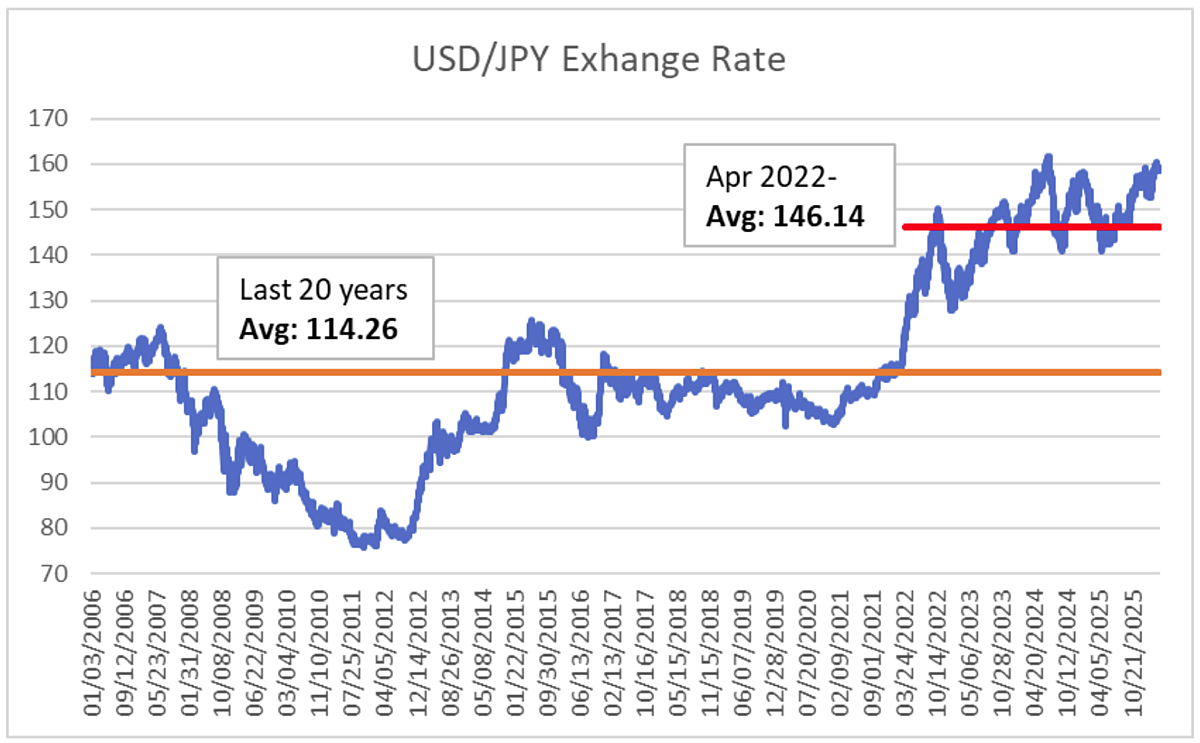
What does this mean to you?
Let’s say you would like to purchase a 50 million property in Japan.
With the strong yen, the same property costs you about $440k dollars. But with the weak yen, it would be about $340k.
Currency creates a discount effect for foreign buyers.
2. Is Now a Good Time to Buy Property in Japan?
Yes, we can say now is a good time to buy property in Japan, if your home currency is strong against the yen.
Many experts forecast the yen will remain weak for the rest of 2026.
This is because the rate gap between the US and Japan is still wide.
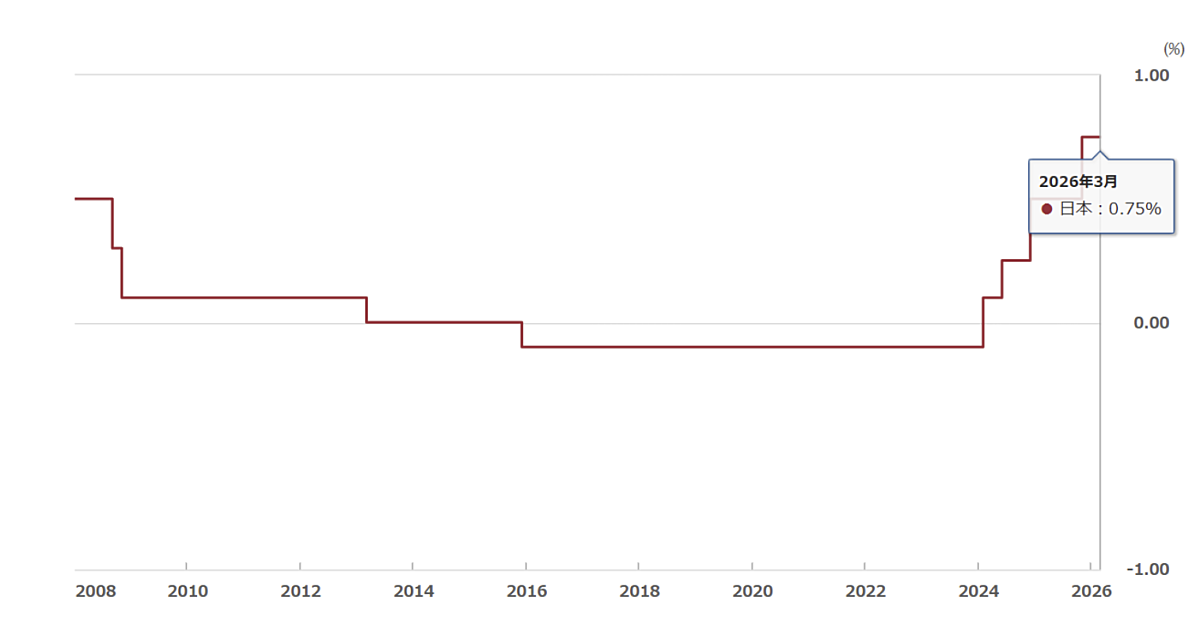
Although the Bank of Japan is slowly raising interest rates (at 0.75% as of April 21, 2026), while the FRB hasn’t cut the rates further since December 2025 (at 3.75% as of April 21, 2026) due to the uncertainty around the Middle East.
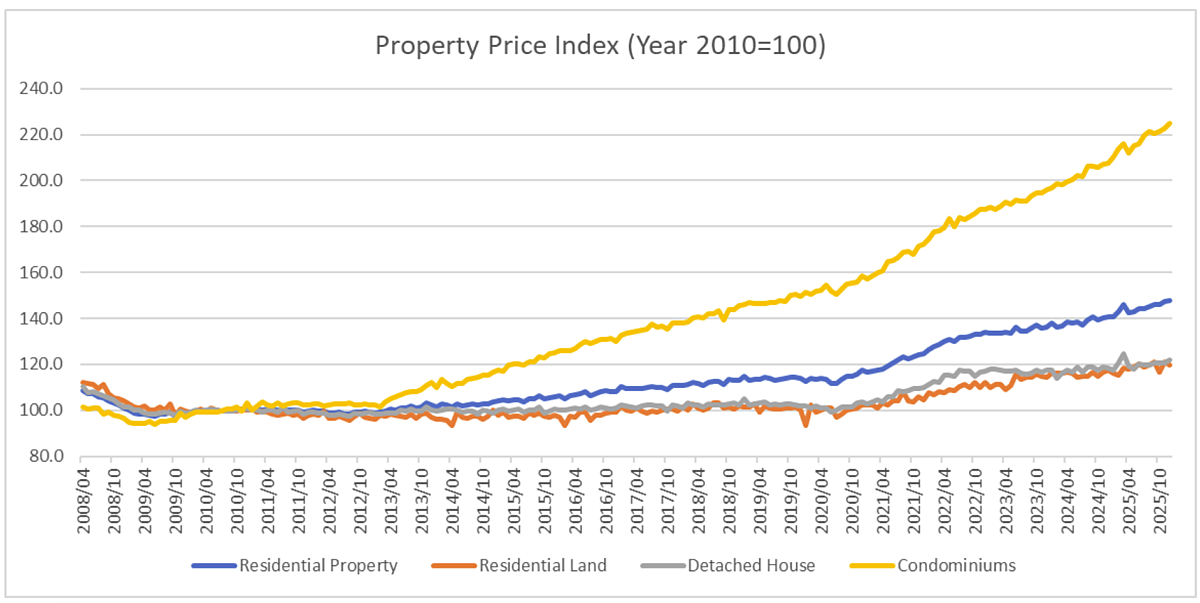
As you can see in the chart above, property prices in yen haven’t necessarily dropped; in fact, they have increased.
But thanks to the discount effect created by the currency, foreign investors using stronger currencies can benefit from the weak yen.
While the purchase cost may be lower, you should also keep in mind that the rental income from the property will be in yen. This means that its value may decrease if you plan to repatriate the funds to your home country.
It is important to plan your exit strategies with your consultant based on possible scenarios.
3. Can Foreigners Buy Property in Japan?
Yes, foreigners can buy property in Japan. And there is no citizenship or residency requirement.
Japan is one of the countries that are open to foreigners in terms of real estate ownership.
In Japan, full ownership rights are granted to both locals and foreigners, with no restrictions on most property types. Therefore, foreigners may freely own land or apartments, not just strata-titled properties, as is the case in many countries that limit foreign ownership.
Stable rental yields (often 3-6%) are also an attractive feature, especially in major cities like Tokyo and Osaka, with a low interest rate environment.
The Bank of Japan has been increasing its policy rate slowly, but at the Bank of Japan’s monetary policy meeting to be held on the 27th–28th, it has become highly likely that the policy interest rate will be left unchanged at 0.75%.
Amid ongoing turmoil in the Middle East, the bank has not yet been able to fully assess the impact on Japan’s economy and prices, and will postpone a decision on whether to implement an additional rate hike until the next meeting in June.
Source: Nikkei
Japan Policy Rate History
4. The True Cost of Buying Property in Japan
While we now know that your strong home currency against the weak yen creates a discount effect, buying property comes with related costs of about 6 to 10% above the purchase price and consumption tax of property.
Let’s look at the breakdown with an example of a condo unit of 80 million yen.
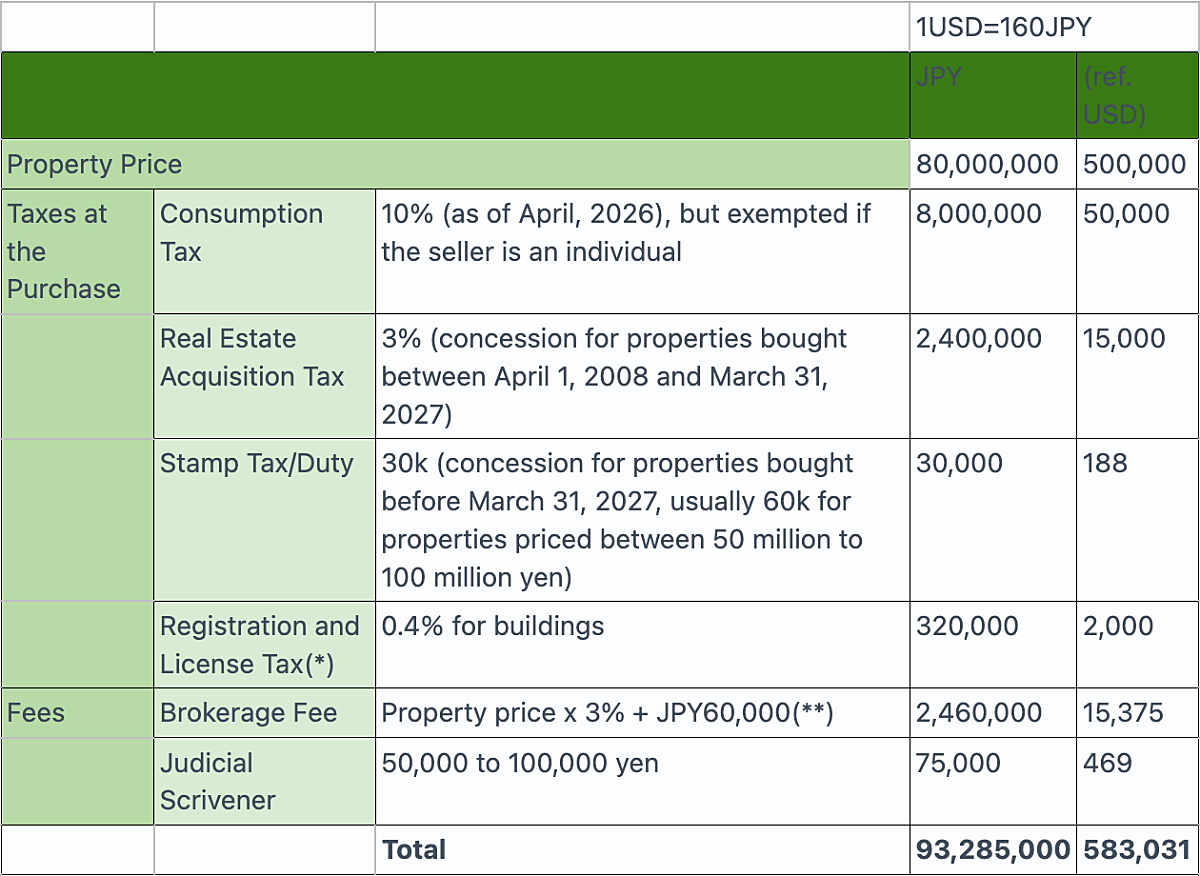
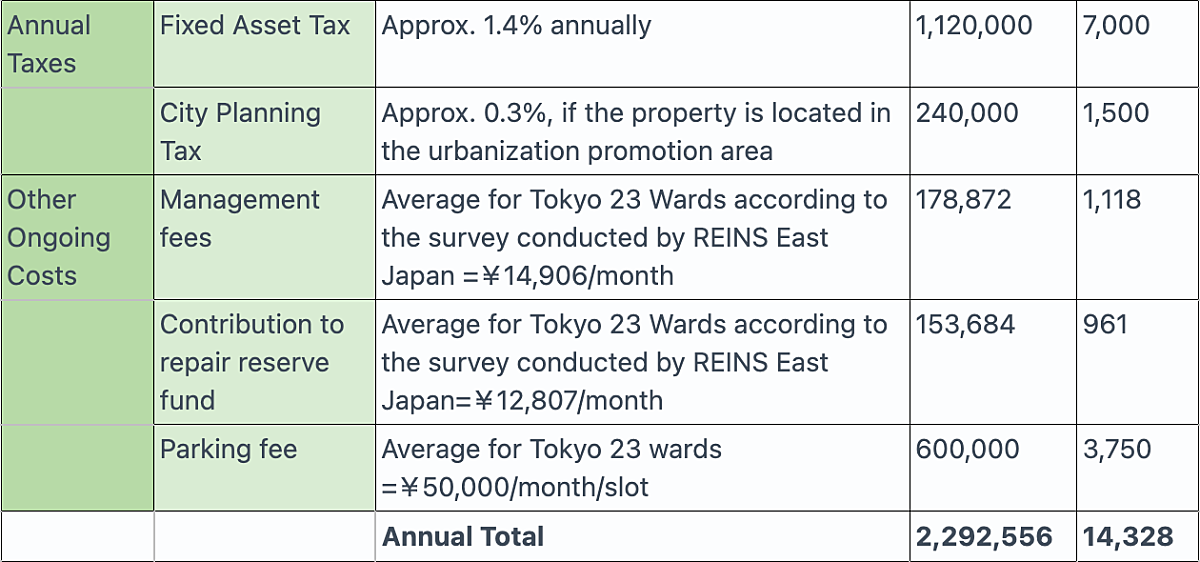
(*) Source: National Taxa Agency, Japan
(**) In addition, consumption tax (10% as of April 2026) is applicable after October 2026
(***) Source: REINS
5. Investment Potential: Rental Yield & ROI
Investment potential in Japan is often defined by stable rental yields, typically ranging from 3–6% in major cities like Tokyo and Osaka. Yields in Tokyo tend to be slightly lower due to higher property prices, making it more of a stability-focused market, while Osaka generally offers higher returns than the capital.
In smaller cities, property prices may be lower, but they often come with weaker demand and higher resale risk. It’s important to understand the demand drivers in the areas you’re considering—whether that’s students, expats, or local residents.
Older houses in rural areas, known as akiya, can be very inexpensive. However, they often require significant maintenance or renovation, which can add to the overall cost.
If you’re planning to use the property for Airbnb, keep in mind that rentals are typically limited to 180 days per year, with the regulatory year starting on April 1.
6. Risks of Buying Property in Japan (Especially Now)
We will be honest, however, that there are risks of buying property especially now in Japan.
1. Currency risk (yen strengthening later)
The yen is currently weak mainly due to interest rate differentials. However, it may strengthen if any of the following factors come into play. It is important to keep in mind that exchange rates can move quickly.
- Inflation rate in the US clearly slows down
- The FRB starts its rate-cutting cycles
- The Bank of Japan aggressively hikes its policy rates
Source: 77 Bank
2. Aging population & rural decline risks
As a report by the World Economic Forum shows, more than 1 in 10 people in Japan are now aged 80 or older and its population is declining as the number of births in Japan has been falling for the 10th consecutive year.
These trends are more notable in rural areas. The location really matters when investing in property in Japan.
3. Capital appreciation is not that high compared to other countries
Reference: Global House Price Index
4. Earthquake and other natural disaster risks
Japan stands on the Ring of Fire and is prone to earthquakes.
The Building Standards Act in Japan stipulates minimum requirements to ensure hygiene and security, including seismic standards of buildings. The stricter seismic standards were enacted on June 1, 1981 (new seismic standards), with the aim of protecting human life by preventing the collapse of buildings even during major earthquakes of seismic intensity 6 upper to 7.
If you would like to know more about the risks of property investment in Japan, also read:
- Risks of Real Estate Investment in Japan - Market Risks
- Risks of Real Estate Investment in Japan - Operational Risks
- Risks of Real Estate Investment in Japan - Location & Natural Disaster Risks
- Risks of Real Estate Investment in Japan - Legal and other Japan-Specific Risks
7. Best Places to Buy Property in Japan
Each city in Japan has its own characteristics in terms of property investment.
These are the trends you need to keep in mind:
Tokyo → Ideal if you pursue stability and liquidity, but the prices tend to be higher.
🔗 The 13 Best Places to Live in Tokyo for Foreigners
Osaka → Ideal if you prefer properties with higher yields in a big city.
🔗 The 10 Best Places to Live in Osaka for Foreigners
Kyoto → Japan’s historical and traditional town is best for tourism-driven demand.
🔗 The 7 Best Areas to Live in Kyoto for Foreigners
Fukuoka → Capital appreciation potential as its relatively cheaper property prices.
🔗 The 7 Best Areas to Live in Fukuoka for Foreigners
Rural areas → Cheap but risky (“akiya” homes). However, some locations offer strong investment opportunities. We recommend consulting an expert before jumping at a low price.
8. Step-by-Step Guide to Buying Property in Japan
The steps for buying property in Japan include:
✅Set budget (consider exchange rates)
✅Property and Agent Selection
✅Viewing
✅Signing Contract & Payment of Stamp Duty
✅Downpayment
✅Final payment & registration
For more detailed information about the buying process, also read:
🔗 Property Buying Steps - From Selecting a Property to Signing a Contract, including Requirements and Necessary Documents
The buying process usually takes 1 to 2 months, and it usually depends on how concrete your investment plans are.
If you are unsure to invest or not, you may want to consult a local expert to shape your investment plans.
If you plan to use a mortgage in Japan, it’s possible but subject to conditions and decisions by the bank depending on your credit status and visa type.
9. Who Should Buy Right Now and Who Shouldn’t?
Property buying in Japan under this weak yen situation is
Ideal for:
- Cash buyers benefiting from FX advantage
- Long-term investors
- Lifestyle buyers
Not ideal for:
- Short-term flippers
- Buyers relying heavily on appreciation
- Those exposed to currency volatility
Think carefully about your investment goal and twice before jumping at the property price in your home currency without considering the related costs and how or when to repatriate the funds.
Summary
Is the Weak Yen Really an Opportunity?
Yes, the weak yen can offer a significant entry discount.
But success depends on:
- Location
- Investment strategy
- Understanding Japan’s unique property market
Buying property in Japan right now isn’t just about timing the currency, but also about making a well-informed, long-term decision.
Our team of seasoned professionals at PropertyAccess is dedicated to helping you navigate Japan’s real estate market with confidence.
With deep local knowledge and a commitment to personalized service, our experts are here to guide you every step of the way.
Book a Free Consultation Session with Our Team!