- Others
Risks of Real Estate Investment in Japan for Foreigners - Legal and other Japan-Specific Risks | What are They and How to Mitigate Them?
Last Updated: October 23, 2026
Learn the key risks of investing in Japanese real estate, from legal and tax issues to stricter restrictions on foreign ownership, with practical mitigation tips.
Table of Contents
Supervised By: Hiroki Kazato
Interested in Japan but not sure what to be cautious about?
Would you like to be thoroughly informed of risks in property investment in Japan?
When venturing into a new investment, it is always important to know the benefits and the risks behind it so that you can make an informed investment decision.
While many websites only talk about the benefits of investing, I will talk about the risks of property investment in Japan.
Investments always come with some risks, but it is totally different if you are aware of them or not.
Read this article about legal and other Japan-specific risks of real estate investment in Japan, be informed, and prepare countermeasures or strategies to mitigate those risks.
Also read:
Top 15 risks in real estate investment in Japan
- Risks of Real Estate Investment in Japan - Market Risks
- Risks of Real Estate Investment in Japan - Operational Risks
- Risks of Real Estate Investment in Japan - Location & Natural Disaster Risks
Top Risks of Real Estate Investment in Japan - Legal and other Japan-Specific Risks
- Legal and Regulatory Risk
- Tax Risk
- Cultural and Language Barrier Risk
- Tightening Foreign Ownership Risk
1. Legal and Regulatory Risk

Legal and regulatory risk in Japan property investment is the risk of laws, regulations, administrative practices, or legal interpretations that may affect ownership, use, profitability, or transfer of real estate.
Also, laws and regulations applicable to real estate investment activities may change and require new actions to be in compliance with them, which is sometimes difficult for owners staying outside of Japan.
To mitigate this legal and regulatory risk,
- Hire an property agent who have plenty of experience in transactions with foreigners and a judicial scrivener to check if:
- the seller is the owner of the title to the property
- the property is free from encumbrances, except for those you are aware of
- the building association of the ; and
- the property is in compliance with the current laws and regulations (Building Standards Act, regulations on zoning and use of buildings, to name a few), among others. - Stay alert to changes in the legal and regulatory framework.
Changes won’t happen overnight. Keep yourself informed of possible future changes so you can respond to them.
2. Tax Risk

Tax Risk is the risk of unexpected tax liabilities, changes in tax laws, or poor tax planning that negatively impacts the investor's cash flow and overall return on investment.
First, it is essential to know what types of taxes are involved when you invest in real estate in Japan as a foreigner and understand a rough amount to be incurred in the course of your property investment journey.
For more details about Japan property tax for foreign investors, please read:
🔗 Japan Property Tax for Foreigners 🔗
Foreigners and locals are taxed equally in principle, except for the consumption tax imposed on the Japan property brokerage service which has been exempted under the current taxation rules.
However, the government is now considering imposing consumption tax on the brokerage service starting from October 2026. (Source: Nikkei)
Taxation laws are subject to change. The changes can impact an investor’s ability to make a return on their investments.
To mitigate this tax risk, it is important to understand tax rules and stay up to date. However, tax regulations can be difficult to read and interpret even for locals, and even more so for foreigners. Seeking professional advice is a safe way to ensure tax compliance.
Also read:
Top 15 risks in real estate investment in Japan
- Risks of Real Estate Investment in Japan - Market Risks
- Risks of Real Estate Investment in Japan - Operational Risks
- Risks of Real Estate Investment in Japan - Location & Natural Disaster Risks
3. Cultural and Language Barrier Risk
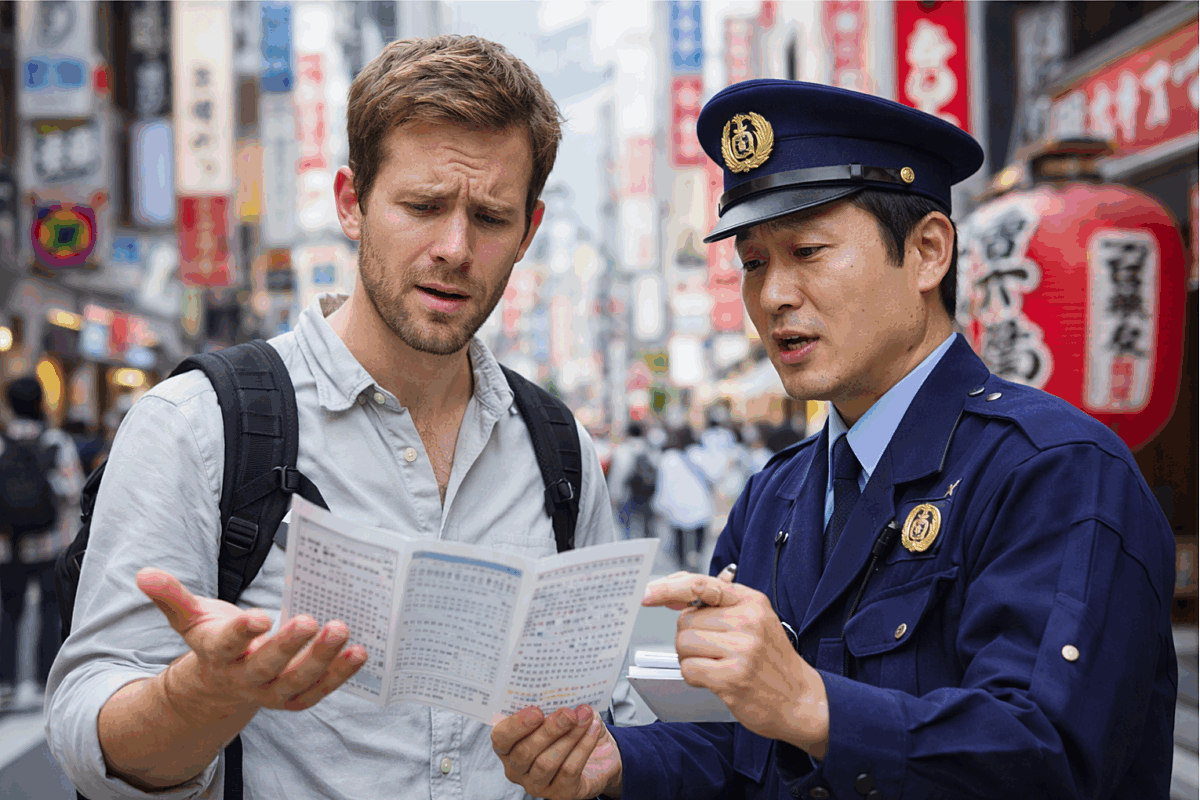
Cultural and language barrier risk is the risk that an investor suffers financial, legal, or operational loss because of misunderstanding, omission or misinterpretation of any critical information, obligations, or intentions due to limited Japanese language proficiency and indirect communication norms.
When transacting property in Japan, legally binding documents such as sale and purchase contract and statement of important matters (重要事項説明書) are in Japanese. Lack of language knowledge can lead to misunderstanding your rights and obligations.
It would be also noteworthy that Japanese business culture often avoids direct refusal. Sometimes it is hard for foreigners to sense the real intention of the speakers, unless you have been in Japan or worked with Japanese for a long time.
To mitigate this cultural and language barrier risk, it is recommended that you
(1) hire a bilingual agent or company that has experience in working with foreigners
Having experience in the cultural setting plays an important role in the transaction and throughout the property holding period until you exit.
(2) request English translation of important documents and confirm in writing
Avoiding verbal agreements will reduce misunderstanding and prevent “what you thought was agreed is actually not agreed” from happening.
You could also use yes/no questions rather than open-ended questions.
4. Tightening Foreign Ownership Risk

Tightening Foreign Ownership Risk refers to the risk that changes in laws, regulations, administrative practices, or political attitudes toward foreign investors may reduce an investor’s ability to operate, transfer, or exit a real estate investment in Japan.
Currently, Japan has almost no restrictions on foreign ownership of real estate, except for certain reporting obligations, including:
(1) Reporting under the Foreign Exchange and Foreign Trade Act (FEFTA) of real estate acquisition by a non-resident to the Minister of Finance through the Bank of Japan (Source: Ministry of Finance, Japan).
(2) Reporting under the Act on the Review and Regulation of the Use of Real Estate Surrounding Important Facilities and on Remote Territorial Islands (重要土地等調査法), which requires disclosure of usage and ownership status when land or buildings located near important facilities are sold, transferred by inheritance, or otherwise acquired (Source: Cabinet Office, Japan).
However, amid the recent surge in property prices, particularly in central Tokyo, there are ongoing government discussions aimed at increasing transparency in real estate acquisition by foreign nationals.
To mitigate this tightening foreign ownership risk:
(1) Focus on major urban areas where policy risk is lower and market liquidity is higher.
(2) Conduct pre-purchase regulatory screening, not just title review, to confirm zoning and land-use classifications.
(3) Continuously monitor regulatory developments and maintain policy awareness.
(4) Plan exit strategies early in the investment process.
While policy changes may be gradual, investors should remain prepared by selecting appropriate assets, structuring investments carefully, and planning exits in advance.
Also read:
Top 15 risks in real estate investment in Japan
- Risks of Real Estate Investment in Japan - Market Risks
- Risks of Real Estate Investment in Japan - Operational Risks
- Risks of Real Estate Investment in Japan - Location & Natural Disaster Risks
Summary
These are the legal and other Japan-specific risks we should consider when property investment in Japan.
1. Legal and Regulatory Risk
Risk: Legal and regulatory risk is the risk that changes in laws, regulations, or their interpretation affect property ownership, use, compliance, or profitability.
Mitigation: This risk can be mitigated by engaging experienced professionals, conducting legal due diligence, and continuously monitoring regulatory developments.
2. Tax Risk
Risk: Tax risk is the risk that unexpected tax liabilities or changes in tax laws negatively affect cash flow and investment returns.
Mitigation: This risk can be mitigated by understanding applicable tax rules in advance and seeking up-to-date advice from qualified tax professionals.
3. Cultural and Language Barrier Risk
Risk: Cultural and language barrier risk is the risk that misunderstandings arising from language limitations or indirect communication norms lead to financial or legal losses.
Mitigation: This risk can be mitigated by hiring a bilingual professional, obtaining written translations of key documents, and confirming agreements in writing.
4. Tightening Foreign Ownership Risk
Risk: Government policy and foreign ownership risk is the risk that changes in laws, regulations, or political attitudes reduce a foreign investor’s ability to operate or exit a property investment.
Mitigation: This risk can be mitigated by focusing on liquid urban markets, conducting regulatory screening, monitoring policy developments, and planning exit strategies early.
Our team of seasoned professionals at PropertyAccess is dedicated to helping you navigate Japan’s real estate market with confidence.
With deep local knowledge and a commitment to personalized service, our experts are here to guide you every step of the way.
Book a Free Consultation Session with Our Team!