Tokyo Real Estate Outlook 2026: Market Trends and Investment Forecast
Last Updated: September 10, 2026
Explore Tokyo’s real estate outlook for 2026 and learn about price and rental trends, investment opportunities, and other insights in Japan’s dynamic property market.
Table of Contents
Supervised By: Hiroki Kazato
Tokyo has been continuously leading the Japanese real estate market in 2025 through the luxury segment. This strong momentum is due to Tokyo’s consistent performance from previous years. As Japan welcomes 2026, the capital city is expected to maintain this drive, benefiting from the area’s strong infrastructure, foreign investment inflows, and a resilient economy despite ongoing inflation.
This article will provide you with a comprehensive outlook of Tokyo’s real estate market in 2026, outlining the following points:
- Key Market Trends and Projections
- Factors Shaping Tokyo’s Real Estate Market
- Opportunities for Investors in Tokyo
- Insights from PropertyAccess
Also read 🔗 Japan Real Estate Outlook 2026: Market Trends and Investment Forecast 🔗 to learn more about market trends, risk analysis, and opportunities in the Japan market.
Key Market Trends and Projections
Tokyo exhibited a rising trend in residential prices, averaging approximately 91.4 million JPY this year, a 10.7% year-on-year increase. Within Central Tokyo alone, prices are exceeding 120 million JPY as of late 2025. According to the Land Research Institute, prices of newly built condominiums in the Tokyo metropolitan area surged over 20% year-on-year in July 2025.
International buyers mostly drive this increase in prices, with the majority of the transactions being within the luxury segment, furthering the price hike. Based on the semi-annual survey by Mitsubishi UFJ Trust & Banking Corp, 20-40% of new apartments within Chiyoda, Shibuya, and Minato wards were sold to foreigners. This inflow of foreign buyers has created a highly competitive environment for domestic buyers, fueling supply constraints for properties in Tokyo compared to other regional cities.
The growth of the homes segment in Tokyo continues to outpace other cities like Osaka. However, the momentum in secondary-market properties remained subdued for 2025.
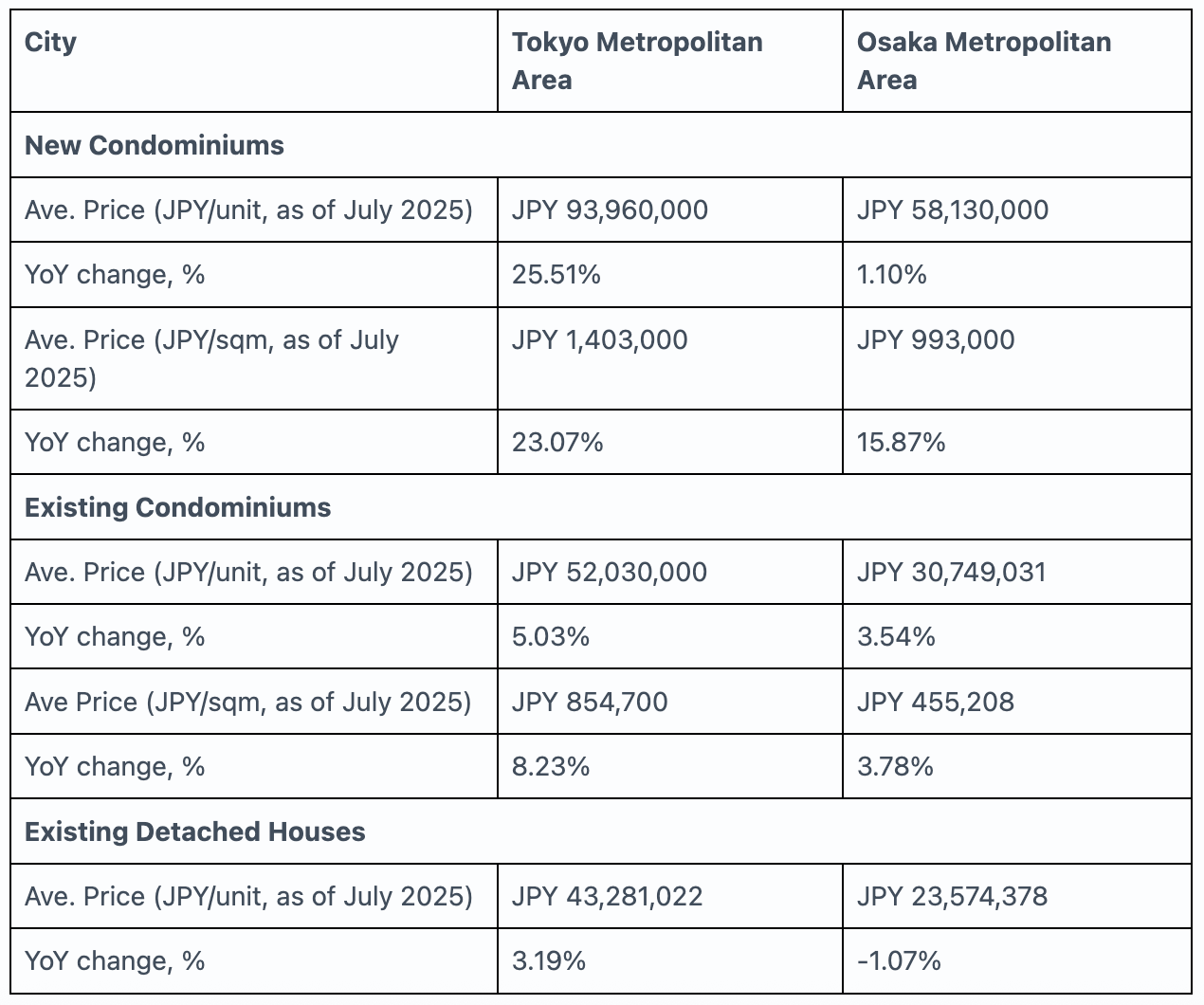
Data Source: Land Research Institute in compilation of transaction data from Real Estate Economic Institute Co., LTD and East Japan Real Estate Transaction Organization
The contract rate within the Greater Tokyo Area slightly decreased from 66.95% to 66.56%. Contract rate has been a widely used benchmark for market demand, considering the percentage of units sold within the first month of sales. Accounting for Tokyo’s 23 wards, the registered contract rate as of late 2025 is around 68.8%. It is anticipated that demand for prime residential units will remain resilient going into 2026 due to foreign demand and affluent domestic buyers.
There is a decrease in residential construction in the Greater Tokyo Area. This area usually accounts for the largest share nationwide, and this year, there has been a 6.94% decrease in the number of constructed dwellings for this area alone. Starting from January 2025, the number of dwellings in Greater Tokyo amounted to 154,746 out of 423,309 nationwide. According to the Research Institute of Construction and Economy (RICE), this downtrend is expected to persist in 2026, with a further decline of 4.4% year-on-year.
Interest rates are predicted to increase leading up to 2026. After deliberations in October, the Bank of Japan has decided to keep the interest rate steady at 0.05% despite proposals to raise it to 0.75%. However, Governor Kazuo Ueda gave a strong signal that an interest hike was possible as early as December 2025. This can affect the base interest rates of other banks on variable loans if BOJ announces an interest hike in 2026.
Factors Shaping Tokyo’s Real Estate Market
Tokyo’s real estate landscape has been shifting throughout 2025, with some consistencies such as the continuous price increase in residential properties due to growing foreign investment. These changes are driven by factors that may provide opportunities or pose challenges for investors.
1. Supply constraints and tight budgets. Domestic buyers who are within or below the middle class are turning to the secondary market due to the rising prices and limited supply within the city.
During the first half of 2025, around 24,659 condominium units sold in Greater Tokyo were pre-owned. This is a 27.17% year-on-year increase according to the Land Research Institute. With prices anticipated to continue to rise, experts believe that this trend may carry on in 2026.
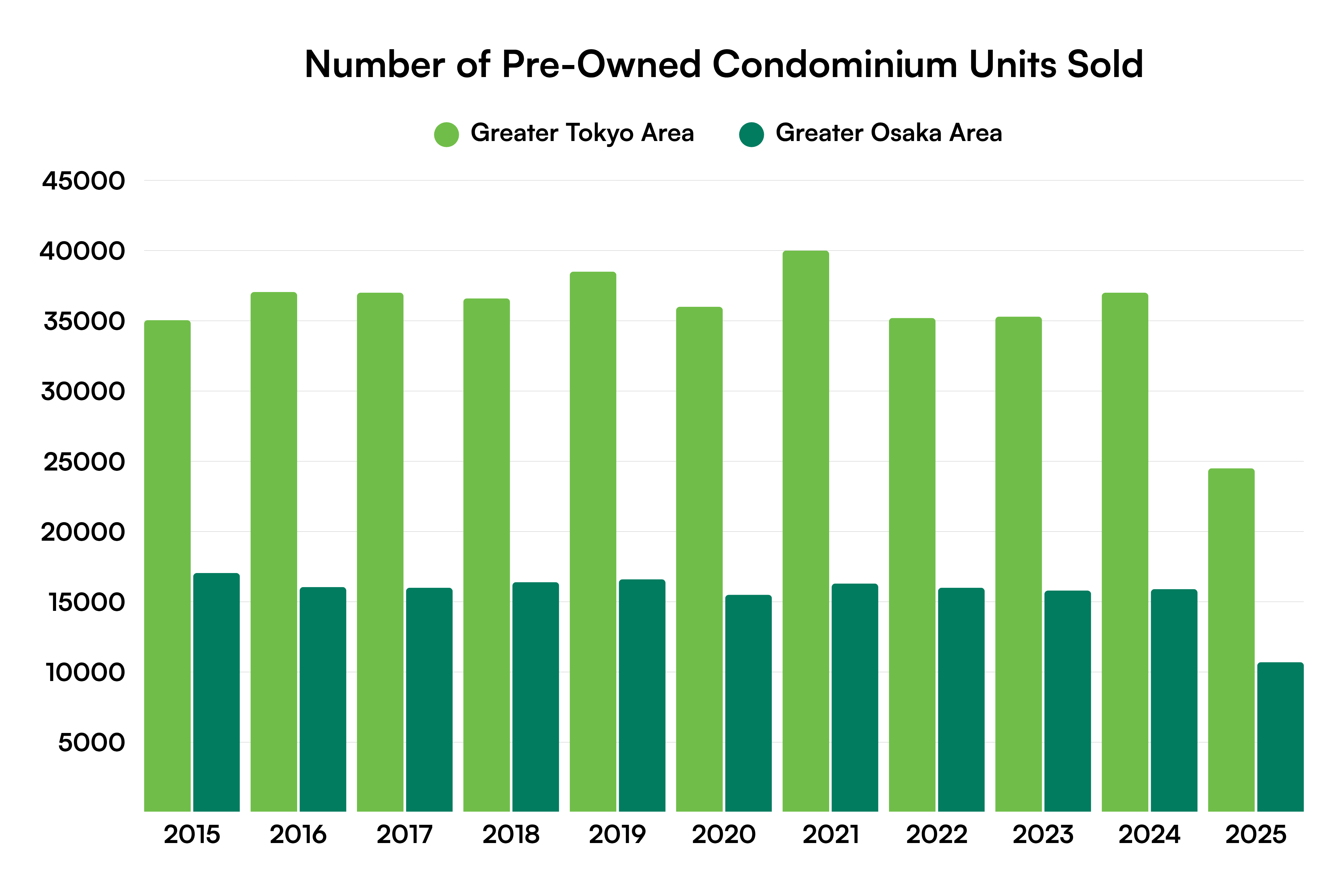
Data Source: Land Research Institute
2. Consistent demand for rental properties. Based on the apartment rent index developed by At Home and Sumitomo Mitsui Trust Research Institute, asking rents, especially for newly listed properties, are growing faster. As of Q2 2025, the recorded index for Tokyo’s 23 wards is 7.99%, 5.27% of which are for suburban Tokyo.
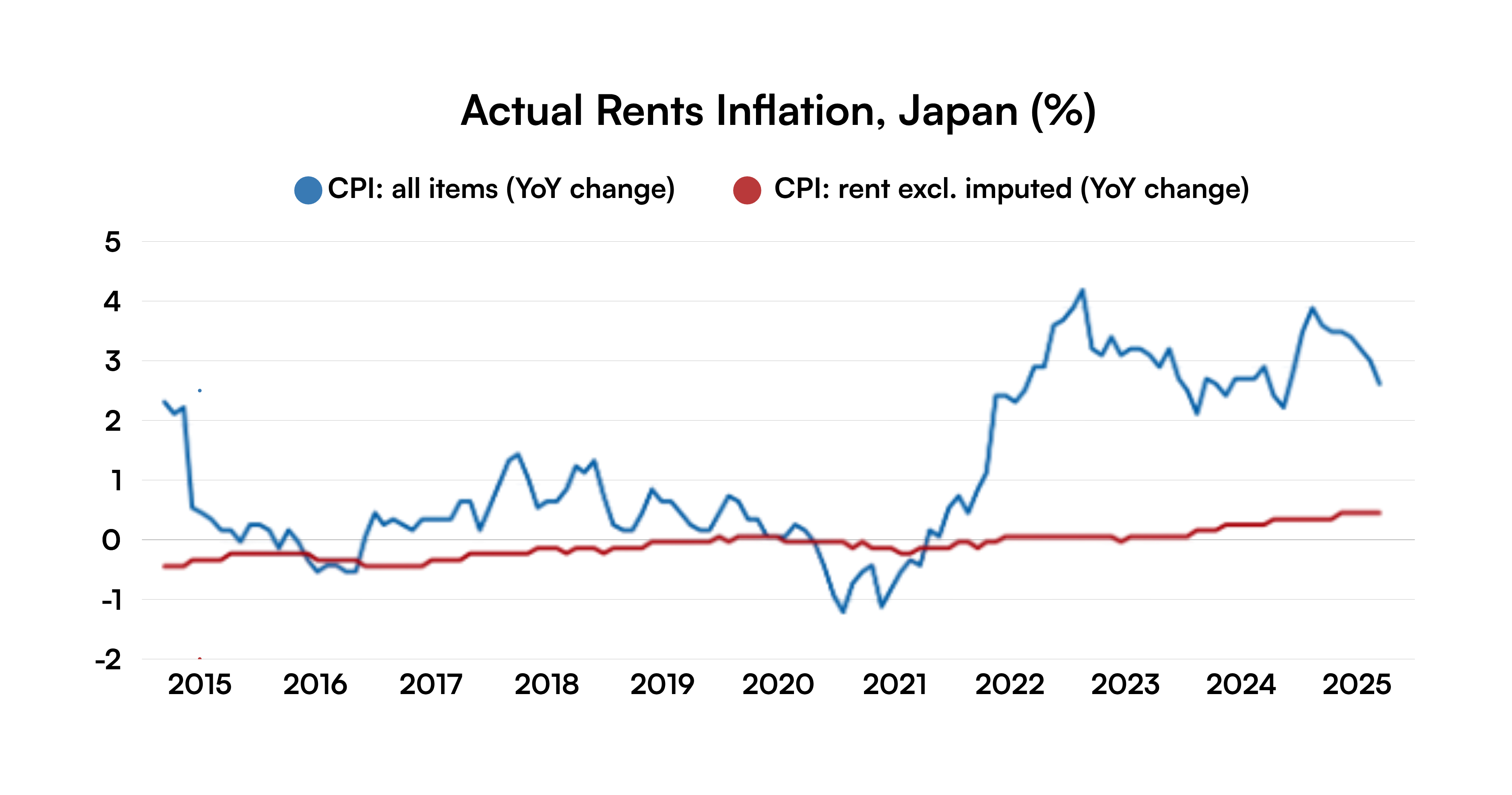
Data Source: SBJ
The average asking rent in Tokyo as of August 2025 starts at around JPY 103,952 for units sized at 30 sqm. For larger units (starting from 70 sqm and above), the average asking rent is JPY 392,192.
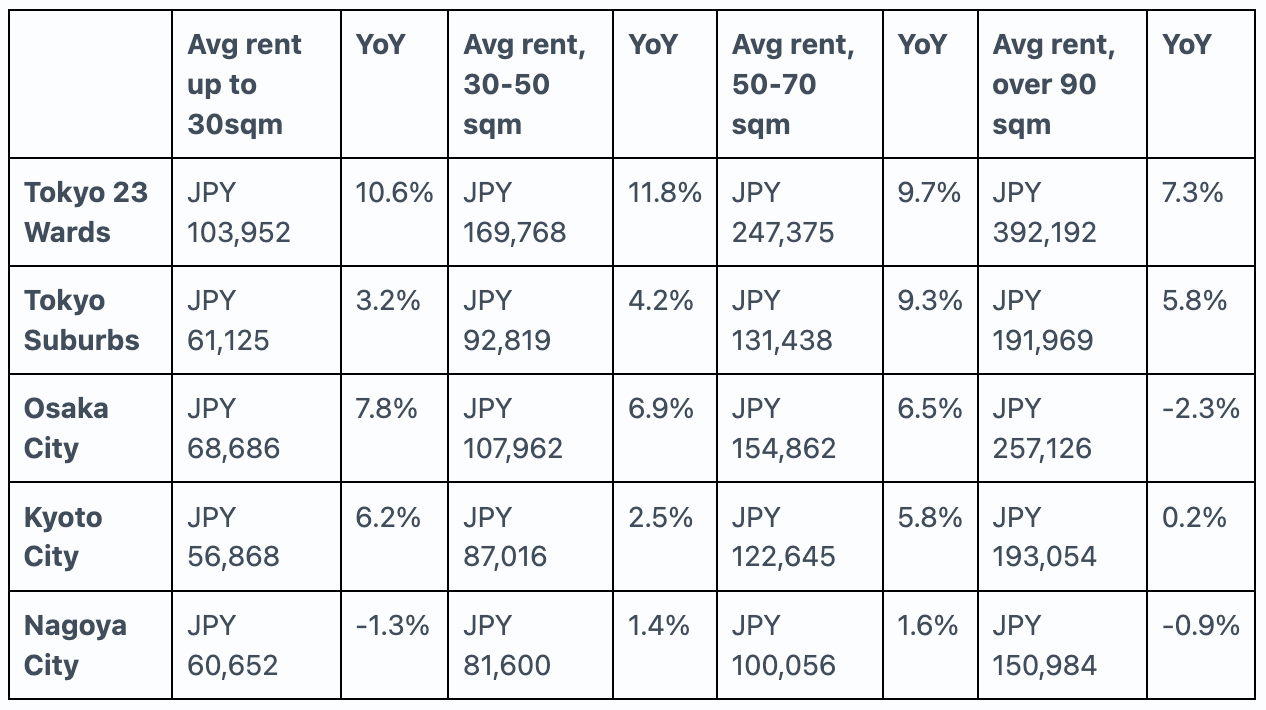
Data Source: Bambooroutes
This is one of the reasons why residential properties have the strongest performance in Tokyo. With consistent and great demand but with ongoing constrained supply, property values tend to appreciate.
5. Urban migration. The urban concentration in Japan has led to approximately 30% of the population living in Greater Tokyo Metropolitan Area. This drives consistent demand even amid price hikes, paying attention to both primary and secondary residential property markets.
Are you looking to move to Tokyo? Here are foreigner-friendly neighborhoods to consider!
🔗 The 10 Best Places to Live in Tokyo for Foreigners 🔗
Opportunities For Investors in Tokyo
Tokyo has always been a desirable destination for foreign and domestic investors. The constant demand for residential properties has made the market robust for many years. And while dynamic shifts in the market may introduce challenges for investment, new opportunities always arise.
As of 2025, foreign buyers have flocked to 3 wards within Tokyo, taking 20-40% of new apartments available in the area. These premium locations are characterized by luxury properties with high-end amenities and constant demand from the affluent, making them attractive areas to invest in.
Top 3 Most Attractive Areas for Investment
1. Minato
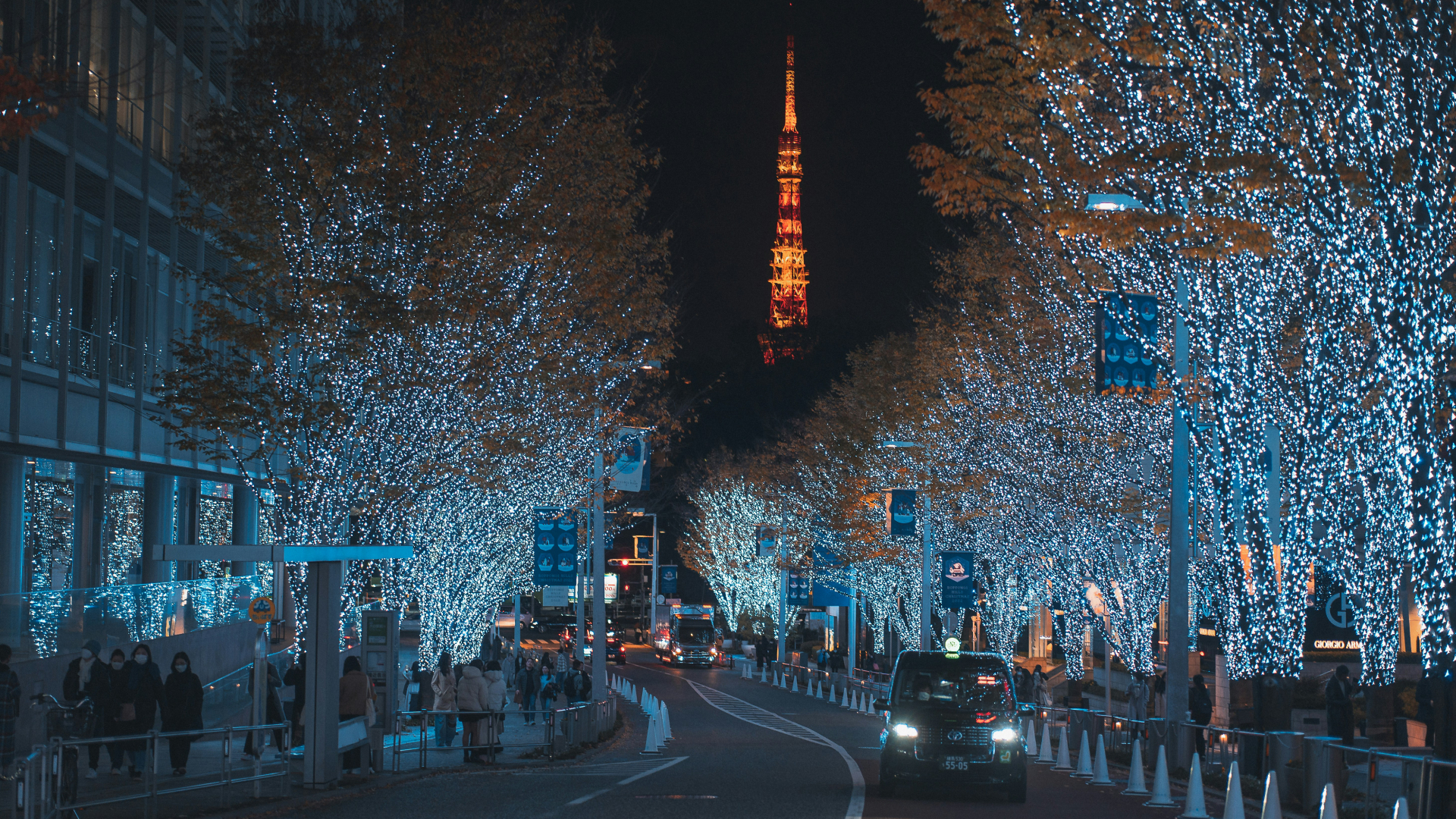
Photo credit: Raphael Lopes
The Minato Ward houses many international embassies and schools, making it highly attractive for expatriate families looking to settle down in Japan. It offers excellent transport links that make moving around the city easy and convenient. This ward is expected to command the premium prices in Tokyo, leading the luxury residential market. The average price per square meter in Minato is around JPY 2,000,000, with rental yields ranging from 3-4% for exclusive areas such as Roppongi and Azabu.
2. Shibuya
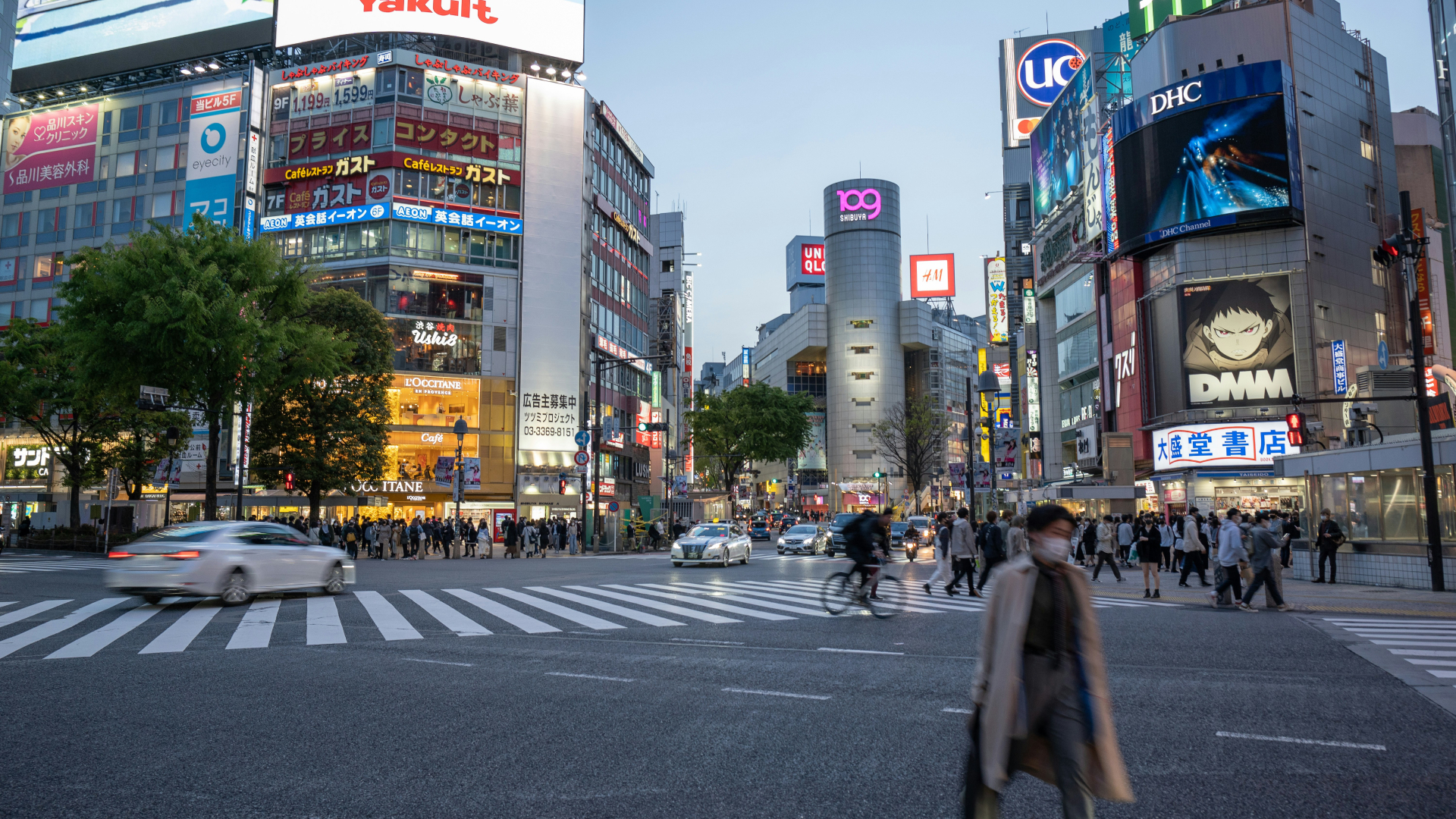
Photo credit: Yuya Uzu
Shibuya is a popular destination, especially for tourists and the youth, that boasts an abundance of shopping districts and big corporations. This location is good for commercial or hospitality investments due to its high foot traffic. It offers good transport links with ongoing development projects. The average price per square meter in Shibuya is around JPY 1,500,000 with rental yields ranging from 3 -5%.
3. Chiyoda
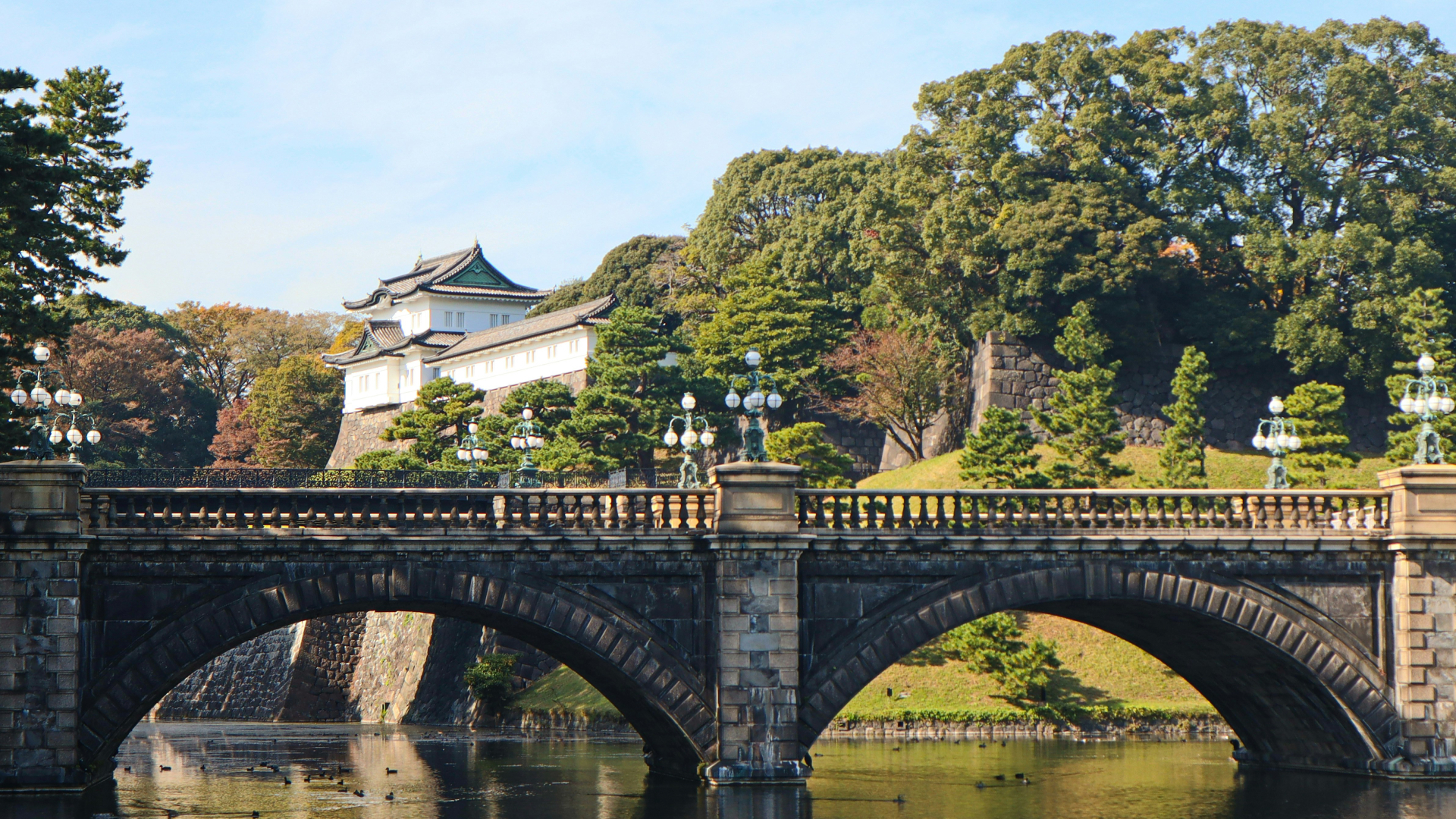
Photo credit: Julie Anne Garrido
Chiyoda houses the Imperial Palace of Japan as well as other important government offices, making it a very prestigious neighborhood accommodating politicians and affluent people. With it being a central location, it has great cultural and historical significance. The average price per square meter in Chiyoda is around JPY 2,500,000 with average rental yields of 2.8-3.5%.
Insights from PropertyAccess
In PropertyAccess.com, Tokyo remains the most preferred area for investment, driving 46% of the inquiries on the platform. The most sought-after property type is houses and apartments with 3 bedrooms, priced at over JPY 72,000,000. The main motivation for seeking Japanese real estate is for investment and rental. We anticipate this trend to continue heading into 2026.
PropertyAccess CEO and Founder, Hiroki Kazato, has shared his noteworthy insights and perspective on Tokyo’s real estate outlook for 2026.
“Tokyo’s real estate market in 2026 is expected to experience continued price growth, particularly in residential properties located in the five central wards, along the major subway lines and the Yamanote Line.
One major factor is the limited supply of new condominium units, which remains significantly lower than in other major cities in advanced economies. Rising construction and material costs are also pushing future listing prices higher, reinforcing the upward trend — including in the secondary (used) property market.
At the same time, the government is considering new regulations on foreign real estate ownership, with discussions on tightening these rules scheduled for next year’s regular Diet session. This is expected to prompt a wave of last-minute purchases by foreign individuals and corporations, a trend that will further drive up prices in Tokyo’s most desirable locations.”
The growing affordability divide will be one of the defining features of the residential market in 2026. We project that the average prices in the area will rise higher, and more demand for premium properties will be driven by international buyers, as foreign investment continues to increase in the coming years.
Our team of seasoned professionals at PropertyAccess is dedicated to helping you navigate Japan’s real estate market with confidence.
With deep local knowledge and a commitment to personalized service, our experts are here to guide you every step of the way.
Book a Free Consultation Session with Our Team!
Data Source: At Home Co. Data Date: As of August 2025.
3. Increasing Construction and Labor Costs. Rising construction costs, along with labor shortages and regulatory changes, are pushing property prices up to become significantly higher for new developments. These costs are being passed onto the buyers, making the purchase price higher. This leads developers to slow down newer projects, shifting the focus to existing properties in the market and renovation opportunities for older properties.
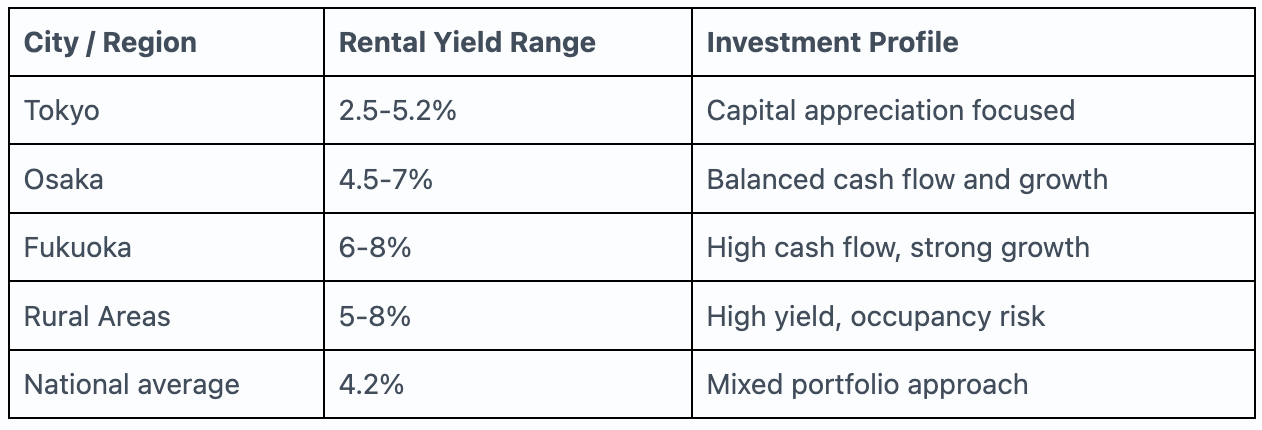
4. Preference for capital appreciation. The primary investment profile in Tokyo is capital appreciation-focused as compared to rental yield. Hence, higher rental yields are available outside of Tokyo’s market. The average rental yield range in Tokyo goes from 2.5% to 5.2%, providing an average of 3.4% in comparison to Osaka with a rental yield range of 4.5% to 7%.