- Market Outlook
Real Estate M&A as a New Method for Safely Buying Property in Japan
Last Updated: November 6, 2026
Property Access Partners with REMA Consultant Association and Loca Management to promote a new investment scheme through Real Estate M&A and to ensure fair and secure market practices.
Table of Contents
Supervised By: PropertyAccess
What is Real Estate M&A
Real estate M&A is a new way to invest in real estate in Japan. In real estate M&A deals, investors can acquire a certain real estate by purchasing some or all of the shares in the Japanese company. This means that the investors do not acquire any ownership of the real estate, but simply ownership of the company. This is different to a normal real estate deal where ownership of the real estate would be transferred.
Investing in real estate M&A means that you are investing in the whole investment company. This means that you are also taking on all other assets and liabilities. This can include un-paid loans, leases, tax liabilities, business relationships to name but a few. Everything owned by the investment company will remain with the company unless otherwise stated.
There are many ways and reasons why people would want to grow their real estate portfolio using an M&A. This can include exiting a specific investment without selling the real estate. This will mean that another investor will take ownership of the company. The company will continue to operate as normal.
From a tax point of view, real estate M&A can be beneficial. As ownership will not be transferred, there will not be any acquisition tax or registration/license taxes. There will also not be any stamp tax on the M&A agreement.
Due Diligence Is Essential
Before any real estate M&A deal (Mergers and Acquisitions), investors must conduct due diligence on:
- Real estate valuation: Assess the property's market value, rental income, location, physical condition, and potential maintenance requirements.
- Financial due diligence: Review the company's financial statements, outstanding loans, cash flow, debts, and other financial obligations.
- Legal due diligence: Examine property ownership, leases, litigation, permits, corporate records, and contractual obligations.
- Tax due diligence: Identify outstanding tax liabilities, filing issues, and potential tax exposure arising from the transaction.
- Banking and financing: Review existing loan agreements, guarantees, security interests, and any provisions requiring lender notification or approval following a change in ownership.
Maintain realistic expectations of the benefits. While there can be some tax, financing or other benefits associated with acquiring real estate assets through M&A, these should not be taken for granted. Taxes may be payable on the sale of shares, and risks and liabilities may be undertaken. The ultimate tax positions will depend upon the facts of each case.
In the case of share acquisition, the buyer inherits the history and obligations of the target company, which may include hidden liabilities that are not apparent during an initial review. Therefore, special attention needs to be paid to these latent or contingent obligations.
It is also important to carefully examine the target company’s existing contracts and financing arrangements. While some contracts can remain in place following a share acquisition because the legal entity does not change, other parties to the agreements, such as lenders, may have change-of-control provisions that require consent or notification.
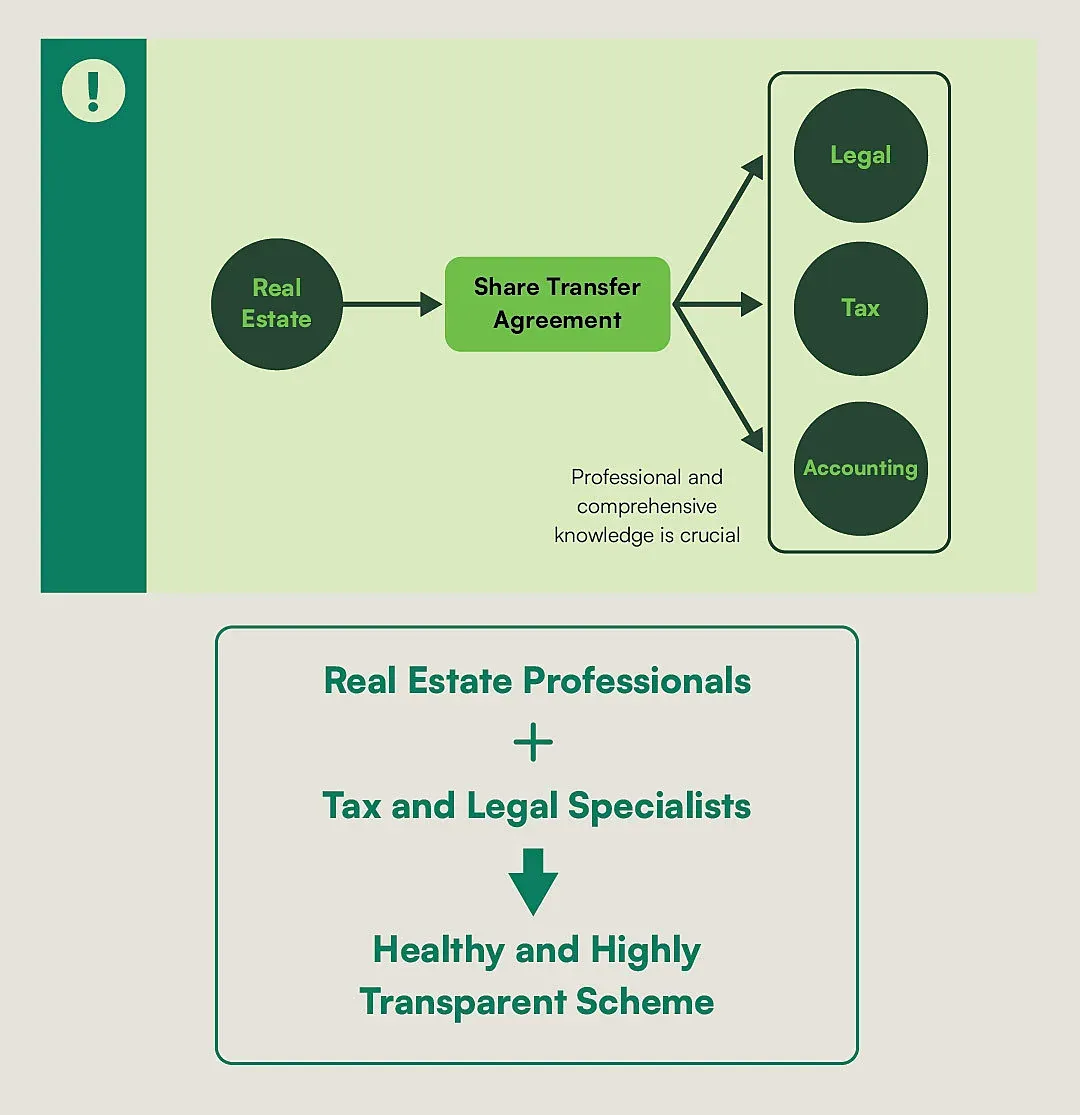
Real Estate M&A is a complex area that requires expertise in real estate valuation as well as corporate finance, taxation and Japanese legal matters. Investors would be well advised to seek the assistance of qualified professionals in assessing the transaction from both the real estate and corporate perspectives.
The Real Estate M&A Consultant Association General Incorporated Association (the “REMA Consultant Association”) is an industry association that aims to develop and nurture professionals who can support real estate M&A transactions here in Japan. The association is actively involved in training and certifying professionals as well as initiatives to promote the development of professionals who can assist in real estate transactions arising out of corporate acquisitions.
Loca Management K.K. (“Loca Management”) offers extra assistance in important fields, like taxation, legal issues, real estate valuation, etc. Loca Management’s special knowledge enables M&A consultants in the real estate field to evaluate deals more comprehensively as well as guide their clients through the M&A process.
With the assistance of the REMA Consultant Association and Loca Management, Property Access can provide foreign investors with a wider scope of investment opportunities in Japan. Historically overseas investors will look to invest in land, apartment blocks and other static real estate. However there are M&A opportunities available. Foreign investors from countries like South Korea, Singapore, Philippines etc. can invest in M&A deals by purchasing shares in a Japanese company which owns real estate. Property Access can provide foreign investors with investment opportunities in Japan.
Investing in Corporate Real Estate
Investors can purchase a company which owns income generating real estate. Depending on the company you are looking to purchase, you can purchase a company with an existing real estate portfolio, tenancy and business. Consider the financial performance and real estate value of the target company.
Corporate Real Estate Investment
As the target company is being purchased as a stock purchase, the company will retain the same legal entity meaning contracts such as leases, business contracts and some banking relationships can stay in place. However this may not apply if the company has an existing tenancy or a relationship with Japanese lenders. Loans, banking relationships and other contracts may have clauses in place relating to a change of control and/or notification and/or consent from lenders. These should be confirmed prior to entering into any deals.
Potential Tax Benefits
A share purchase may avoid some taxes relating to the transfer of real estate properties such as registration and licensing tax, real property acquisition tax. This is because the real estate will be transferred by purchasing the business or shares of the target company. However these are relative and limited tax benefits and therefore investors should consider the tax implications of the deal. This can include tax payable by the target company's shareholder on disposal of the shares, any previous tax liabilities of the target company and any potential future tax liabilities. Overseas investors should not make decisions based on the tax saving from acquisition taxes but should consider the commercial and tax implications.
Professional Assistance
If investors are unfamiliar with Japanese corporate law, tax and regulations, real estate M&A across borders can be difficult. Property Access can provide overseas investors with professional advice on how to find the right target company, conduct due diligence and structure the deal. This can include financial due diligence, valuations, liability due diligence and whether a share purchase is suitable.
Benefits for Foreign Investors
With the assistance of the REMA Consultant Association and Loca Management, Property Access can provide foreign investors with a wider scope of investment opportunities in Japan. Historically overseas investors will look to invest in land, apartment blocks and other static real estate. However there are M&A opportunities available. Foreign investors from countries like South Korea, Singapore, Philippines etc. can invest in M&A deals by purchasing shares in a Japanese company which owns real estate. Property Access can provide foreign investors with investment opportunities in Japan.
Investing in Corporate Real Estate
Investors can purchase a company which owns income generating real estate. Depending on the company you are looking to purchase, you can purchase a company with an existing real estate portfolio, tenancy and business. Consider the financial performance and real estate value of the target company.
Corporate Real Estate Investment
As the target company is being purchased as a stock purchase, the company will retain the same legal entity meaning contracts such as leases, business contracts and some banking relationships can stay in place. However this may not apply if the company has an existing tenancy or a relationship with Japanese lenders. Loans, banking relationships and other contracts may have clauses in place relating to a change of control and/or notification and/or consent from lenders. These should be confirmed prior to entering into any deals.
Potential Tax Benefits
A share purchase may avoid some taxes relating to the transfer of real estate properties such as registration and licensing tax, real property acquisition tax. This is because the real estate will be transferred by purchasing the business or shares of the target company. However these are relative and limited tax benefits and therefore investors should consider the tax implications of the deal. This can include tax payable by the target company's shareholder on disposal of the shares, any previous tax liabilities of the target company and any potential future tax liabilities. Overseas investors should not make decisions based on the tax saving from acquisition taxes but should consider the commercial and tax implications.
Professional Assistance
If investors are unfamiliar with Japanese corporate law, tax and regulations, real estate M&A across borders can be difficult. Property Access can provide overseas investors with professional advice on how to find the right target company, conduct due diligence and structure the deal. This can include financial due diligence, valuations, liability due diligence and whether a share purchase is suitable.
Investing in Real Estate M&A
Investing in real estate M&A is a way to invest in the Japanese real estate market. It can be a good option for investors who want to invest in companies who own real estate, or those who want to make larger investments. However buying a building outright may be a simpler solution for someone wanting to purchase a single house/rental unit and do not wish to take on any liabilities of an existing company.
Investors may also wish to purchase shares in a company if they want to retain key assets, a strong business and/or relationships. Ultimately it depends on your goals, how healthy the target company is, how valuable the real estate assets are and the legal and tax implications of the deal.
As the Japanese real estate market is becoming internationally recognised, real estate M&A can provide foreign investors with new investment opportunities. With the correct professional assistance and thorough due diligence, you will be able to make sensible decisions on investing in Japanese real estate companies.
Our team of seasoned professionals at PropertyAccess is dedicated to helping you navigate Japan’s real estate market with confidence.
With deep local knowledge and a commitment to personalized service, our experts are here to guide you every step of the way.
Book a Free Consultation Session with Our Team!