- 資金調達
The Hidden Costs of Buying Property in Japan: A Complete Breakdown of Fees and Taxes
Last Updated: 10月 23, 2026
Buying property in Japan involves more than the purchase price. Learn about hidden costs, real estate fees, taxes, and other expenses for foreign buyers.
目次
-
Costs You May Encounter Before Buying
-
The Costs You Pay When Buying Property
-
Registration Costs
-
Real Estate Acquisition Tax
-
Annual Property Taxes: What You Pay After Buying
-
Condominium Costs Beyond the Purchase Price
-
Maintenance and Insurance: The Costs of Keeping Your Property
-
Mortgage Costs: More Than Just Interest
-
The Cost of Moving Money to Japan
-
Additional Costs When Renting Out Your Property
-
Taxes on Rental Income
-
Extra Considerations for Non-Resident Property Owners
-
Costs When Selling Your Property
-
How Much Should You Budget Beyond the Property Price?
-
Complete Checklist of Costs
-
Summary
Supervised By: 風戸 裕樹
“Japanese houses are very cheap. But is it really?”
Buying property in Japan can be an attractive opportunity for both homebuyers and investors.
But the purchase price is only part of the total cost.
From brokerage fees and registration taxes to property taxes, condominium fees, insurance, and currency exchange costs, there are several expenses that can significantly increase the amount you need to factor in.
For foreign buyers, particularly those living outside Japan, there are also additional costs and administrative considerations that may not be immediately obvious.
The good news is that Japan generally does not charge foreign nationals an additional property purchase tax simply because they are foreign.
However, the total cost of buying and owning property depends on factors such as your tax residency, the type of property, whether you plan to live in it or rent it out, and whether you use a mortgage or not.
This guide breaks down the main costs you should consider, from before you buy through ownership and eventual sale, so you can estimate the true cost of buying property in Japan.
1. Costs You May Encounter Before Buying
Some expenses arise before you even sign a purchase agreement.
Property Inspection and Due Diligence
Depending on the property, you may want to investigate its physical condition, legal status, and investment potential.
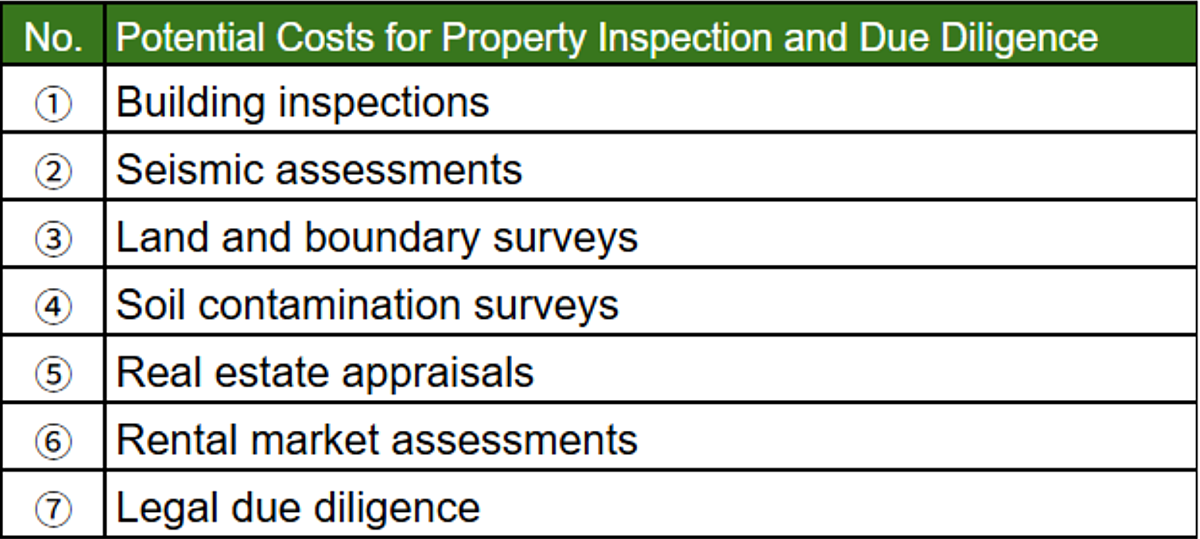
These services are not required for every purchase, but they can be particularly valuable for overseas buyers who cannot easily inspect a property themselves.
Legal and Tax Advice
Professional advice can help you understand the financial and legal implications of your purchase.
You may choose to consult a lawyer or tax accountant about:
- Individual vs. corporate ownership
- Rental income taxation (if planning to rent the property out)
- Tax implications of a future sale
- Inheritance and gift tax
- Non-resident taxation
- The terms of the purchase agreement
Translation and Interpretation
There are local agents who speak English or your language, but all the legal documents will be in Japanese.
If you are not comfortable conducting the transaction in Japanese, you may also need to budget for:
- Contract translation
- Translation of the Important Matters Explanation
- Translation of registration documents
- Translation of certificates
- Interpretation during meetings
These are not mandatory costs for every foreign buyer, but they may be necessary depending on your circumstances.
Travel Costs
Overseas buyers who would like to visit Japan before purchasing should also consider travel costs.
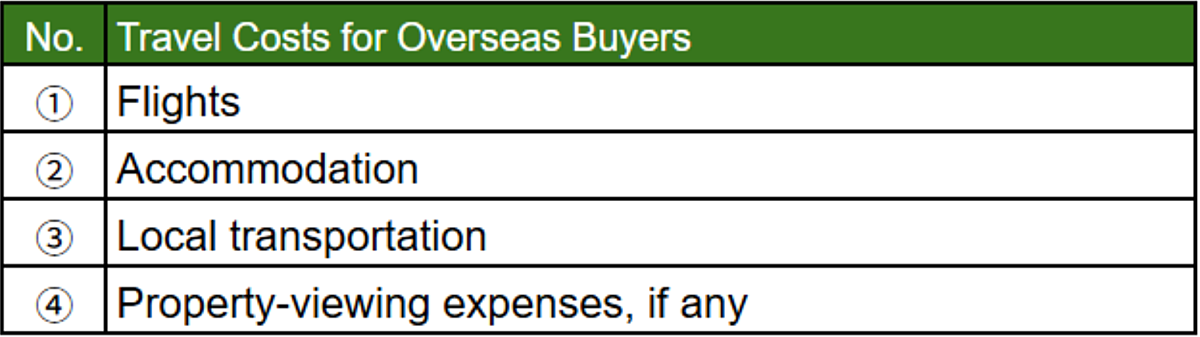
Virtual viewings and remote procedures may reduce some of these costs.
However, visiting the property will definitely be insightful, as you’ll get a better sense of the neighborhood and the facilities surrounding the property.
2. The Costs You Pay When Buying Property
Once you have chosen a property, several costs can arise during the contract and settlement process.
Deposit: Usually Part of the Purchase Price
A deposit (tetsukekin) is generally paid when the purchase agreement is signed.
However, importantly, the deposit is normally part of the purchase price, not an additional cost.
For example:
Property price: ¥100 million
Deposit: ¥10 million
Remaining balance: ¥90 million
The consequences of cancelling the contract depend on its terms.
If the buyer is the one cancelling the contract, usually the buyer may forfeit the deposit.
Real Estate Brokerage Fee
If you purchase through a real estate brokerage company, you will generally pay a brokerage fee.
For properties priced above ¥4 million, the maximum fee is generally calculated as:
Property price × 3% + ¥60,000 + consumption tax
For a ¥100 million property, this would amount to:
¥3.06 million + consumption tax
This is the maximum fee permitted by law, not necessarily the amount you will actually pay.
The actual fee should be confirmed with your real estate agent.
Stamp Tax
Stamp tax may apply to paper purchase and sale agreements.
The amount depends on the contract price and the type of document.
For real estate sale and purchase agreements, currently certain tax reductions may apply (applicable to contracts prepared between April 1, 2014 and March 31, 2027).
(Source: Stamp Tax Relief Measures for Real Estate Sales Contracts, National Tax Agency)
Electronic contracts may be treated differently from paper contracts.
Usually stamp tax is not applicable to electronic contracts, so buyers should confirm the applicable treatment before signing.
3. Registration Costs
Once you purchase a property, the ownership transfer must be registered.
These expenses are often overlooked by buyers.
Registration and License Tax
Registration and license tax is a national tax imposed when registering ownership and other rights in real estate.
The amount depends on the taxable value of the property (land/building), the type of registration, and the applicable tax rate.
For example, if you are purchasing a second-hand house and the land underneath it, the standard registration tax rate for the transfer of ownership is 2.0% for both the land and the building, before any applicable reductions.
Reduced rates may apply to qualifying residential properties, subject to specific requirements.
(Source: Registration and License Tax Rate Table, National Tax Agency)
Judicial Scrivener's Fee
A judicial scrivener (shiho shoshi) typically handles the registration process.
Their professional fee is separate from the registration and license tax.
Foreign buyers may incur additional professional and administrative costs if special documentation (document certification, notarization, authentication) is required, particularly when they live overseas.
4. Real Estate Acquisition Tax
Real estate acquisition tax is a prefectural tax imposed when you acquire real estate in Japan.
Foreign buyers are generally not subject to a higher real estate acquisition tax simply because they are foreign nationals.
One reason buyers may overlook this tax is that it is generally not paid at the time of settlement.
Instead, buyers typically receive a tax notice after the acquisition.
The amount depends on the taxable value of the property and the applicable tax rate.
Factors that can affect the amount include:
- Land or building
- Residential or non-residential use
- New or used property
- Floor area
- Applicable tax reductions
Qualifying residential land and properties may benefit from tax reductions.
For more information about Real Estate Acquisition Tax, also read:
Real Estate Acquisition Tax Japan: What Buyers Need to Know
5. Annual Property Taxes: What You Pay After Buying
The costs do not end once you receive the keys.
Property owners generally need to budget for annual property taxes.
Fixed Asset Tax
Fixed asset tax is an annual municipal tax imposed on owners of land and buildings.
The standard tax rate is generally 1.4% of the taxable value, although the actual amount can vary depending on the municipality and applicable reductions.
Residential land may qualify for special tax-base reductions.
If you would like to know more about the tax-base reductions, please refer to the website of the municipality where the property is located.
For Tokyo, visit this website of the Tokyo Bureau of Taxation.
City Planning Tax
City planning tax may also apply to properties located in designated urban planning areas.
The maximum standard rate is generally 0.3%, although the actual rate varies by municipality.
When estimating your annual property tax burden, consider both:
Fixed asset tax + city planning tax
These taxes are assessed annually and paid in four installments or as a lump sum, whichever is more convenient for the taxpayer.
6. Condominium Costs Beyond the Purchase Price
If you buy a condominium in Japan, property taxes are only part of your ongoing costs.
Management Fees
Management fees cover the maintenance and management of common areas and facilities.
They are generally paid monthly.
The amount varies significantly depending on the type and location of the condominium.
Repair Reserve Contributions
Condominium owners generally contribute to a repair reserve fund for future major repairs and long-term maintenance.
One important point for buyers is that the monthly contribution may increase in the future.
Some buildings may also require special one-time assessments for major repairs.
Major repairs are usually carried out every 12 to 15 years.
Parking and Other Fees
Additional fees may apply for facilities such as:
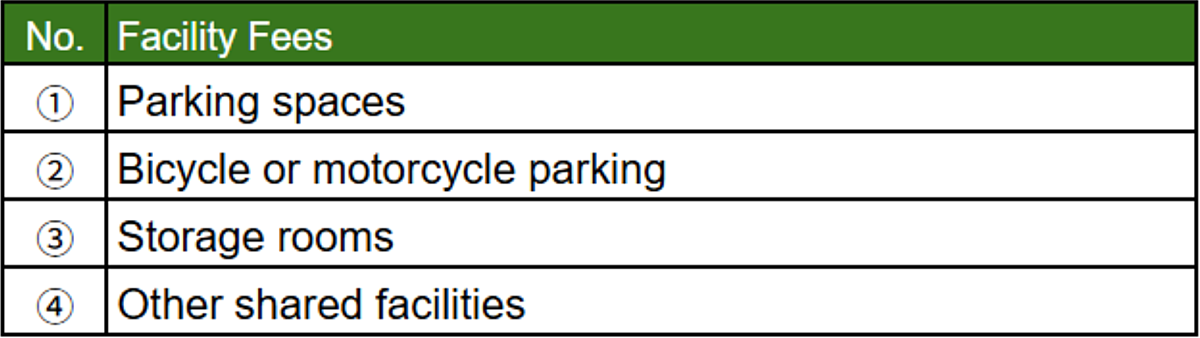
There are various types of parking spaces, including covered, uncovered, surface, and multi-story parking.
When comparing condominiums, look beyond the purchase price and compare the total monthly ownership costs.
7. Maintenance and Insurance: The Costs of Keeping Your Property
Detached House Maintenance
Owners of detached houses are responsible for their own maintenance and repairs.
Potential costs include:
- Roof repairs
- Exterior wall maintenance
- Waterproofing
- Plumbing
- Termite control
- Garden and exterior maintenance
These expenses may not occur every year, but they should be included in your long-term budget.
If your property is located in an area that experiences significant snowfall in winter, keep in mind that you are responsible for the costs of snow removal from your premises.
Fire Insurance
Fire insurance is an important consideration for property owners in Japan.
It is not mandatory to obtain a fire insurance policy, but it is usually required by lenders when purchasing a property with a mortgage.
Even cash buyers may choose to obtain coverage.
Earthquake Insurance
In Japan, earthquake insurance can be purchased only as an add-on to fire insurance.
Given Japan’s high earthquake risk, foreign investors should consider whether earthquake coverage is appropriate for their property.
Earthquake insurance can cover the building, household contents, or both, with the building and contents insured separately.
You can choose the coverage that best suits your circumstances and risk profile.
8. Mortgage Costs: More Than Just Interest
If you finance your property purchase, the interest rate is not the only cost to consider.
Depending on the loan, you may also pay:
- Loan administrative fees
- Guarantee fees
- Stamp tax on paper loan agreements
- Mortgage registration costs
- Judicial scrivener's fees
- Group credit life insurance
- Mortgage interest
Foreign nationals may be able to obtain a mortgage in Japan depending on their circumstances. However, eligibility and available products can vary significantly based on factors such as residence status and whether the borrower lives in Japan.
For more information about obtaining a property loan in Japan as a foreigner, also read:
How to Get a Property Loan in Japan as a Foreigner: Requirements, Banks & Tips
When comparing mortgages, consider the total cost of the loan, not just the advertised interest rate.
9. The Cost of Moving Money to Japan
For overseas buyers, one of the most easily overlooked costs is transferring money to Japan.
International Transfer Fees
International transfers may involve:
- Sending bank fees
- Correspondent or intermediary bank fees
- Receiving bank fees
Foreign Exchange Costs
If your funds are held in US dollars, Singapore dollars, Korean won, or another currency, you will generally need to convert them into Japanese yen.
The exchange rate offered by your bank or transfer service may include a spread or other costs.
For a large real estate transaction, even a small difference in the exchange rate can have a significant financial impact.
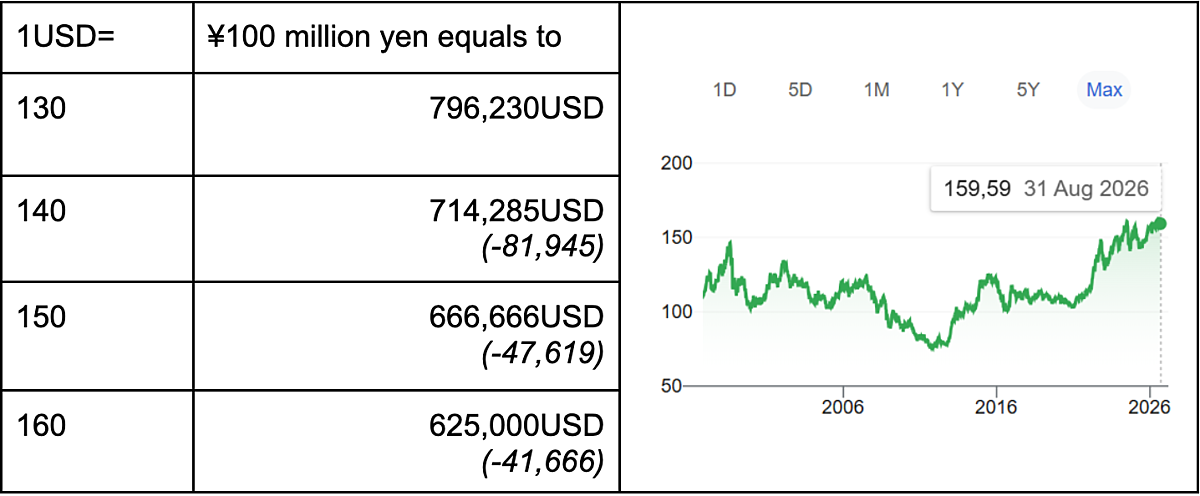
Currency Fluctuation Risk
Currency movements are not technically a fee or tax, but they can affect your actual investment return.
For example, a property purchased for ¥100 million may produce a very different return when measured in your home currency if exchange rates change significantly before you sell.
10. Additional Costs When Renting Out Your Property
If you purchase property as an investment, your costs do not stop after the purchase.
Property Management
Overseas owners often use a Japanese property management company to handle:
- Rent collection
- Tenant communication
- Complaints
- Repairs
- Move-ins and move-outs
A management fee is generally charged for these services.
Tenant Recruitment
When a property becomes vacant, you may incur:
- Advertising costs
- Rental brokerage commissions
- Other tenant recruitment expenses
Usually, advertising fees and brokerage commissions are success-based fees and are incurred once a lease agreement is finalized.
Repairs and Restoration
When a tenant leaves, you may need to pay for:
- Cleaning
- Wallpaper replacement
- Flooring repairs
- Equipment replacement
- Other restoration work
If there is a special provision in the lease contract stating that the tenant is responsible for the move-out cleaning fee, that amount may be deducted from the security deposit.
Vacancy
Even when your property has no tenant, many costs continue, including:
- Fixed asset tax
- City planning tax
- Management fees
- Repair reserve contributions (in case of a condominium unit)
- Mortgage payments
- Insurance premiums
This is why vacancy assumptions should be included when calculating expected rental returns.
11. Taxes on Rental Income
Rental income from Japanese real estate is subject to Japanese taxation.
Income Tax
For individuals, real estate income is generally calculated by deducting allowable expenses from rental income.
Gross rental income − allowable expenses = Real estate income
Depending on the circumstances, allowable expenses may include management costs, repairs, insurance, and depreciation.
Special Reconstruction Income Tax
Individuals subject to Japanese income tax may also be subject to the Special Reconstruction Income Tax.
The Special Income Tax for Reconstruction is a temporary tax levied in addition to the regular income tax through 2037 to secure funding for reconstruction following the Great East Japan Earthquake.
Resident Tax
Resident tax treatment depends on factors including whether the property owner is a tax resident of Japan.
Foreign property owners should therefore determine their tax residency status when assessing their overall tax obligations.
12. Extra Considerations for Non-Resident Property Owners
If you live outside Japan, additional tax and administrative requirements may apply.
Withholding Tax on Rental Income
When rental income from Japanese real estate is paid to a non-resident, the payer is generally required to withhold 20.42% at source.
There are exceptions, including certain cases where an individual rents the property for their own residence or that of a family member.
The 20.42% withholding amount is not necessarily the owner's final tax liability. Depending on the circumstances, filing a Japanese tax return may result in an adjustment or refund.
Tax Accountant Fees
Overseas owners may choose to hire a Japanese tax accountant to handle:
- Bookkeeping
- Expense calculations
- Depreciation
- Tax return preparation
- Non-resident tax filing
Tax Representative
Non-residents with Japanese tax obligations may need to appoint a tax representative in Japan.
Depending on the provider, fees may include annual management, tax filing, and representation fees.
(Source: Notification of Tax Representative, National Tax Agency)
13. Costs When Selling Your Property
When calculating the total cost of buying Japanese real estate, you should also consider exit costs.
Brokerage Commission
If you use a real estate agent to sell the property, you will generally pay a brokerage commission.
Stamp Tax
Stamp tax may apply to the sale agreement depending on the contract.
Capital Gains Tax
If you sell the property for a gain, the gain may be subject to taxation.
The basic calculation is:
Sale price − acquisition cost − selling expenses = Capital gain
The acquisition cost may include the original purchase price and certain acquisition-related expenses.
The applicable tax treatment depends on factors including the length of ownership and your tax residency status.
Withholding Tax for Non-Resident Sellers
If you are a non-resident of Japan when you sell real property located in Japan, special withholding rules generally apply.
When a buyer purchases land, buildings or other qualifying real property located in Japan from a non-resident or foreign corporation, the buyer is generally required to withhold income tax and reconstruction special income tax at a rate of 10.21% from the consideration paid and remit the withheld amount to the Japanese tax authorities.
An exception applies where an individual purchases the property for their own residence or that of a relative and the consideration paid is ¥100 million or less.
The amount withheld is not necessarily the seller’s final Japanese tax liability.
The seller is generally required to file a Japanese tax return in respect of the sale, through which the final tax liability is calculated and any excess withholding tax may generally be refunded.
14. How Much Should You Budget Beyond the Property Price?
Unfortunately, there is no single percentage that applies to every foreign buyer.
The total additional cost depends on the following factors:
- Property price
- New vs. used property
- Land/house with land vs. condominium
- Personal use vs. investment
- Mortgage vs. cash purchase
- Japanese resident vs. non-resident
- Individual vs. corporate ownership
- Whether professional services are required
Buyers should avoid relying on a simple rule such as “add X% to the purchase price and calculate the costs specific to your property and situation.
15. Complete Checklist of Costs
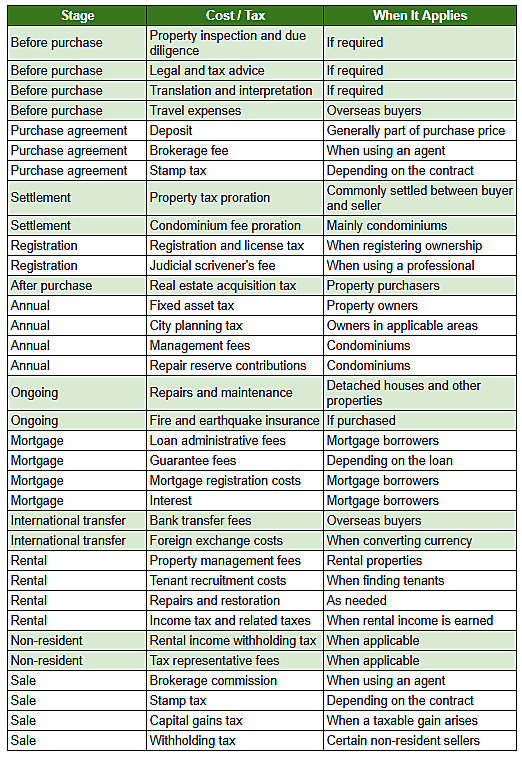
Summary
The advertised price of a Japanese property does not tell you the full cost of owning it.
Before buying, make sure you consider transaction costs, taxes, financing, annual ownership expenses, property management, currency exchange, and potential selling costs.
For foreign buyers living overseas, non-resident tax rules and administrative requirements can add another layer of complexity.
Being a foreign national does not automatically mean paying higher property taxes in Japan.
However, your tax residency, the type and use of the property, and the structure of the transaction are generally more important.
By looking at the entire cost, from purchase through ownership and eventual sale, you can make a more realistic assessment of the investment and avoid unpleasant financial surprises later.
It is also advisable to seek professional advice to gain a clear understanding of the total costs involved in your purchase.
Our team of seasoned professionals at PropertyAccess is dedicated to helping you navigate Japan’s real estate market with confidence.
With deep local knowledge and a commitment to personalized service, our experts are here to guide you every step of the way.
Book a Free Consultation Session with Our Team!