- Area Guides
Typical Japanese House Layout: Room Sizes, Floor Plans & Functions Explained
Last Updated: October 23, 2026
Learn how typical Japanese houses have evolved over time, from traditional features like tatami rooms, oshiire closets, and tokonoma to modern layouts adapted to contemporary living.
Table of Contents

Supervised By: Hiroki Kazato
Are you looking for a home in Japan or looking to invest in real estate?
Would you like to know what a typical Japanese home layout looks like?
This guide explains the evolution of the Japanese house floor plan, from traditional homes to modern family residences. We will look at traditional homes from the Showa era (around 1930 - 1990, a period of rapid economic growth in Japan) as well as homes built afterward.
In this article, we are also showing actual photos of our staff's parents' house, so you can see what the rooms look like.
- Before 1990
- 1990 or later
1. Before 1990
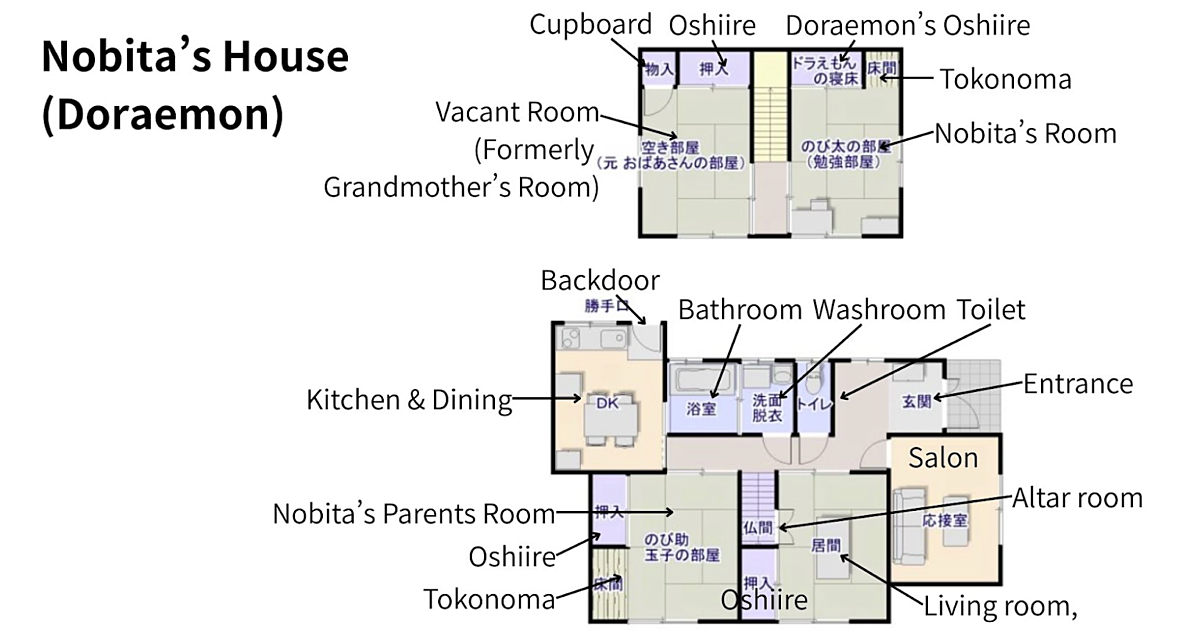
(Source: HOMES)
Have you ever watched the worldwide famous Japanese cartoon “Doraemon”? The layout of his friend Nobita’ house available on the internet shows a typical Japanese house before 1990.
In general, homes built before 1990 represent the traditional Japanese house layout that many people still associate with Japan today.
A typical Japanese house before 1990 comes with a main entrance, a corridor that leads to the kitchen and dining, and a toilet and a bathroom with a small washroom that has a washbasin and a space to take off your clothes before going into the bathtub.
There’s one bedroom downstairs and a few more upstairs.
Not all the houses have a garage space.
As car ownership became widespread between the latter half of 1960 and 1970s and not all the houses are adapted to the lifestyle of having a car.
These are the features that define characteristics of a Japanese traditional house layout:
Entrance
The entrance is where you take off your shoes. A shoe cupboard is placed on the side of the wall so you can keep the entrance neat.
Bedrooms with tatami mats
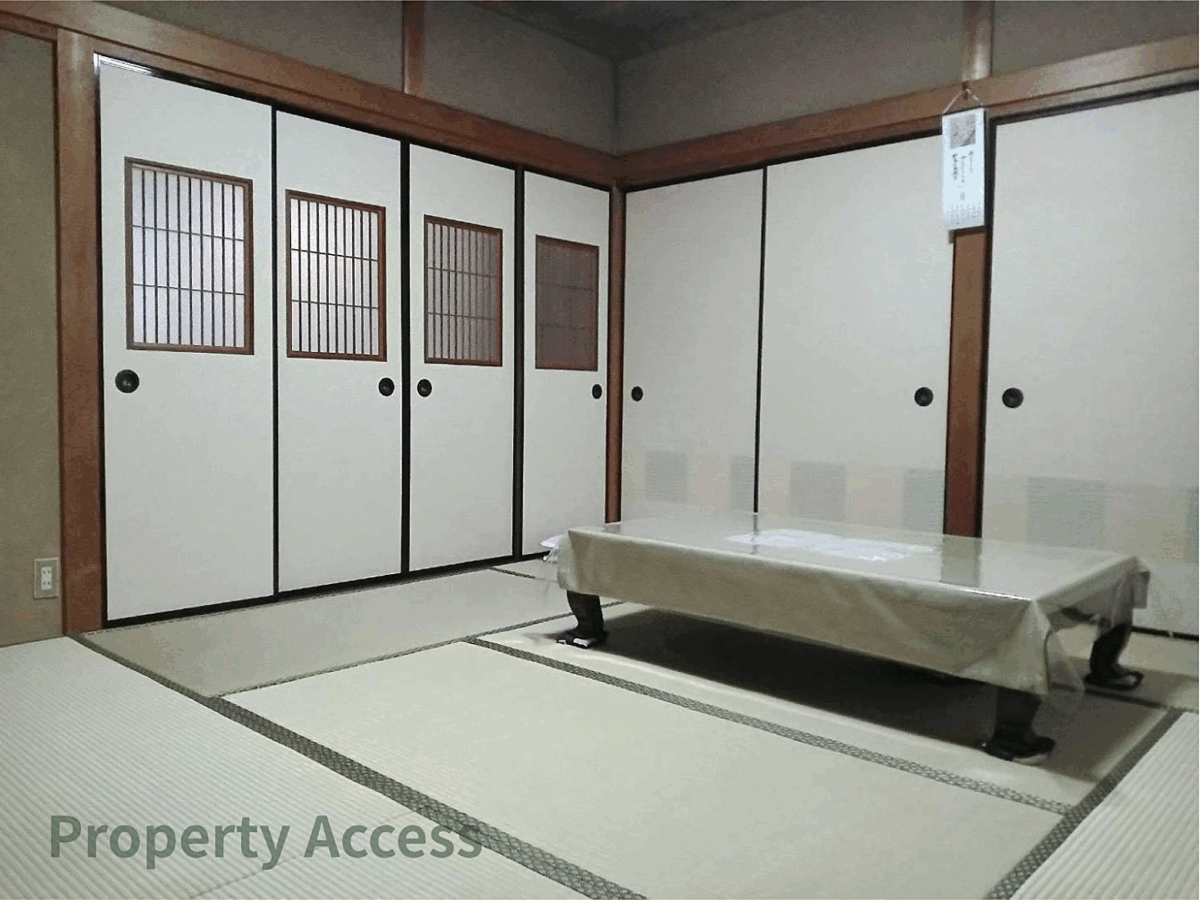
Bedroom with tatami mats (Image: Property Access staff'
Most of the rooms have tatami mats. The tatami mats offer excellent humidity control and insulation suited to Japan's hot and humid climate, a relaxing effect from the scent of rush grass, sound and shock absorption.
Tatami mats are two-sided. Tatami grass or igusa is a natural material. Tatami mats’ rush green color fades over time, but once you start noticing colour fading or damage, you can turn over the tatami mat and use the other side (3-5 years after the purchase).
You could also ask the tatami vendor to replace only the surface layer of the mat, using the same mat base (about 5 years after you turn over the tatami mat).
Oshiire
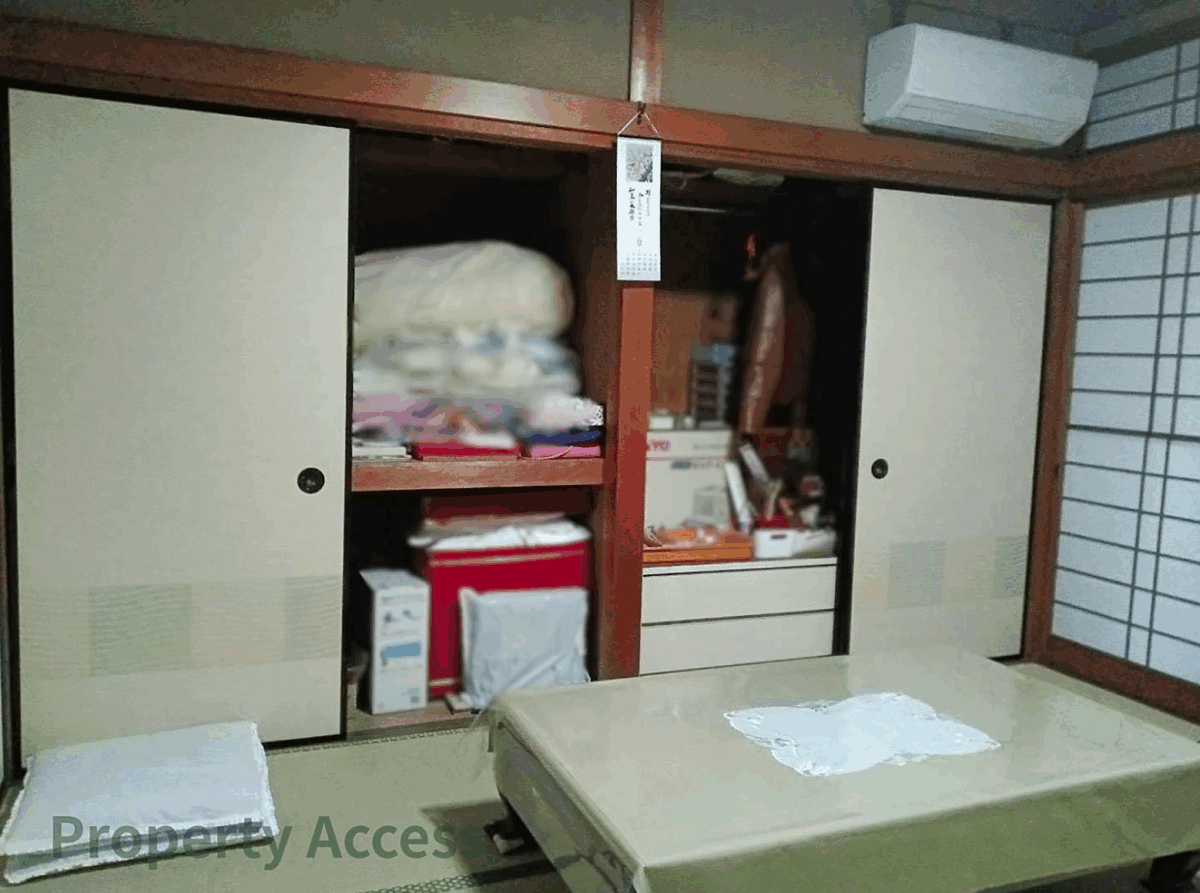
Oshiire (Image: Property Access staff)
Do you remember where Doraemon sleeps? Oshiire is a closet meant to keep futon during the daytime. It is big enough to keep futon sets and two-tied.Unlike Western beds, Japanese usually don’t leave their futon beds laid for the whole time. They keep it during the daytime to make use of the space of the room and spread it before they sleep.
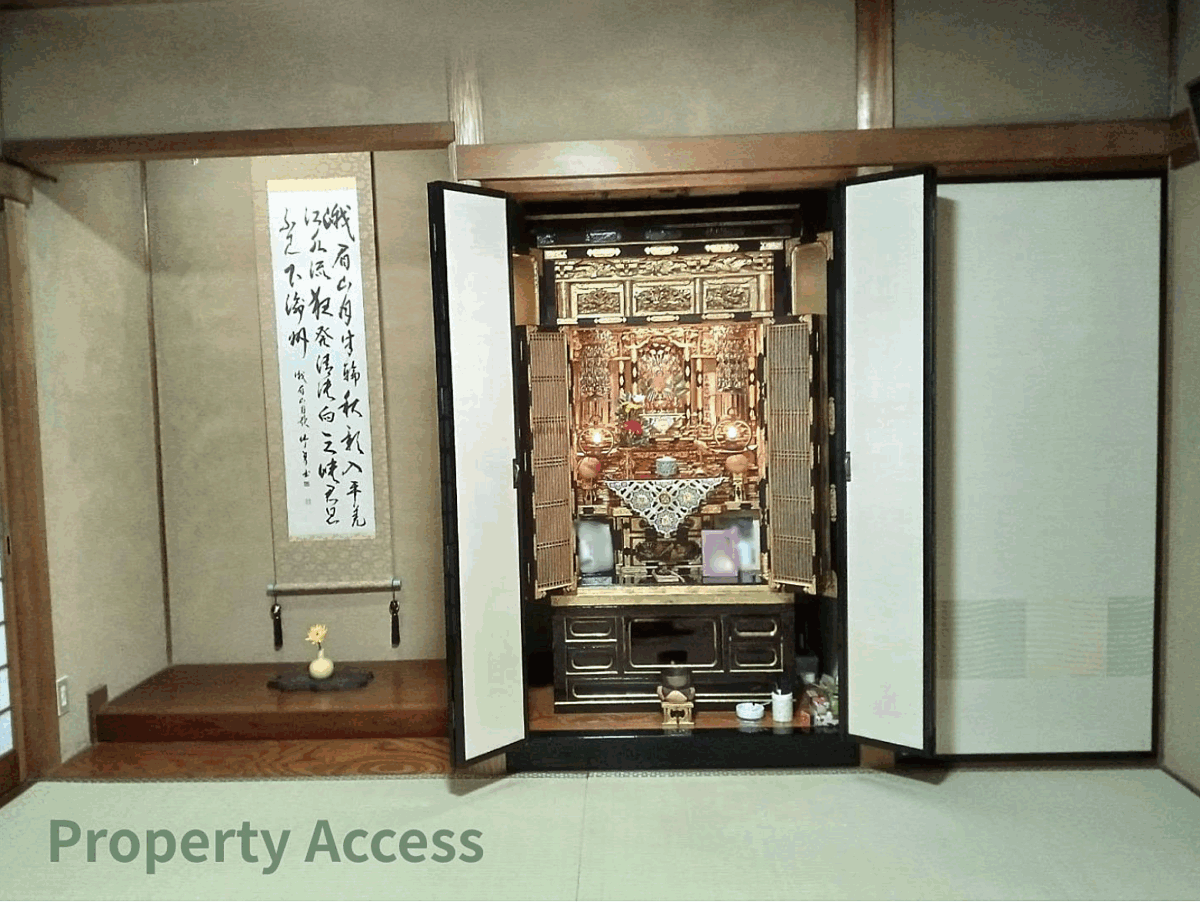
Tokonoma & Altar Room (Image: Property Access staff)
Tokonoma
Tokonoma is a raised platform in a tatami room that serves as a decorative space. It is used to hang a scroll, to place ikebana flowers or to display ornaments of the season.
Altar room
Many households used to have an altar room or Butsuma (仏間) where a Buddhist alar is placed. If the family is shintoist, a shinto-style altar is placed.
Backdoor
Usually a backdoor is placed near the kitchen. This is to bring out garbage or take in groceries directly from or to the kitchen without going through the main entrance.
2. 1990 or After
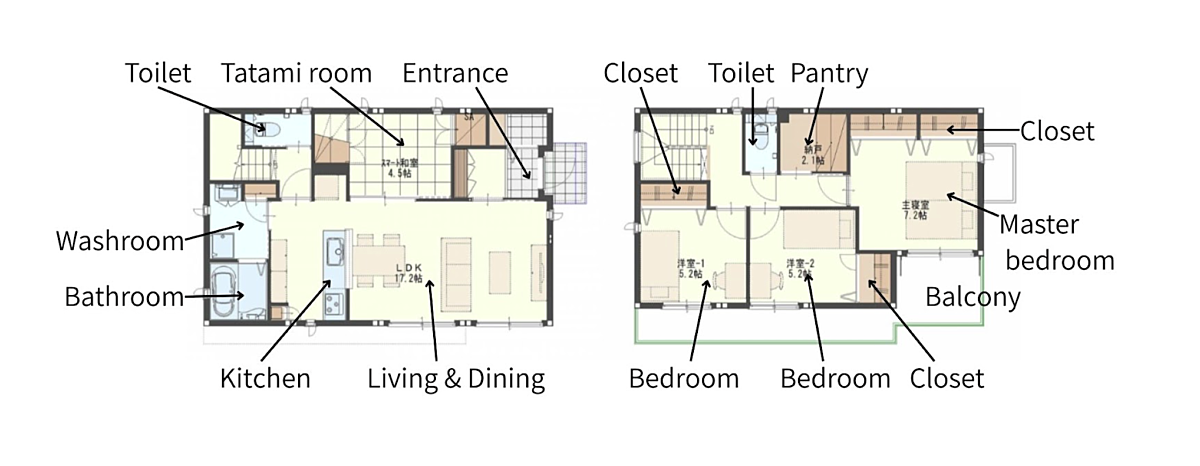
(Source: TOYOTA HOME)
As the lifestyle of Japanese families gets westernized, the layout of the houses changes.
The modern Japanese home floor plan has gradually shifted toward open living spaces and family-oriented designs.
More and more people own cars and having a garage space has become a standard.
Another big change is that most of the rooms have wooden or PVC flooring instead of tatami mats.
Instead, it’s quite common to have a tatami room connected to the living room, so it can be used as an extension of the living room or an individual guest room if the sliding doors are closed.
Having a dining table & chairs in the dining room and a sofa set in the living room instead of a traditional low table and floor cushions, and using beds instead of futon became common, the use of tatami mats in a Japanese house has been lessened.
The house is designed more family-oriented.
The most popular kitchen layout faces the living room, allowing the person cooking to see the living room and talk with the kids.
Some people prefer to have access to the second floor through the living room, or the staircase can be accessed only through the living room. So their teenage kids need to say hi to their parents before going up to their own rooms.
It is also more common to have a toilet on the second floor as well.
Due to the lack of land in the city centers, detached houses are usually multi-stories.
However, there is a secret boom of single stories in the countryside where there is plenty of land, among those people who are looking at the time when they become empty-nesters.
Summary
A typical Japanese house has changed significantly over time, but many traditional features remain.
Entrance: The entrance is a space for removing shoes, usually equipped with a shoe cupboard to keep the area tidy.
Bedrooms with tatami mats: Many rooms have tatami mats, which provide comfort, insulation, humidity control, and a relaxing natural scent suited to Japan’s climate.
Nowadays, instead of having tatami mats in rooms, it is common to have one tatami room attached to the living room while the other rooms have wooden or PVC flooring.
Oshiire: Oshiire is a deep closet designed to store futon during the day so the room can be used as a living space.
Tokonoma: Tokonoma is a raised alcove in a tatami room used to display scrolls, flowers, or seasonal decorations.
Altar room: Some homes have an altar room where a Buddhist or Shinto altar is placed for religious practice.
Backdoor: The backdoor, usually near the kitchen, allows convenient access for taking out garbage or bringing in groceries.
Whether you are buying property or simply learning about Japanese architecture, understanding a Japanese home floor plan makes it easier to appreciate how homes are designed for daily life.
Hope you found this article useful!
Our team of seasoned professionals at PropertyAccess is dedicated to helping you navigate Japan’s real estate market with confidence.
With deep local knowledge and a commitment to personalized service, our experts are here to guide you every step of the way.
Book a Free Consultation Session with Our Team!