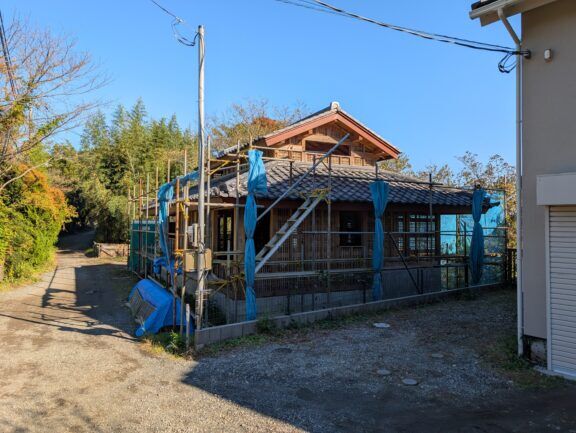
The True Cost of Buying an Akiya: Purchase Price, Fees, Taxes, and Hidden Expenses
Last Updated: September 16, 2026
Wondering how much it really costs to buy an akiya in Japan? Learn about purchase prices, taxes, legal fees, renovation costs, and hidden expenses before you buy.
Table of Contents
Supervised By: Hiroki Kazato
Real Estate Expert
Buying an akiya, or vacant home, seems like a steal. The tales of one million yen homes and rural cottages that only require some repairs sound very enticing. However, the actual asking price is only a minor part of the total sum that one needs to estimate prior to buying a home in Japan.
Regardless of whether it is a five-hundred thousand yen rural house or a ten million yen renewed akiya, additional costs are to be considered.
This guide highlights the expenses that are relevant when purchasing such a property and provides approximate figures for each. It discusses why the purchase price of an akiya is not the only sum to be taken into account and what expenses are typically included.
One of the most common misconceptions regarding buying an akiya is that its final price is the sum stated by the owner. In reality, it is only a minor part of the expenses that one has to cover before moving into a new home. For example, assume that one has found a gorgeous countryside house for one million yen. Compared to the prices of Tokyo, this price is surprisingly low. However, prior to signing the papers, one would still have to consider various payables, including:
- Real estate agency fees
- Registration taxes
- Judicial scrivener fees
- Property acquisition tax
- Stamp duty
- Building inspections
- Renovation costs
- Utility reconnections
- Insurance
- Annual property taxes
If the house has been abandoned, then the removal and structural costs could also be substantial. The additional expenses for an akiya can exceed or equal the purchase price, so it is vital to understand what sums are to be paid when buying a property in Japan.
Cost #1: Purchase Price
When considering the purchase of an akiya, one needs to evaluate what square meters one wishes to obtain with the use of the given sum. Akiya prices can vary considerably, depending on its location, size, condition, and other characteristics.
Official akiya banks can offer municipal houses for only one yen, but such houses are typically promoted to people willing to perform extensive renovations within the city.
Most of the akiya houses for sale come with these estimated asking prices
| Property Type | Estimated Price |
|---|---|
| Promotional akiya | ¥1–¥500,000 |
| Rural homes needing major renovation | ¥500,000–¥3 million |
| Livable countryside homes | ¥3–8 million |
| Renovated akiya | ¥8–20 million+ |
The price of an akiya depends on its location. Generally, the cost of such a house is lower in the countryside than near big cities or popular regions, such as Kyoto or Hakone. Naturally, the location also determines the price of renovations that might be necessary for an abandoned home. The final price also depends on various other factors, including the plot size, building materials, and other characteristics.
In most cases, it is a good idea not to spend more than half or two-thirds of the targeted budget on buying the house itself. By doing so, one sets aside funds for renovations and other expenses.
Cost #2: Real Estate Agency Fees
When purchasing an akiya, one may be required to pay certain fees to a real estate agency. The fees are state-regulated and can only be imposed by licensed real estate agencies. According to the Ministry of Land, Infrastructure, Transport and Tourism, real estate agencies can only charge a buyer 3% of the purchase price plus 60,000 yen for any property valued higher than 8,000,000 yen.
For any property valued at 8,000,000 yen or lower, a new law allows real estate agencies to charge up to 330,000 yen to facilitate the sale of a lower-valued property, such as an akiya. The total fee in such cases would include consumption tax.
Estimated Brokerage Fee, Depending on the Price of an Akiya
| Property Type | Estimated Price |
|---|---|
| ¥1 million | Up to ¥330,000 |
| ¥5 million | ¥500,000–¥3 million |
| ¥8 million | Up to ¥330,000 |
| ¥10 million | Approximately ¥396,000 |
As can be seen from the figures above, such a fee is estimated relatively high for a property valued at one million yen. It is essential to remember that such a fee is incurred due to multiple hours of work of a real estate agent, including negotiations with the owner, proof verification, and legal paperwork.
Some municipal akiya banks offer properties that are not promoted by real estate agencies. Therefore, it is always a good idea to clarify the purchase conditions prior to submitting a purchase application.
Cost #3: Registration and Legal Fees
As a buyer, one is responsible for a myriad of legal expenses that are estimated at approximately 100,000 – 200,000 yen. When buying an akiya, it is essential to hire a judicial scrivener to examine documents and finalize the purchase deal in accordance with Japanese property laws.
Such expenses typically include:
- Judicial scrivener fees
- Registration and license tax
- Property registration
- Certified document fees
- Identity verification
- Translation services (if required)
Service Estimated Cost in Yen
| Service | Typical Cost |
|---|---|
| Judicial scrivener | ¥50,000–¥120,000 |
| Registration expenses | ¥50,000–¥100,000+ |
| Translation or interpretation (if needed) | ¥20,000–¥100,000 |
The estimated legal expenses for a simple purchase of an akiya sum up to 100,000 – 200,000 yen. If there are disputes over the property or its boundaries or if the akiya has multiple owners, then the costs may be estimated higher than 200,000 yen.
When working with a judicial scrivener, it is advisable to select someone who is familiar with the peculiarities of purchase deals with foreigners and vacant akiya houses. By doing so, one can eliminate many potential difficulties that may arise with the purchase of an abandoned house.
Cost #4: Taxes
When buying an akiya in Japan, one also needs to budget for several local taxes. Even though the exact figures depend on the price and location of the property, there are some estimated figures that one should take into account.
Stamp Duty
The stamp duty is a tax imposed on a contract, and the rate depends on the value of the given contract. On average, one can expect to pay anywhere between 1,000 and 10,000 yen.
Registration and License Tax
The next tax that one has to pay when buying an akiya is a registration and license tax, which is imposed when the ownership of a property is transferred and registered. Unlike the stamp duty, this tax is based on the value of the property as determined by the Japanese government.
Real Estate Acquisition Tax
The real estate acquisition tax is a local tax that is imposed by the municipality after the purchase of a property. It is also based on the property’s value as assessed by the local government. In most cases, residential buildings can be subject to a reduced tax or temporary exemption, so it is advisable to verify whether this applies to a specific akiya.
Fixed Asset Tax
Finally, the local government also levies a fixed asset tax for the property ownership. Although it is billed annually, starting from the year of purchase, such expenses should be incorporated into the akiya budget, as well.
When estimating the budget for buying an akiya, one should always remember that the tax value and the assessed value of a property can be considerably higher than the price that one pays for it. Such differences can also affect the final sums considerably for two similar properties.
The table below provides an example of the final purchase price for a property with a one, five, and ten million yen valuation, respectively. It does not include renovation and maintenance expenses.
Estimated Purchase Costs, Excluding Renovations and Maintenance
| Expense | ¥1M Home | ¥5M Home | ¥10M Home |
|---|---|---|---|
| Purchase Price | ¥1,000,000 | ¥5,000,000 | ¥10,000,000 |
| Purchase Price | ¥1,000,000 | ¥5,000,000 | ¥10,000,000 |
| Legal & Registration | ¥100,000–¥200,000 | ¥100,000–¥200,000 | ¥120,000–¥250,000 |
| Legal & Registration | ¥100,000–¥200,000 | ¥100,000–¥200,000 | ¥120,000–¥250,000 |
| Acquisition & Registration Taxes | Varies | Varies | Varies |
Estimated Total Before Renovation
- ¥1 million property: Approximately ¥1.45–1.60 million
- ¥5 million property: Approximately ¥5.45–5.60 million
- ¥10 million property: Approximately ¥10.55–10.75 million
The final figure shows that the purchase price of an akiya is never the sum that one can ignore, but it is only a bigger part of the total expenses that one needs to consider prior to buying a home in Japan.
Cost #5: Renovation
For many buyers, renovating an empty house is associated with the highest costs of all.
Depending on the home’s condition, the area, and the intended use of the property, buyers may have to spend additional funds to renovate and rehabilitate the home. Some older akiya only require a fresh coat of paint, while others require extensive repairs to be habitable again.
Below are some renovation cost estimates for reference:
| Renovation | Estimated Cost |
|---|---|
| Interior painting and wallpaper | ¥300,000–¥1 million |
| Flooring replacement | ¥500,000–¥2 million |
| Kitchen renovation | ¥800,000–¥3 million |
| Bathroom renovation | ¥800,000–¥2.5 million |
| Toilet replacement | ¥150,000–¥600,000 |
| Toilet replacement | ¥150,000–¥600,000 |
| Exterior wall repairs | ¥800,000–¥3 million |
| Seismic reinforcement | ¥1–5 million |
| Full-home renovation | ¥5–20 million+ |
Many older wooden homes require extensive repairs that may only become apparent to a contractor upon closer inspection. It is therefore wise to budget an additional 10-20% for renovations in the case of unexpected expenses.
Request multiple renovation cost estimates before buying an akiya. It will help you understand the additional costs associated with your desired purchase and decide whether the property is worth the investment.
Cost #6: Demolition
Some abandoned homes are not worth repairing. If an akiya has extensive damage, it may be more cost-effective to demolish the structure and build a new home on the land.
Demolition costs depend on several factors, including:
- Building size
- Construction materials
- Accessibility
- Local labor rates
- Waste disposal requirements
- Hazardous materials such as asbestos
Typical demolition costs for older wooden homes are:
| Building Type | Estimated Cost |
|---|---|
| Small wooden home | ¥1–2 million |
| Average detached wooden home | ¥1.5–3 million |
| Larger homes or difficult sites | ¥3–5 million+ |
Narrow roads may also require manual demolition, which increases labor costs and project complexity. The removal of asbestos typically requires licensed contractors, which can also add to the costs. If you are considering reconstruction, ask the contractor for renovation and demolition cost estimates. In some cases, rebuilding from scratch can be less expensive than repairing an old house.
Cost #7: Utility Upgrades
Decades of abandonment take a toll on the home’s utility systems. These may require upgrades even if they appear to be in working condition since an inspection usually reveals outdated wiring or plumbing that will need replacing.
Common upgrades include:
| Utility Upgrade | Estimated Cost |
|---|---|
| Electrical rewiring | ¥500,000–¥2 million |
| Plumbing replacement | ¥500,000–¥2 million |
| Water heater replacement | ¥200,000–¥600,000 |
| Septic system repair or replacement | ¥500,000–¥2 million |
| Gas connection or equipment upgrades | ¥100,000–¥500,000 |
| Internet installation | ¥20,000–¥100,000 |
Connecting to the nearest water and sewer lines may also incur additional costs in the case of distant location or topography challenges. Ask the seller about the year of the last utility usage. A house that has been unoccupied for an extended period will typically require an inspection before being reactivated.
Cost #8: Insurance and Annual Ownership
It is crucial to budget for additional expenditures associated with owning an empty house.
Fixed Asset Tax (Kotei Shisan Zei)
This tax is levied on the owner’s property and assessed based on the government valuation rather than the purchase price. Fixed Asset Tax rates are typically low for many rural areas and can vary for large-scale buildings or structures in sought-after locations.
City Planning Tax
This tax is applicable for properties in designated urban planning areas.
Insurance
Homeowners typically carry fire, earthquake, and personal liability insurance for an akiya. Insurance costs vary depending on the property, its location, construction materials, and desired coverage.
Maintenance
Even upgraded or renovated homes require maintenance. Habitability checks are a must for anyone living in an abandoned house that has been unoccupied for an extended period.
Annual maintenance may include:
- Roof inspections
- Exterior painting
- Pest control
- Garden maintenance
- Gutter cleaning
- Septic tank servicing
- Snow removal in colder regions
| Annual Expense | Typical Range |
|---|---|
| Fixed Asset Tax | Varies by assessed value |
| Fire insurance | ¥20,000–¥60,000/year |
| Earthquake insurance | ¥20,000–¥80,000/year |
| Routine maintenance | ¥100,000–¥500,000+/year |
If you only plan to use your akiya as a vacation home, consider maintenance company inspections during your absences. It will minimize the risk of expensive issues such as mold and insect infestations.
Summary
Let’s assume that you have found an akiya that suits your needs. It has a purchase price of 2,000,000 yen. Below are the estimated costs associated with buying and renovating the house.
Suppose you purchase an akiya for ¥2 million.
Purchase Costs
| Expense | Estimated Cost |
|---|---|
| Purchase price | ¥2,000,000 |
| Brokerage fee | ¥330,000 |
| Legal and registration fees | ¥150,000 |
| Taxes and stamp duty | ¥70,000 |
| Building inspection | ¥70,000 |
| Subtotal | Approximately ¥2.62 million |
Renovation Costs
| Improvement | Estimated Cost |
|---|---|
| Kitchen renovation | ¥1.5 million |
| Bathroom renovation | ¥1 million |
| Electrical upgrades | ¥800,000 |
| Plumbing repairs | ¥700,000 |
| Roof repairs | ¥1.5 million |
| Flooring and interior finishes | ¥1 million |
| Contingency fund | ¥800,000 |
| Renovation Total | Approximately ¥7.3 million |
Total Initial Investment
| Category | Cost |
|---|---|
| Purchase | ¥2.62 million |
| Renovation | ¥7.3 million |
| Estimated Total | Approximately ¥9.9 million |
With renovation costs added to the purchase costs, the total comes to approximately 9,920,000 yen. This example demonstrates why it’s critical to take a holistic view of an akiya purchase. The renovation costs far outweighed the initial 2,000,000 yen purchase price.
Not all abandoned homes require such expensive upgrades, of course. Some homes may only need cosmetic repairs, and some may require more significant repairs or even demolition. Everything depends on the akiya’s condition and the scope of your renovation plans.
How to Reduce Ownership Costs
Purchasing an akiya does not have to be expensive if you know what you are doing. Here are a few essential tips for reducing ownership costs:
- Research Municipal Subsidies - Many local governments offer subsidies for akiya renovations, retrofits, and repairs. Be sure to research available programs in the area where you intend to buy an abandoned house.
- Get a Professional Inspection - A building inspection is much cheaper than hiring a contractor to deal with the consequences of rotting wood or faulty wiring.
- Focus on High Priority - Renovations First It is wise to leave cosmetic improvements until later and budget for essential repairs first.
- Renovate Gradually - Many akiya owners spread out their renovation plans over several years in order to afford them.
- Compare Quotes - Request multiple contractor quotes. The costs of similar jobs can vary significantly depending on the experience and location of the company.
For many buyers, an abandoned house represents an unparalleled opportunity to acquire larger living space than is typical for an apartment in a metropolitan area. Furthermore, many akiya owners enjoy the satisfaction of restoring traditional Japanese homes or completely customizing their dream house. However, most experts agree that realistic expectations are paramount when it comes to budgeting for an akiya.
The main lesson for prospective buyers is that the lowest advertised price is not always the best option. It is essential to consider all costs associated with an abandoned home over time, from renovation and reconstruction to insurance, taxes, and potential improvements to the property. The most desirable properties are therefore those that fit within a buyer’s long-term budget and plans.
With the right preparation and guidance, however, many akiya owners find that their investment is well worth the effort involved. Not only can an abandoned home provide excellent value for money, but it can also be an incredibly rewarding experience.
Final Thoughts
Buying an akiya can be a much more affordable option than purchasing real estate in Japan’s major cities. However, many buyers are unprepared for the financial responsibilities that come with owning an abandoned house. From additional expenses during purchase and renovations to demolition, taxes, and maintenance, a comprehensive understanding of ownership costs will help you avoid unpleasant surprises and make better investment decisions.
Luckily for prospective buyers, most costs associated with an akiya can be reliably predicted. You can establish a realistic budget by relying on cost estimates, working with professional real estate agents and contractors, and taking advantage of subsidies where possible. In the end, an akiya can be much more than just a bargain - it can become a valuable long-term investment with proper research and preparation.
Source
- Ministry of Land, Infrastructure, Transport and Tourism (MLIT)
- National Tax Agency of Japan
- Japan Housing Finance Agency
- Real Estate Information Network System (REINS)
- Japan Akiya & Inaka Network
- Real Estate Japan
- Japan Property Central
- Statistics Bureau of Japan
- CBRE Japan Market Research
- Savills Japan Research
Our team of seasoned professionals at PropertyAccess is dedicated to helping you navigate Japan’s real estate market with confidence.
With deep local knowledge and a commitment to personalized service, our experts are here to guide you every step of the way.
Book a Free Consultation Session with Our Team!