- エリアガイド
Tokyo vs Nagoya: Which City Should You Consider for Property Investment?
Last Updated: 10月 23, 2026
Compare Tokyo and Nagoya for property investment, including prices, rental yields, population, economic strength, redevelopment, and long-term market potential.
目次

Supervised By: 風戸 裕樹
Real Estate Expert
Tokyo and Nagoya are both popular cities for buying real estate in Japan, but both places have their advantages and disadvantages. In particular, Tokyo has a broader market with greater demand and better liquidity of purchased property, while Nagoya is a more accessible city, offers better rental yields, and is more industrially developed. Therefore, when choosing between these two Japanese cities, it is necessary to consider which benefits are more important for the investor.
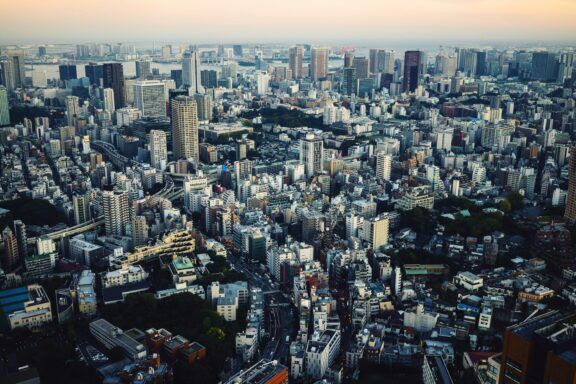
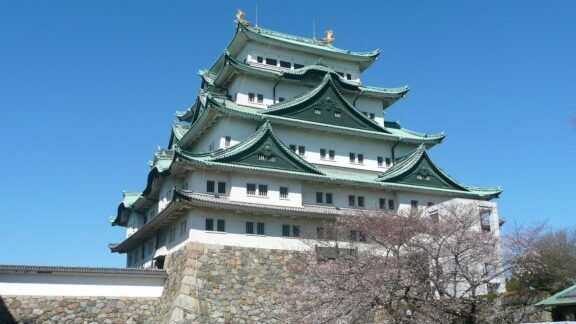
For property investment, should you choose Tokyo or Nagoya? Tokyo is the largest center in Japan in terms of property sales and purchases. Therefore, it attracts many investors who want to own real estate in the heart of the Japanese economy. However, Nagoya is not as well-known, but it also has its benefits. Being the capital of Aichi Prefecture, this city is well-developed and located in a advantageous position near Tokyo, Osaka, and the central part of the Chubu region. In addition, Nagoya is actively developing and undergoing modernization, particularly along the Nagoya Station and Sakae.
Which of these two cities is more advantageous for you? It depends on which benefits you are looking for in real estate investment.
Property Prices and Entry Costs
In Tokyo, the prices in the center and near large business districts and transportation hubs are naturally high. Due to the high demand for real estate in the capital, prices in Tokyo tend to be higher than in Nagoya. In addition, competition is also fierce in the capital, which decreases the potential rental yield on property purchase.
In Nagoya, there is a choice of real estate at various prices. Therefore, an investor can find options in both the budget and premium price segments. It is also important to consider not only the cost of the desired real estate and its potential yield but also its resale value. If the priority is to purchase several real estates with a decent rental yield, then Nagoya will be a good choice.
Rental Yields
In terms of rental yields, Nagoya has significant advantages over Tokyo. According to the latest survey by the Japan Real Estate Institute, “Expected Yields from Whole Building Rentals survey as of 2026,” the expected yield in Nagoya is 4.5%. At the same time, the expected yield in Tokyo’s Jōnan region is 3.6%. In terms of family rentals, Nagoya has an advantage with a yield of 4.5%, as compared to 3.7% in Tokyo’s Jōnan.
It is important to note that this data refers to whole building rental yields, not individual apartments or houses. Therefore, this indicator may not apply to all types of real estate. Nevertheless, the difference in yields is significant for investors, as high prices in Tokyo narrow the profit margin on rental prices.
Therefore, when the primary goal is to reside on rental income, Nagoya appears to be a more attractive option for investment.
Population and Rental Demand
In terms of population, Tokyo is ahead of all Japanese cities. As of September 1, 2026, the population of Tokyo is 14,316 thousand people, of which about 10,045 thousand people live within Tokyo’s special wards. In other words, the number of residents in the capital of Japan is close to 14 million people. This is a significant population base, which means a high demand for real estate of all types and sizes.
At the same time, Nagoya has a population of 2,353 thousand people as of September 2026. Thus, Nagoya is one of the largest cities in Japan, but its population is barely 2.5 million people. Nevertheless, the demand for real estate in Nagoya is also quite significant. According to the 2025 census, the proportion of the working-age population and students in Nagoya is 63.5% (1,491 thousand people) — an indicator that reflects the demand for rental real estate.
Therefore, although Tokyo has a population about 5 times larger than that of Nagoya, this does not mean that the capital has a demand for real estate 5 times higher than in the other city. In reality, the proportion of the working-age population in Nagoya is comparable with that of Tokyo. Moreover, the presence of high-quality education in Nagoya also increases the demand for rental real estate.
Economic and Business Environment
When it comes to economic security, Nagoya has distinct advantages over Tokyo.
Being the center of the Chubu region, Nagoya is the economic core of Japan. In particular, the city is known for its developed industrial sector. Many Japanese and foreign companies are located in Nagoya, in particular car manufacturers such as Toyota and their suppliers.
Thus, Nagoya has a significant advantage over Tokyo in terms of the developed industrial sector. Although Tokyo is the economic and financial center of Japan, it nevertheless has a more niche profile.
Capital Growth Potential
In terms of the growth of land prices, Tokyo is also in first place. According to Japan’s 2026 Land Price Survey, residential land prices in Tokyo grew by 4.0% year-on-year. At the same time, land prices in Nagoya grew by 1.5% in the same period. Commercial land prices in Tokyo grew by 8.9%, while in Nagoya, commercial land prices grew by 2.7%. Therefore, it can be seen that the trend in land prices for both cities is growing, but the growth is strongest in Tokyo.
In other words, investing in real estate and land in Tokyo seems to be safer and more profitable in the short term, but in the long term, an investor can quickly resell real estate in Nagoya at a higher price due to land price growth. Although it is important to remember that the initial price in Nagoya will also be significantly lower than in Tokyo.
Nagoya is a city that is developing and modernizing. In particular, Nagoya has plans to revitalize the areas near the Nagoya Station, which is key to developing investment in the city. In particular, the city is developing as a destination for investment with the development of infrastructure. Thus, the priority in investing in Nagoya is to purchase property near developing transport hubs and promising areas.
However, it should be noted that Nagoya sometimes suffers from postponed large-scale infrastructure projects, for example, the opening of the Linear Chuo Shinkansen. Therefore, it is a factor to consider in Nagoya investment. By contrast, Tokyo has many infrastructure projects under construction or completed recently, which increases the infrastructure’s attractiveness and safety for investment.
Liquidity and Resale Considerations
Tokyo wins in this aspect as well, as it has the broadest real estate market in Japan. There are many buyers searching for real estate in Tokyo, which means there will also be buyers interested in purchasing your property. Although in Nagoya, the selection of real estate is more modest and demand is lower, nevertheless, demand is still there. In particular, the most demand in Nagoya is for property near large business districts, convenient transport, schools, and located in developed neighborhoods.
Of course, the same applies to Tokyo — a property in the center will always have more demand than one not conveniently located. But an investor should understand that demand is not the only criterion in real estate investment. The location of the house, its convenience, age, rental yield, and price are also important indicators to analyze.
Final Thoughts
Thus, which city fits better for an investor depends on their needs. Choosing Tokyo as the place for your real estate investment makes sense if you are interested in:
- a large-scale and reliable market with good liquidity;
- a wider range of tenants and those ready to pay more;
- and potential resale value of your property, as well as the ability to enter the Japanese economy through ownership of real estate in the capital;
- higher rates of property value increase that Tokyo offers its residents.
At the same time, one should choose Nagoya if one is interested in:
- more affordability of purchase;
- higher yields on rent;
- a relatively large tenant base;
- participation in Nagoya’s large-scale urban redevelopment;
- and taking advantage of the developed industrial sector of Nagoya.
If an investor prioritizes rental income, then Nagoya has more advantages. However, if the priority is high liquidity of the purchased real estate and its subsequent resale, then the choice falls on Tokyo. Nevertheless, it should be borne in mind that the selection of real estate in Tokyo is much broader, and therefore there are both affordable options with a high yield on rent and premium real estate with a high price and lower yield. Therefore, depending on the needs of the investor, this or that option will be cost-effective.
Source
- Ministry of Land, Infrastructure, Transport and Tourism – 2026 Prefectural Land Price Survey
- Ministry of Land, Infrastructure, Transport and Tourism – 2026 Land Price Trends
- Tokyo Metropolitan Government – Estimated Population
- Nagoya City – Population Statistics
- Nagoya City – Population and Census Statistics
- Japan Real Estate Institute – Real Estate Investor Survey
- Nagoya City – Nagoya Station Area Development
- Nagoya City – Central Nagoya Urban Development
- Mitsubishi Estate Real Estate Services – Nagoya Real Estate Market Report
Our team of seasoned professionals at PropertyAccess is dedicated to helping you navigate Japan’s real estate market with confidence.
With deep local knowledge and a commitment to personalized service, our experts are here to guide you every step of the way.
Book a Free Consultation Session with Our Team!
プロパティアクセスの経験豊富な専門チームが、お客様が安心して日本の不動産市場に投資いただけるようお手伝いいたします。
不動産に全般に関する豊かな知識とおひとりおひとりに合ったサービスで、不動産投資のプロセスを一貫してサポートしますので、お気軽に個別相談をご利用ください。
無料の個別相談を予約する(予約画面は英語で表示されます)