- その他
Risks of Real Estate Investment in Japan for Foreigners - Market Risks What are They and How to Mitigate Them?
Last Updated: 10月 23, 2026
Learn market risks of investing in Japanese real estate, from market volatility, interest rate and financing cost, currency exchange to liquidity issues, with practical mitigation tips.
目次

Supervised By: 風戸 裕樹
Interested in Japan but not sure what to be cautious about?
Would you like to be thoroughly informed of risks in property investment in Japan?
When venturing into a new investment, it is always important to know the benefits and the risks behind it so that you can make an informed investment decision.
While many websites only talk about the benefits of investing, I will talk about the risks of property investment in Japan.
Investments always come with some risks, but it is totally different if you are aware of them or not.
Read this article about market risks of real estate investment in Japan, be informed, and prepare countermeasures or strategies to mitigate those risks.
Also read:
Top 15 risks in real estate investment in Japan
- Risks of Real Estate Investment in Japan - Operational Risks
- Risks of Real Estate Investment in Japan - Location & Natural Disaster Risks
- Risks of Real Estate Investment in Japan - Legal and other Japan-Specific Risks
Risks of Real Estate Investment in Japan - Market Risks
- Market Volatility Risk
- Interest Rate and Financing Cost Risk
- Currency Exchange Rate Risk
- Liquidity Risk
- Property Value Decline Risk
1. Market Volatility Risk

Market volatility risk is the risk of fluctuations induced by economic downturns and changes in market conditions. Economic conditions, interest rates, demographics, oversupply, and natural disasters may affect the profitability or the value of your property.
To mitigate this market volatility risk, you should consider the following:
(1) Accurate understanding of market trends
You should analyze the latest market data, demographics, and infrastructure development plans to select a promising area (such as a redevelopment zone and an area experiencing population growth).
(2) Having an exit strategy ready
Property deteriorates over time.
You can’t expect to receive the same amount of rent indefinitely. It is important to adjust the rent according to the age of the property and the market conditions to retain or attract tenants. If the property is in a good location, the decline of rent is slower than properties in not so popular locations. If the property remains vacant for a long period of time, it is also recommended to consider selling the property.
2. Interest Rate and Financing Cost Risk
Source: Created by PropertyAccess based on forex.com)
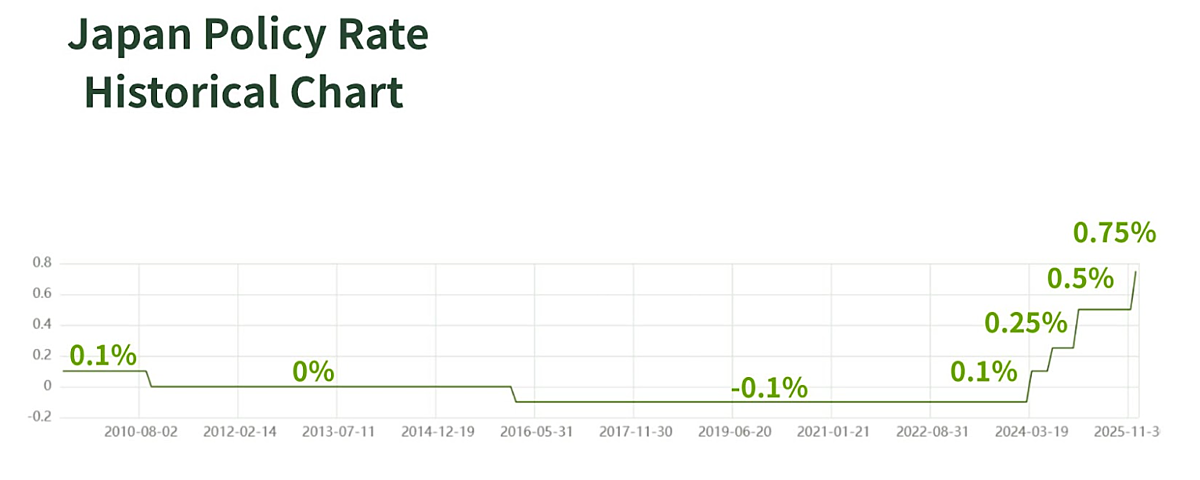
Interest rate and financing cost risk is the risk of possible increase of loan repayments due to rising interest rates. As a result, net revenue may decline, and if repayments exceed rental income, the owner may need to use personal funds to cover the shortfall.
The Bank of Japan decided to raise the policy interest rate from 0.5% to 0.75% at its monetary policy meeting on December 18 and 19, 2025 and maintained it at the meeting on 22 and 23 January, 2026.
This marks the first time Japan’s policy rate has exceeded 0.5% in 30 years, since 1995.
To mitigate this interest rate and financing cost risk, you may want to consider the following:
(1.) Refinancing to a fixed rate loan
In many cases, long-term fixed interest rates tend to rise ahead of short-term (floating) rates, because they are priced off long-term bond yields that reflect market expectations of future rate increases.
For this reason, refinancing after variable rates have already started to climb may not always be the most cost-effective strategy, since fixed rates may have already risen as well.
(2.) Maintain a sufficient buffer to manage risks
Increase your down payments and secure surplus funds in preparation for prepayments if necessary.
Also read:
Top 15 risks in real estate investment in Japan
- Risks of Real Estate Investment in Japan - Operational Risks
- Risks of Real Estate Investment in Japan - Location & Natural Disaster Risks
- Risks of Real Estate Investment in Japan - Legal and other Japan-Specific Risks
3. Currency Exchange Rate Risk
Source: Created by PropertyAccess based on xe.com)
Currency Exchange Rate Risk (also called FX risk) is the risk that arises when an investor’s home currency differs from the currency in which the property is priced or generates cash flow, potentially affecting the expected return on investment.
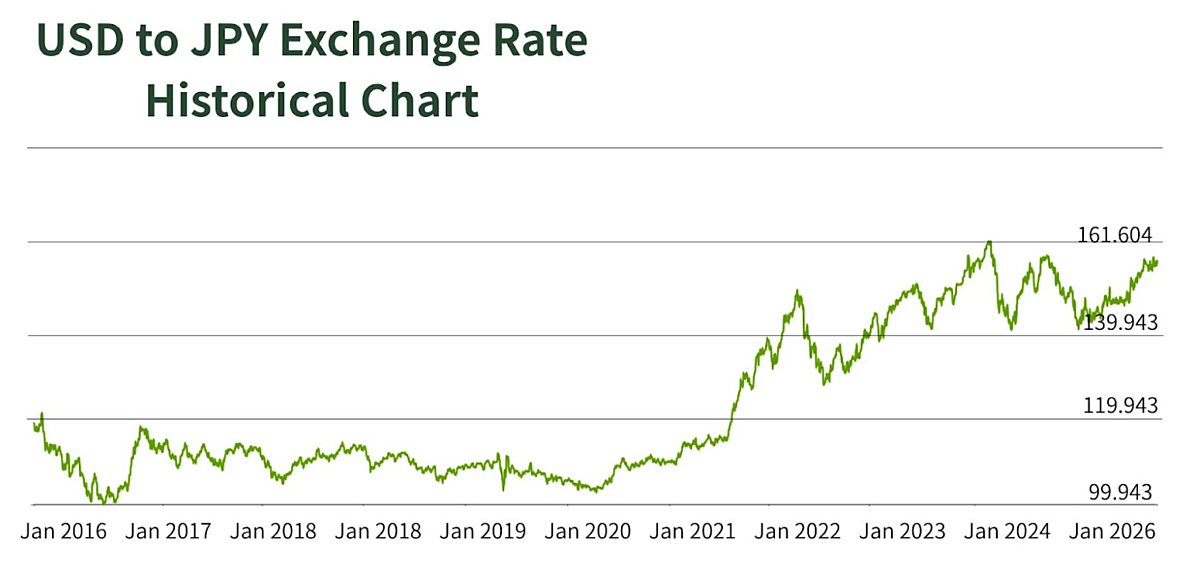
The significant yen depreciation since 2022 has pushed the dollar above the broad range seen since 1995, reaching levels not seen since 1985. The weak yen has made real estate in Japan relatively inexpensive, increasing the appeal of Japanese property investment for foreign investors.
The weakening yen is said to have been driven by the growing difference between domestic and overseas interest rates. Since 2022, the U.S. dollar has strengthened and the yen has weakened as U.S. interest rates rose sharply following the Federal Reserve’s rate hikes. At the same time, the gap between interest rates in Japan and the United States widened significantly.
According to the Institute for International Monetary Affairs (IIMA), as the Federal Reserve moves toward cutting interest rates and the Bank of Japan shifts toward rate hikes, the interest rate gap between the United States and Japan is narrowing, and the dollar–yen exchange rate is already showing signs of peaking. How much this gap continues to close will likely determine how far the dollar falls against the yen going forward.
Despite expert opinions, it remains difficult to predict movements in foreign exchange rates.
To mitigate this currency exchange rate risk, you can consider the following:
(1) Diversify real estate investments
Diversifying your property holdings across different currencies or countries can help lessen the impact of unfavourable exchange rates.
(2) Local Currency Financing
Taking out a loan in the same currency as the property's income stream creates a natural hedge, as currency fluctuations affect both your income and your debt in a balanced way.
Foreigners can take out mortgages or loans from Japanese banks but the requirements are usually stricter.
For more details about mortgages in Japan, also read:
🔗 Getting Mortgage in Japan as a Foreigner 🔗
4. Liquidity Risk

Liquidity risk is the risk that you cannot sell a property quickly at or near its expected value when you want or need to exit.
The Japanese property market has been attracting increasing interest in recent years; however, it is important to understand that liquidity risk is driven by the following key factors:
- Japan is experiencing a population decline, and its population is rapidly aging.
- However, there is an inflow of younger populations into major cities such as Tokyo, Osaka, Fukuoka, and Nagoya. On the other hand, areas outside these major cities require careful and selective location analysis when considering investment.
- Property types x location plays an important role (for example, houses in rural areas)
To mitigate this liquidity risk, generally speaking, it is safer to invest in condominium units with good train access in central areas of major cities such as Tokyo and Osaka. However, “central Tokyo” still covers a vast area.
Therefore, more detailed neighborhood information, such as access to the CBD, supermarkets, schools, hospitals, and municipal services, as well as local demographics and popular property types, can be extremely helpful.
Even if you have visited Japan several times and are familiar with various areas of Tokyo, visiting and living are different experiences.
We recommend seeking professional assistance to help narrow down suitable areas or identify high-potential locations.
5. Property Value Decline Risk

Property value decline risk is the risk that the market value of a property decreases over time, reducing capital appreciation or resulting in a loss upon sale.
In Japan, houses are seen as a depreciating asset, not an appreciating one, except for some properties in specific areas.
While in central Tokyo, areas around major stations, and redevelopment zones command strong value retention, weak or declining values are seen more often in rural areas, outer suburbs and locations without railway access.
To mitigate the risk of property value decline, we recommend prioritizing “location” above all other factors.
Investors should avoid rural areas and focus on central locations, with professional advice on property types that are popular in the contemplated area. In addition, potential investment properties should be reviewed for legal defects, such as non-compliance with seismic standards and other applicable regulations, which could affect the property value in the future.
Also read:
Top 15 risks in real estate investment in Japan
- Risks of Real Estate Investment in Japan - Operational Risks
- Risks of Real Estate Investment in Japan - Location & Natural Disaster Risks
- Risks of Real Estate Investment in Japan - Legal and other Japan-Specific Risks
Summary
These are the market risks we should consider when property investment in Japan.
1. Market Volatility Risk
Risk: Market volatility risk is the risk that economic downturns, demographic shifts, interest rate changes, or oversupply reduce rental income or property value.
Mitigation: This risk can be mitigated by analyzing market trends carefully and preparing an exit strategy that allows rent adjustments or timely disposal of the property.
2. Interest Rate and Financing Cost Risk
Risk: Interest rate and financing cost risk is the risk that rising interest rates increase loan repayments and reduce net investment returns.
Mitigation: This risk can be mitigated by considering fixed-rate refinancing options and maintaining sufficient cash buffers to absorb higher financing costs.
3. Currency Exchange Rate Risk
Risk: Currency exchange rate risk is the risk that fluctuations between the investor’s home currency and the Japanese yen reduce overall investment returns.
Mitigation: This risk can be mitigated by diversifying investments across currencies and using local-currency financing to create a natural hedge.
4. Liquidity Risk
Risk: Liquidity risk is the risk that a property cannot be sold quickly or at its expected value when the investor wishes to dispose of it.
Mitigation: This risk can be mitigated by investing in properties with strong demand, such as condominiums in central areas of major cities, and by seeking professional location advice.
5. Property Value Decline Risk
Risk: Property value decline risk is the risk that a property’s market value decreases over time, reducing capital appreciation or causing losses at sale.
Mitigation: This risk can be mitigated by prioritizing strong locations, avoiding rural or poorly connected areas, and ensuring properties comply with legal and seismic standards.
Our team of seasoned professionals at PropertyAccess is dedicated to helping you navigate Japan’s real estate market with confidence.
With deep local knowledge and a commitment to personalized service, our experts are here to guide you every step of the way.
Book a Free Consultation Session with Our Team!
プロパティアクセスの経験豊富な専門チームが、お客様が安心して日本の不動産市場に投資いただけるようお手伝いいたします。
不動産に全般に関する豊かな知識とおひとりおひとりに合ったサービスで、不動産投資のプロセスを一貫してサポートしますので、お気軽に個別相談をご利用ください。
無料の個別相談を予約する(予約画面は英語で表示されます)